substances and materials | Research Center for Electronic and Optical Materials

上部へ戻る

Research and development at this center
substances and materials

At this center, we are conducting research and development on a wide variety of substances in order to acquire the desired material technology.
First, semiconductors are a typical functional material. Semiconductors are also used as switches that control current by utilizing their electron transport properties, and as chemical sensors that identify substances. Semiconductors are also used for light emitting and light receiving, that is, in devices that emit various types of light, such as lighting and displays, as well as in light sensors and solar cells.Materials that emit light include fluorescent materials, which are materials with a light-emitting structure built into them, and optical materials, such as lenses. In addition, there is a method of imparting fine structure to materials to achieve optical and electronic functions. A typical example is nanostructures such as metamaterials, which can be called nanosized antennas.Additionally, the materials needed for electronics include insulating materials such as capacitors, packaging materials, and piezoelectric materials. Additionally, some substances perform chemical functions such as trapping molecules or transporting ions.
At this center, material development is progressing from a variety of perspectives, from the search for new substances that exhibit unprecedented high functionality to technologies for applying superior materials as devices.

We would like to introduce the research and development of semiconductors at this center, especially semiconductors focusing on electron transport.

Power electronics semiconductor

We are developing wide band gap semiconductors for high voltage power control.

Crystal growth and device fabrication of
wide bandgap oxides such as gallium oxide

Group in charge
Ultra-wide Bandgap Semiconductors Group

OSHIMA, YuichiOSHIMA, Takayoshi

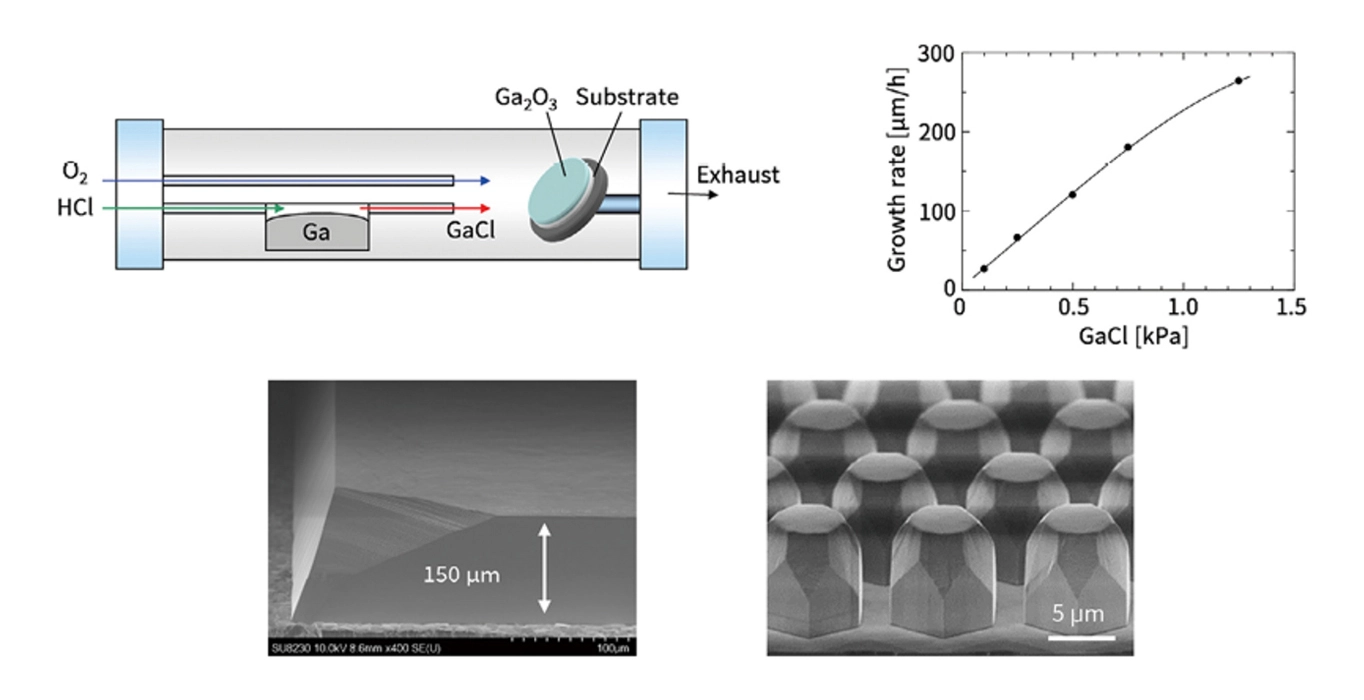
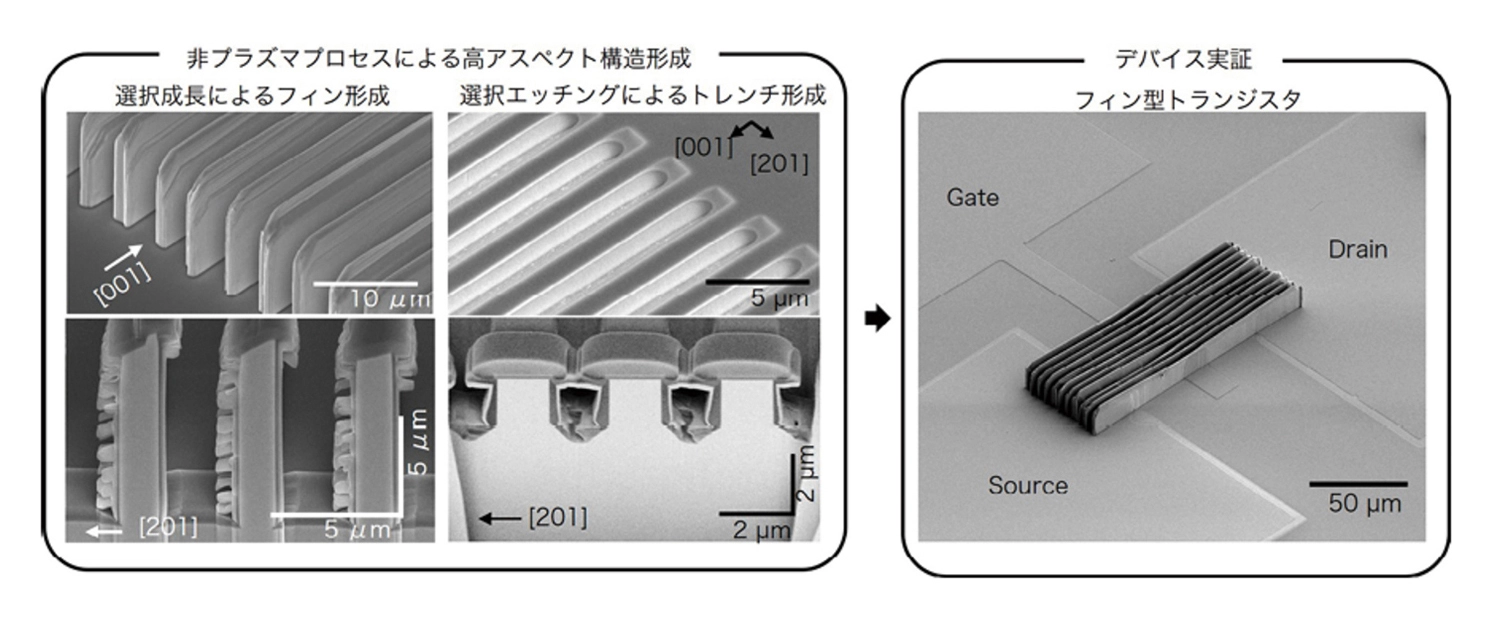
A composite image illustrating the gallium oxide crystal growth process. The top left diagram shows the system where oxygen and hydrogen chloride gases react with liquid gallium to deposit gallium oxide on a substrate. The top right graph demonstrates that increasing gallium chloride gas pressure raises the growth rate to nearly 300 micrometers per hour. The bottom section features scanning electron microscope images: the left reveals a cross section of a 150 micrometer thick crystal, while the right displays an array of hexagonal pillar structures at a 5 micrometer scale, showing high precision fabrication. Scanning electron microscope images showing high aspect ratio structure formation via non plasma processes and device demonstration. The left section illustrates fabrication techniques, featuring fine fin formation through selective growth and deep trench formation via selective etching at a micrometer scale. The right section displays a completed fin type transistor as a practical device application. It shows an electronic component with source, gate, and drain terminals precisely fabricated at a 50 micrometer scale, demonstrating the successful integration of these advanced processing technologies into functional semiconductor devices.

Power electronics application of semiconductor diamond

Group in charge
Ultra-wide Bandgap Semiconductors Group

KOIZUMI, Satoshi
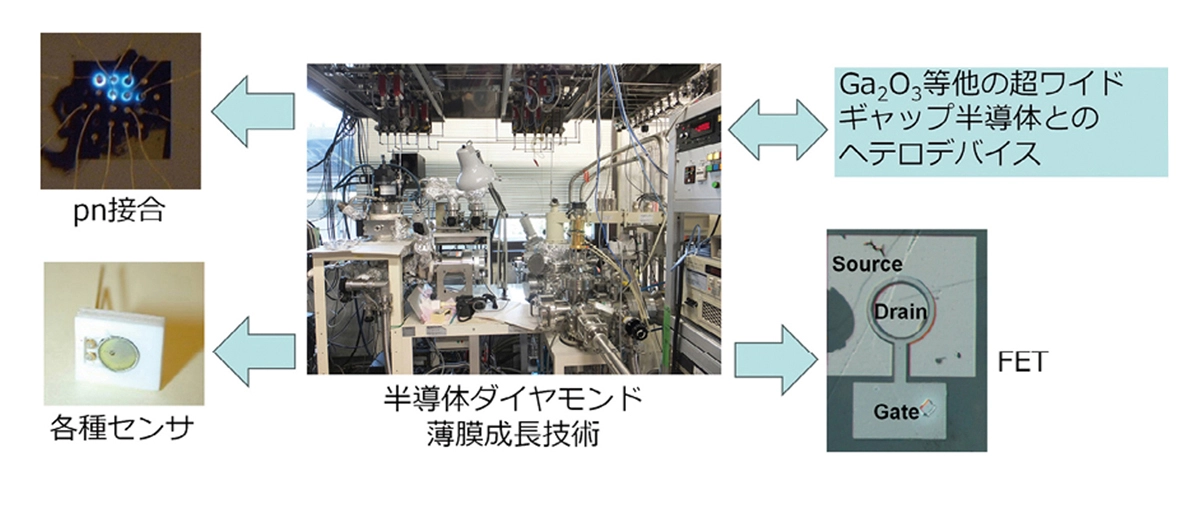
A diagram showcasing semiconductor diamond thin-film growth technology and its applications. The central photograph of the growth equipment connects to four key areas: a blue light-emitting p-n junction, various sensors, and a field-effect transistor (FET) showing source, drain, and gate structures. It also highlights the development of hetero-devices integrating diamond with other ultra-wide bandgap semiconductors like gallium oxide, illustrating the creation of high-performance electronic components for next-generation technology.

Semiconductor for chemical sensors

We are developing sensor semiconductors that utilize the chemical activity of semiconductor surfaces.

Thin film sensor materials such as zinc oxide

Group in charge
Electro-ceramics Group

ADACHI, YutalaSAITO, Noriko
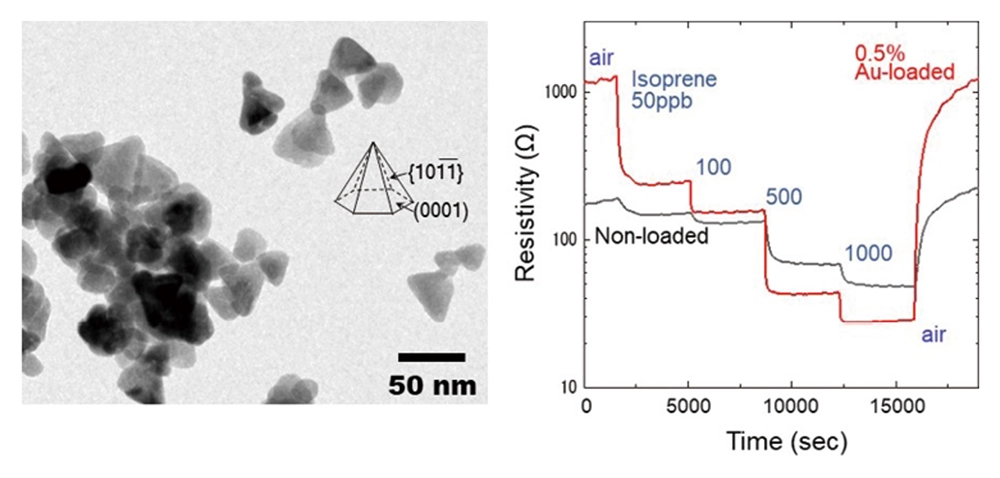
Structural images of zinc oxide microparticles and their gas-sensing performance. The left electron microscope image shows polygonal pyramidal particles with labeled crystal planes at a 50 nanometer scale. The right graph plots electrical resistance in ohms against time in seconds for isoprene gas. A 0.5 percent gold-loaded sample (red line) shows much larger resistance drops than the non-loaded sample (black line) as gas concentration increases from 50 to 1000 parts per billion, demonstrating significantly enhanced sensitivity.

Sensor applications of nitride semiconductors

Group in charge
Ultra-wide Bandgap Semiconductors Group

IROKAWA, Yoshihiro
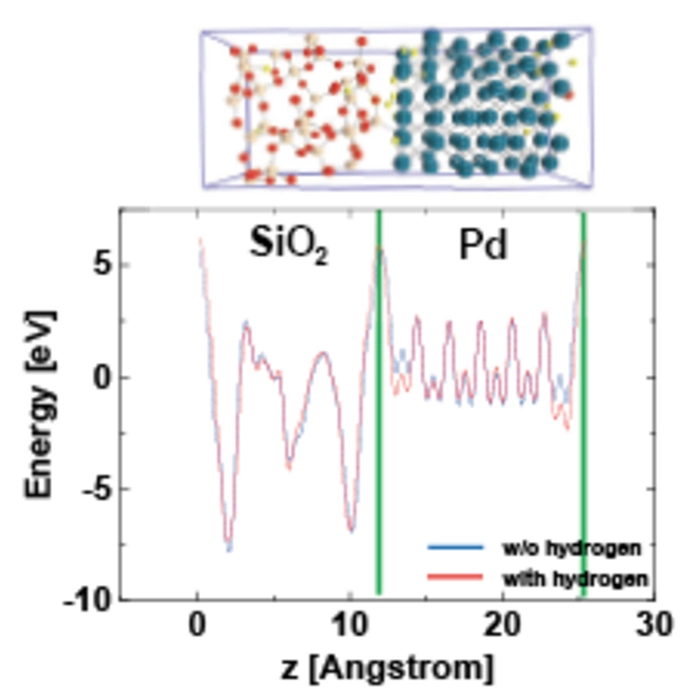
An atomic structure model of the interface between silicon dioxide (SiO2) and palladium (Pd), accompanied by a potential energy graph. The top model shows the junction where the two materials meet. The graph below displays energy levels in electron volts relative to the position along the z-axis in angstroms. It compares the electronic states with and without hydrogen over a 30-angstrom range. The data illustrates how the presence of hydrogen modifies energy fluctuations within the palladium layer, providing insight into the material's electronic response and its potential application in hydrogen sensing technologies.

Semiconductor junction/interface function

We are developing materials and forming bonds to improve the functionality of electronic devices such as transistors.

We are developing devices that utilize interface functions, such as variable resistance devices and memristors.

Group in charge
Electro-ceramics Group

OHSAWA, Takeo

A document on clarifying interface electron transport. The left graph shows the current-voltage characteristics of a gold and niobium-doped strontium titanate junction, comparing current density at 300 Kelvin and 78 Kelvin. The top right schematic depicts an experiment where hard X-rays strike a 10-nanometer gold layer on a strontium titanate substrate to observe electron emission. The bottom right graph displays X-ray photoelectron spectroscopy results, comparing titanium binding energy in electron volts across a temperature range from 80 to 300 Kelvin. This illustrates how temperature changes influence the electronic states and transport properties at the material interface.

Research on gate insulating films for the development of diamond and nitride devices

Group in charge
Semiconductor Defect Design Group

LIU, Jiangwei
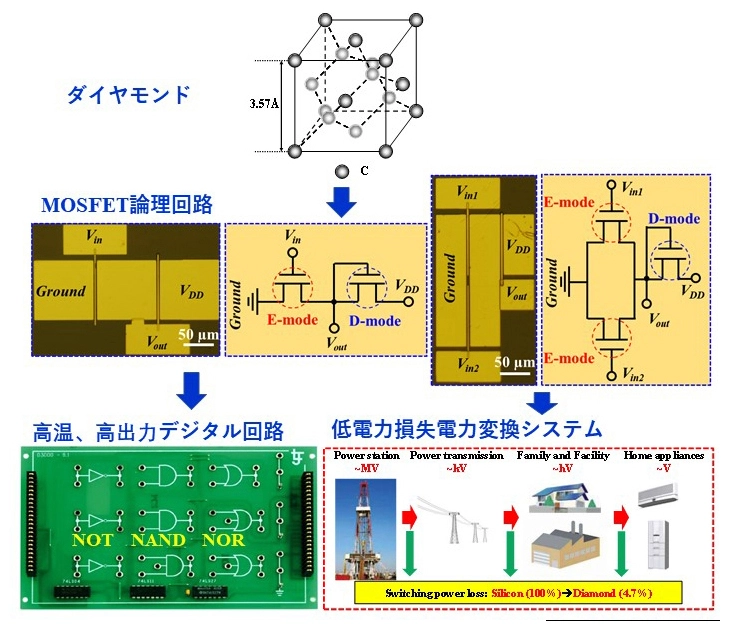
A flowchart illustrating diamond semiconductor development from crystal structure to social application. The top features a carbon crystal lattice with a 3.57 angstrom side. The middle section shows MOSFET logic circuits, including 50-micrometer scale micrographs and circuit diagrams for E-mode and D-mode configurations. The bottom displays practical applications: a digital circuit board with NOT, NAND, and NOR gates, and a power conversion system from power stations to appliances. It highlights a significant performance advantage, showing that diamond reduces switching power loss to 4.7 percent compared to 100 percent for conventional silicon-based systems.

Exploration of new materials

The appearance of new materials can change the industrial structure. We are currently searching for semiconductors with properties such as high mobility.

Functional exploration of non-diamond structure nitrides

Group in charge
Amorphous Material Group

OGAKI, Takeshi

Group in charge
Electro-ceramics Group

SUEHIRO, Takayuki
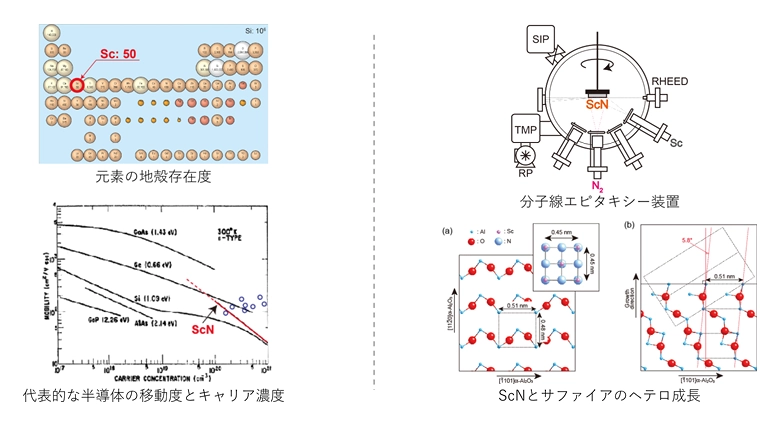
A comprehensive chart on Scandium Nitride (ScN) semiconductors. Top left: A periodic table highlighting Scandium's crustal abundance. Bottom left: A log-log graph comparing the mobility and carrier concentration of ScN against Silicon and Gallium Arsenide. Top right: A schematic of a Molecular Beam Epitaxy (MBE) system used for crystal growth. Bottom right: Atomic models illustrating the heteroepitaxial growth of Scandium Nitride on a sapphire substrate, detailing lattice spacings such as 0.45 and 0.51 nanometers. This material connects the abundant natural resources to advanced semiconductor fabrication and their crystalline structural analysis.

We would like to introduce the research and development of semiconductors at this center, with a particular focus on semiconductor applications related to light.

III-V semiconductors

We are working on compound semiconductor materials and their nanostructure control with the aim of developing highly efficient light emission and highly sensitive optical sensors.

We are developing III-V semiconductors including quantum dots

Group in charge
Semiconductor Epitaxial Structures Group

MANO, Takaaki OHTAKE, Akihiro KAWAZU, Takuya

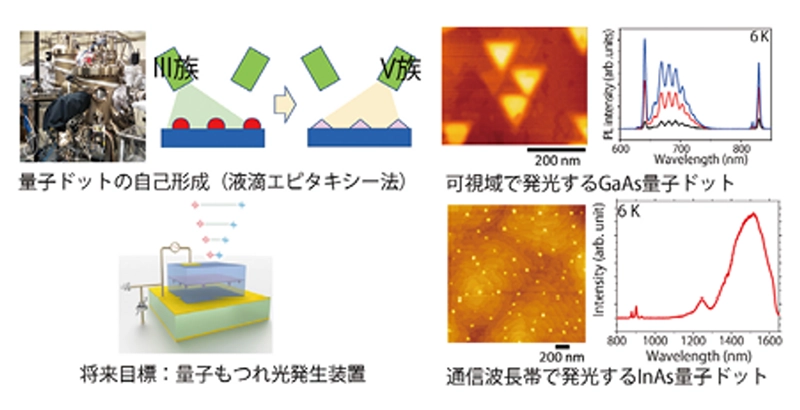
Four diagrams explaining quantum dot fabrication and emission properties. Top left: The self-formation process using Droplet Epitaxy, showing a schematic of group three element droplets reacting with group five elements alongside an apparatus photograph. Right side: Two sets of two hundred nanometer-scale microscopic images and photoluminescence intensity graphs at six Kelvin. The top set shows Gallium Arsenide quantum dots emitting in the visible spectrum, and the bottom set shows Indium Arsenide quantum dots emitting in the communication wavelength band. Bottom left: A conceptual image of a future entangled-light generator.

Nitride semiconductors

We are working on developing III-V nitride semiconductors, from aluminum nitride to indium nitride, with the aim of increasing their functionality.

We are developing nitride semiconductors including gallium nitride (GaN)

Group in charge
Electro-ceramics Group

SUMIYA, Masatomo

Group in charge
Semiconductor Epitaxial Structures Group

IMURA, Masataka

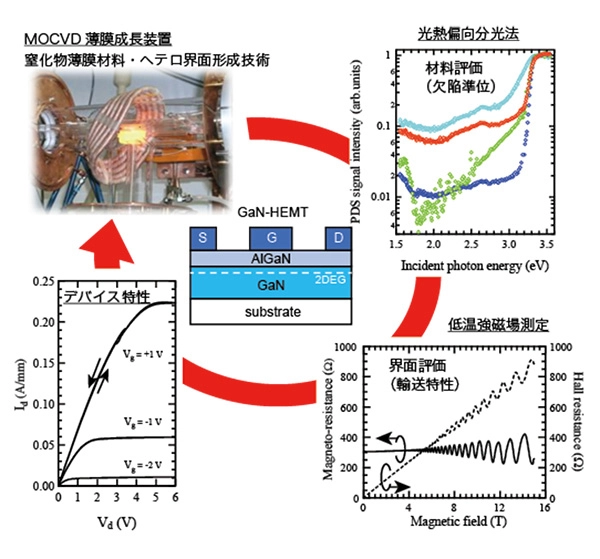
A diagram illustrating the fabrication and multi-faceted evaluation of nitride semiconductors. At the center is a cross-sectional view of a Gallium Nitride High Electron Mobility Transistor, or GaN-HEMT, showing the heterojunction interface between aluminum gallium nitride and gallium nitride layers. Surrounding this are an image of an MOCVD thin-film growth system and three evaluation graphs: current-voltage device characteristics, photothermal deflection spectroscopy for defect analysis, and low-temperature magneto-resistance measurements for interface transport properties. The circular arrangement depicts the research cycle from material growth to advanced device characterization and structural optimization.

Non-traditional semiconductors

We are currently exploring new semiconductors that are not classified as III-V or II-VI, especially direct transition type semiconductors.

Organic-inorganic hybrid crystals

Group in charge
Electro-ceramics Group

OHASHI, Naoki SAITO, Noriko
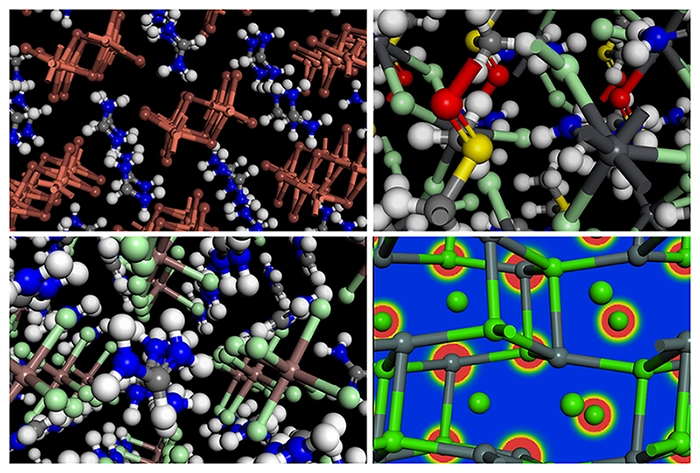
Four computer simulations revealing the internal atomic structure of hybrid crystals. The top two and bottom-left images depict intricate networks of atoms, such as carbon and nitrogen, forming functional molecular frameworks shown from various perspectives. The bottom-right image visualizes electron density distribution, featuring green atoms arranged regularly against a blue background with red and yellow contour lines representing the intensity of electron clouds. These visualizations demonstrate how computational science can precisely predict chemical bonding and the distribution of electrical charges within advanced materials at the atomic level.

New semiconductors such as silicide

Group in charge
Electro-ceramics Group

OHASHI, NaokiIMAI, Motoharu
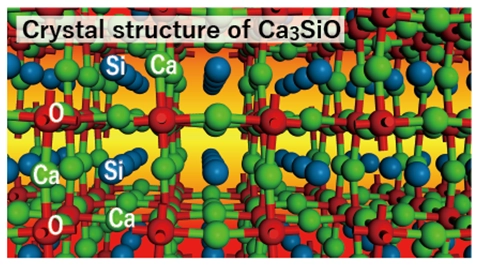
A three dimensional lattice model showing the atomic arrangement of a Calcium 3 Silicon Oxide (Ca3SiO) crystal. Red spheres represent oxygen atoms, green spheres represent calcium, and blue spheres represent silicon. These atoms are organized in a precise, grid-like structure, illustrating how they are interconnected to form a stable crystalline framework. The visual representation highlights the spatial relationships and repeating patterns of the atoms within the material, with an orange and red gradient background enhancing the depth of the molecular structure.

We would like to introduce the research and development of phosphors and optical materials at this center.

Phosphors for lighting and displays

We are conducting research and development aimed at reducing the power consumption of lighting, improving display quality, and improving the functionality of phosphors in the infrared region.

We are developing high-performance phosphors such as nitrides and oxynitrides.

Group in charge
Advanced Phosphor Group

TAKEDA, Takashi

A flowchart illustrating an efficient development cycle for new phosphors using data science and the single-particle diagnostic method. The process starts with synthesizing various powder products in a furnace based on proposed compositions. Next, promising particles emitting light at specific wavelengths are selected from a fifty-micrometer scale single-crystal mixture using a microscope. The cycle concludes with crystal structure analysis of the selected single particle to inform future material proposals. This illustrates an automated 'Smart Lab' system designed to accelerate material discovery through a continuous loop of synthesis, selection, and structural analysis.

We are developing new phosphor materials such as new composite compounds.

Group in charge
Advanced Phosphor Group

NAKANISHI, Hiroyuki
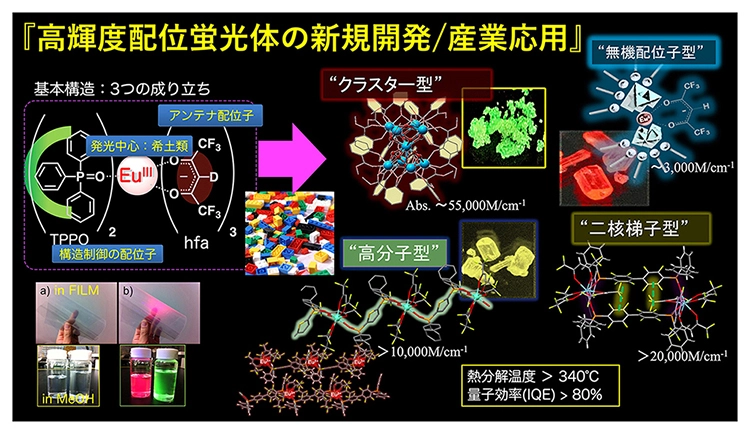
A technical summary of high-brightness coordination phosphors and their industrial applications. The left diagram illustrates a basic molecular model with europium at its core, featuring 'antenna ligands' for light collection. The modular assembly is likened to toy blocks, leading to the four complex architectures shown on the right: cluster, polymer, inorganic ligand, and dinuclear ladder types. Real-world samples, such as glowing films and solutions, are pictured in the center. The document highlights exceptional performance metrics, including thermal stability above 340 degrees Celsius and an Internal Quantum Efficiency (IQE) exceeding 80 percent, demonstrating both versatility and high efficiency.

Single crystals that emits high-brightness and high-power light

Group in charge
Optical Single Crystals Group

SHIMAMURA, KiyoshiVILLORA, Garcia
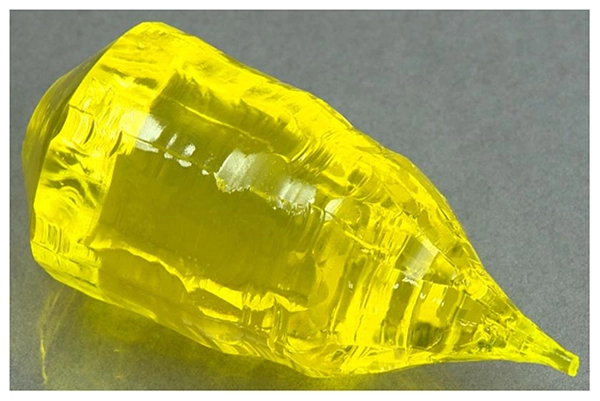
A photograph of a high-purity, vibrant yellow single crystal developed through advanced research. The crystal features a conical bulk shape with visible, regular growth steps and striations on its surface, which are characteristic of controlled crystalline growth. Its exceptional transparency and lack of internal flaws highlight the material's high quality and structural integrity. This single crystal represents a promising new optical material designed for high-brightness and high-power applications, showcasing the success of the synthesis process in achieving superior optical clarity.

Polycrystalline bulk laser material

We are developing ceramic laser materials for high-power lasers such as industrial lasers.

We are developing ceramic laser materials using advanced sintering technology.

Group in charge
Optical Ceramics Group

SUZUKI, TohruFURUSE, Hiroaki

Scintillator materials

We are developing scintillator materials for radiation detection, which are important in security and medical fields.

We are developing single crystal growth technology and exploring new materials.

Group in charge
Optical Single Crystals Group

SHIMAMURA, KiyoshiYUAN, Dongsheng

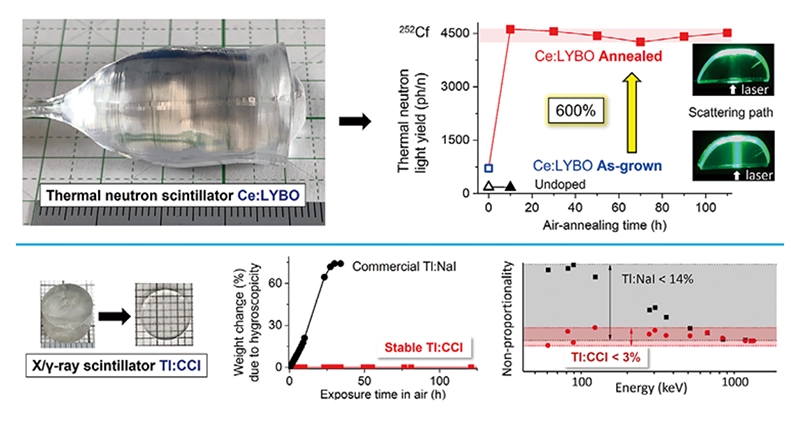
A technical document comparing two advanced scintillator crystals. The top section features a thermal neutron scintillator, Cerium-doped Lutetium Yttrium Borate (Ce:LYBO), with a graph showing that air-annealing increases its light yield by 600 percent compared to as-grown samples. The bottom section introduces an X-ray and gamma-ray scintillator, Thallium-doped Cesium Chloride (Tl:CCl). A central graph demonstrates its superior stability against humidity, showing negligible weight change compared to commercial Thallium-doped Sodium Iodide (Tl:NaI). The bottom-right graph highlights high precision, with non-proportionality under 3 percent, significantly lower than the 14 percent found in commercial alternatives.

Transparent polycrystalline optical material

We are developing transparent and translucent ceramics with various optical properties such as infrared transparency.

Group in charge
Polycrystalline Optical Material Group

MORITA, Koji
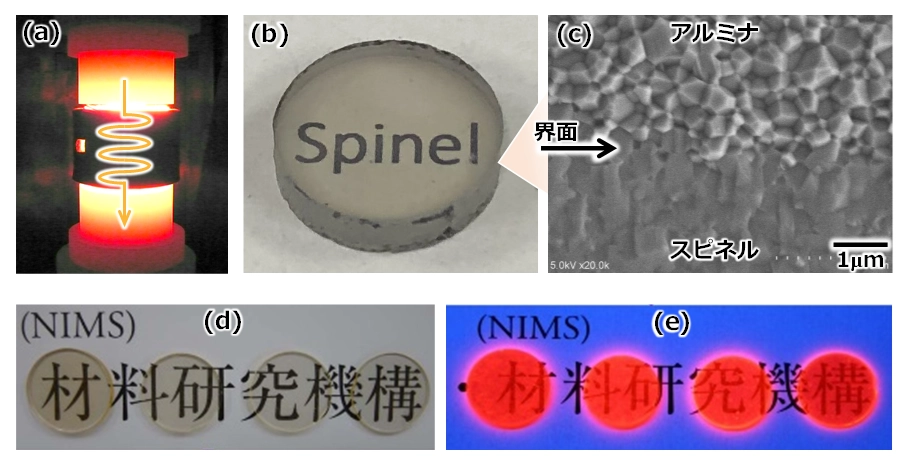
Five panels showing the fabrication and functional evaluation of transparent ceramics. (a) High-temperature synthesis using a spark plasma sintering system. (b) A spinel ceramic sample exhibiting high optical transparency, clearly revealing the text 'Spinel' underneath. (c) A scanning electron microscope image showing a dense heterojunction interface between alumina and spinel at the nanometer scale. (d, e) Multiple disk samples placed over text, comparing their exceptional clarity under ambient light (d) with vivid red luminescence under excitation (e).

Electro-optic/magneto-optic materials

We are developing electro-optical and magneto-optical materials used for wavelength conversion and polarization control.

We are developing magneto-optical materials (isolator materials) for short wavelengths using transparent magnetic materials.

Group in charge
Optical Single Crystals Group

SHIMAMURA, KiyoshiVILLORA, Garcia
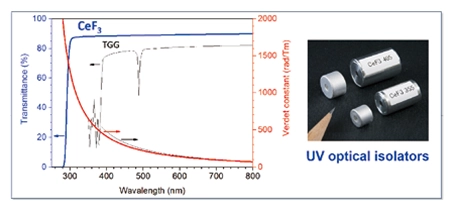
Technical data for Cerium Fluoride (CeF3) in ultraviolet optical isolators. The left graph plots transmittance and the Verdet constant against wavelength from three hundred to eight hundred nanometers. It shows the material maintains high transparency and performance below three hundred nanometers, surpassing the conventional TGG crystal. The right photo shows several small cylindrical components, ranging from a few millimeters to one centimeter in size, compared with a pencil tip to demonstrate their compact scale for practical use.

We are developing optical element materials that apply ferroelectric materials

Group in charge
Quantum Photonics Group

KURIMURA, Sunao

Technical summary of a slab waveguide non-linear optical device. The left photograph shows the 'Generation of correlated photon pairs,' where blue pump light from a gallium nitride laser diode is directed into a crystal block. The right image displays the microscopic 'periodically poled structure' with a 3.2-micrometer pitch. This magnified view reveals fine, regular vertical stripes on a green background, designed for efficient optical property conversion through microscopic structural engineering.

Structural color materials

We are developing color-forming materials with controlled photonic band structures

Group in charge
Nanophotonics Group

FUDOUZI, Hiroshi

Characteristics of photonic elastomers that change color under mechanical stimuli. Section A shows a film with a rainbow gradient. The graph below plots reflectance against wavelength from four hundred fifty to seven hundred nanometers, showing peak shifts. Section B demonstrates color change from orange to green when the material is stretched. Section C is a magnified image of a thin film with micro-cracks creating iridescent hues. This illustrates how physical strain is visually represented through structural color changes.

We are conducting research toward the development of devices that apply metamaterials

Group in charge
Semiconductor Epitaxial Structures Group

MIYAZAKI, Hideki

Group in charge
Nanophotonics Group

IWANAGA, Masanobu
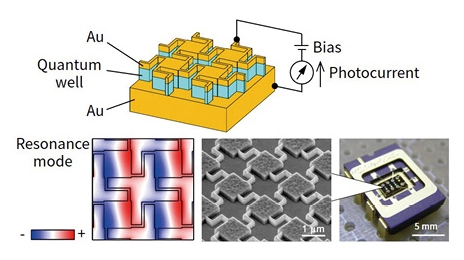
A diagram and photos of a next-generation sensor using metamaterial technology. The top shows a three-dimensional schematic of a device where a quantum well is sandwiched between gold layers to extract photocurrent under bias. The bottom left shows a resonance mode simulation of electric field distribution. The bottom center is a scanning electron microscope image of the one micrometer scale fabricated surface, and the bottom right shows the final five millimeter sized packaged device.

We would like to introduce the research and development of nanostructures and composite materials at this center.

Nanophotonics

We are developing photonic devices adopting microfabrication and nanomaterial synthesis.

Development of highly sensitive sensors using metamaterials

Group in charge
Semiconductor Epitaxial Structures Group

MIYAZAKI, Hideki

Group in charge
Nanophotonics Group

IWANAGA, Masanobu

An illustration of metamaterial technology for medical detection. Section A shows a ten millimeter scale metasurface substrate and a magnified image of silicon nano-pellets in a five hundred nanometer period. Section B depicts targeting cell-free DNA released during exercise. The right side illustrates fluorescence detection, where target molecules are captured on purple cylindrical structures on the metasurface, emitting a yellow glow for high-sensitivity detection.

Development of quantum dots and quantum structures by epitaxy

Group in charge
Semiconductor Epitaxial Structures Group

MANO, TakaakiOHTAKE, AkihiroKAWAZU, Takuya

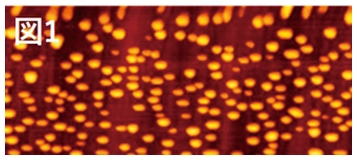
An atomic force microscopy image labeled 'Figure 1,' showing the surface of quantum dots. Numerous tiny, bright dot-like structures are scattered across a dark background. The image demonstrates how individual quantum dots are self-formed through crystal growth and distributed at high density on the substrate.

Nano-powders

We are proceeding with the development of nanopowder as a raw material for making ceramics and to obtain the advantage of high specific surface area.

Synthesis of nanopowder raw materials for producing transparent optical ceramics

Group in charge
Polycrystalline Optical Material Group

LI, Jiguang

A technical chart showing the morphology and luminescence of nano-powders. Four panels demonstrate color control using rare-earth dopants: Europium for red, Terbium for green, Cerium for yellow, and Dysprosium for white. Each panel features a scanning electron microscope image of five hundred nanometer scale powders, a photo of the glowing powder, and a CIE chromaticity diagram plotting the color coordinates. It illustrates the precise tuning of emission colors while maintaining powder morphology through elemental doping.

Synthesis of nanopowder for highly functional chemical sensors

Group in charge
Electroceramics Group

SAITO, Noriko

Structural images of zinc oxide microparticles and their gas-sensing performance. The left electron microscope image shows polygonal pyramidal particles with labeled crystal planes at a 50 nanometer scale. The right graph plots electrical resistance in ohms against time in seconds for isoprene gas. A 0.5 percent gold-loaded sample (red line) shows much larger resistance drops than the non-loaded sample (black line) as gas concentration increases from 50 to 1000 parts per billion, demonstrating significantly enhanced sensitivity.

Nanocomposite

We are developing nanocomposites with the aim of creating high-strength substrates and materials with controlled heat conduction.

Development of non-oxide heat-resistant high-strength ceramics

Group in charge
Polycrystalline Optical Material Group

VASYLKIV, Oleg

Data on the strength and flexibility of ultra-high-temperature ceramics. Graph A plots flexural strength against engineering strain, showing increased ductility as temperature rises from sixteen hundred to two thousand degrees Celsius. Graph B compares strength and strain to fracture, highlighting a plastic deformation zone at high temperatures. Section C features a photograph of a complex ceramic component with cross-shaped protrusions, demonstrating the material's advanced processing capabilities.

Development of composite ceramics with dispersed nanotubes

Group in charge
Optical Ceramics Group

ESTILI, Mehdi
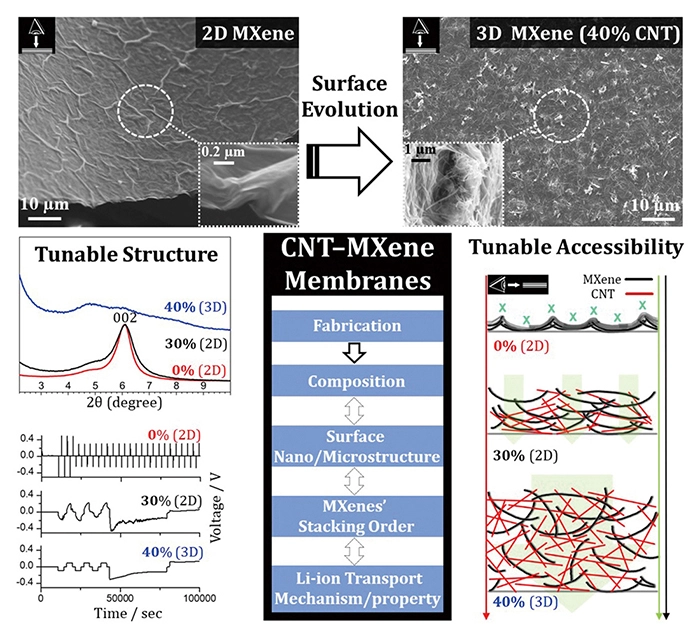
Research data on a hybrid membrane combining carbon nanotubes and the two-dimensional material MXene. Top electron microscope images show surface evolution from smooth 2D MXene to a fibrous 3D structure by adding forty percent CNT. Bottom-left graphs illustrate changes in crystal structure and voltage characteristics across zero, thirty, and forty percent CNT content. Right-side schematics explain tunable accessibility, showing how CNTs create internal spaces to facilitate lithium-ion transport. A central flowchart outlines the research process from fabrication to property evaluation.

We would like to introduce the research and development of dielectrics and piezoelectrics at this center.

Search for new ferroelectric and piezoelectric materials

We are developing dielectrics and piezoelectrics for various applications such as electronics, sensors, and actuators.

Search for dielectrics and piezoelectrics other than perovskite-derived structures

Group in charge
Electro-ceramics Group

SHIMIZU, Takao

Group in charge
Nanophotonics Group

IWANAGA, Masanobu

Two electron microscope images showing research results. The left is a cross-sectional view of a one micrometer thick yttrium-doped hafnium oxide film grown on platinum and silicon. An inset graph shows a hysteresis loop proving ferroelectricity. The right side is a surface image of a ten nanometer thick wurtzite-type aluminum scandium nitride film. It shows polarization switching within square regions where plus six volts and minus six volts were applied, resulting in distinct contrast levels.

Dielectric material exploration using data science

Group in charge
Nano Electronics Device Materials Group

NAGATA, Takahiro
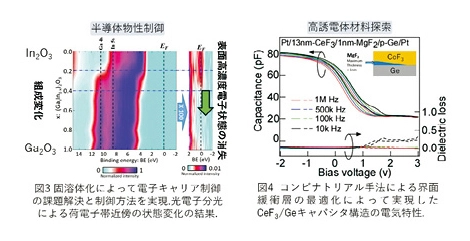
Two figures showing material development via combinatorial methods. Figure 3 on the left is a heat map of semiconductor property control, illustrating the disappearance of high-density surface electron states as the composition shifts from Indium Oxide to Gallium Oxide. Figure 4 on the right explores high-dielectric materials, featuring a schematic of a capacitor with a thickness-graded Magnesium Fluoride buffer layer and Cerium Fluoride on Germanium. An accompanying graph plots capacitance versus bias voltage measured at frequencies from 10 kilohertz to 1 megahertz.

Development of MEMS devices

We are developing materials for the further development of MEMS, such as frequency filters and magnetic sensors.

Development of a high-sensitivity sensor using MEMS that takes advantage of the hardness of diamond

Group in charge
Ultra-wide Bandgap Semiconductors Group

LIAO, Meiyong
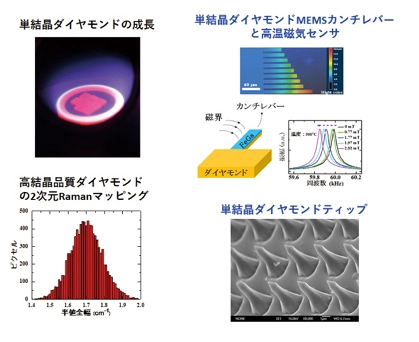
Device development leveraging the properties of diamond. Top left shows single-crystal diamond growth in plasma. Bottom left is a statistical graph of 2D Raman mapping for quality evaluation. Top right features a thermal image of diamond MEMS cantilevers and a graph showing frequency shifts under magnetic fields at five hundred degrees Celsius, indicating sensor applications. Bottom right is an electron microscopy image of single-crystal diamond tips with an array of sharp, aligned protrusions.

Search for low dielectric constant glass and high heat resistant glass

We are investigating amorphous materials without grain boundaries not only as optical materials but also as insulators and dielectrics.

Development of heat-resistant, high-hardness glass for high-power circuits and devices

Group in charge
Amorphous Material Group

SEGAWA, Hiroyo
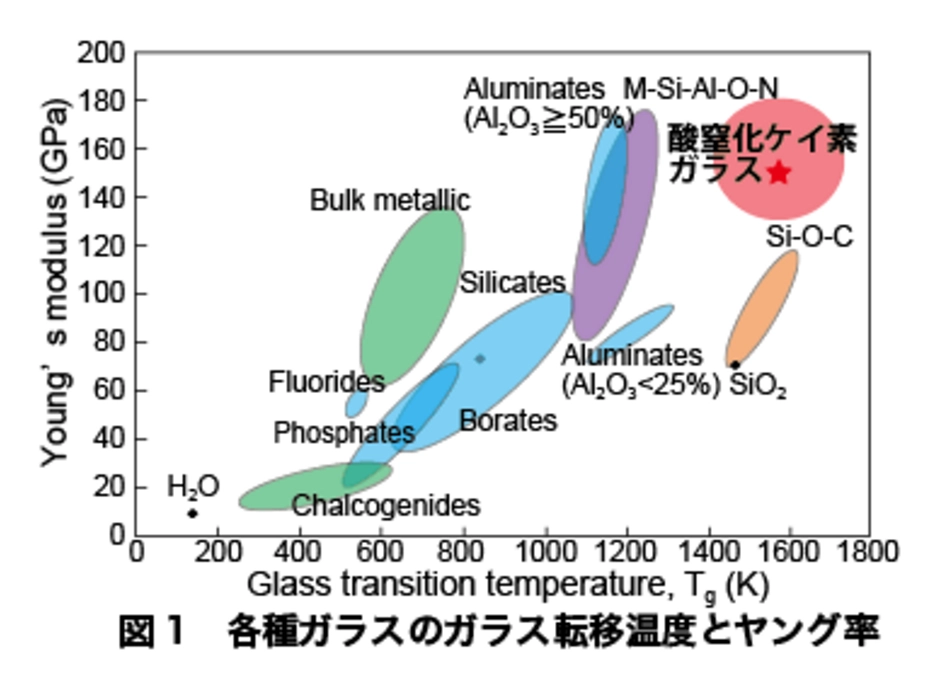
A scatter plot titled 'Figure 1: Glass transition temperature and Young's modulus of various glasses.' The horizontal axis shows glass transition temperature in Kelvins, and the vertical axis shows Young's modulus in gigapascals. Ellipses represent material groups like Fluorides and Silicates. In the top-right, Silicon Oxynitride Glass is marked with a red star, indicating exceptionally high heat resistance at approximately sixteen hundred Kelvins and high stiffness at one hundred sixty gigapascals compared to other materials.

We would like to introduce the research and development of chemically functional materials such as ionic conductors and adsorption materials at this center.

Hydrogen ion conductors

We are developing hydrogen ion conductors for energy applications such as fuel cells.

We are developing polymer electrolyte materials that are environmentally friendly

Group in charge
Environmental Circulation Composite Materials Group

KIM, JedeokTAMURA, Kenji

A cycle diagram of eco-friendly alternative polymer material development. The top section focuses on molecular design of non-fluorinated polymers, showing polymer chains and molecular models. The bottom left illustrates enhancing ion paths and stability using nanoparticles like hexagonal lattices. The bottom right depicts device applications, explaining how electrolyte membranes generate or use green hydrogen and oxygen for clean energy. Arrows connect these three elements to represent a continuous research and development cycle.

Environmental Circulation materials

We are developing materials with low environmental impact that utilize biopolymers and natural resources.

Utilization of biopolymers and biomass

Group in charge
Environmental Circulation Composite Materials Group

TAMURA, Kenji

Research on enhancing plastic strength using industrial lignin. The top shows a conifer illustration, glycol lignin powder, and its molecular structure. Central electron microscopy images compare composites, showing how adding lignin strengthens the bond between resin and carbon fibers. Bottom 3D bar graphs plot tensile modulus and tensile strength against the content of carbon fibers and lignin in weight percent. It demonstrates that increasing lignin content improves both stiffness and strength, highlighting the synergy between biomass use and high-performance design.

Capture and recovery of elements using clay minerals, etc

Group in charge
Environmental Circulation Composite Materials Group

TAMURA, KenjiSAKUMA, HiroshiSUEHARA, Shigeru

A schematic illustrating two research themes for utilizing waste and natural substances. The top section outlines the production of carbonate crystals as reinforcing materials for biomass plastics, combining carbon dioxide from emissions with calcium and magnesium ions from cement waste or seawater. The bottom section explains hazardous substance adsorbents using layered crystals, using a caffeine molecule as an example to show how substances are trapped and recovered within the interlayer spacing of clay structures.

Process development for ceramics reuse

Group in charge
Amorphous Material Group

SEGAWA, Hiroyo

Group in charge
Electro-ceramics Group

OHASHI, Naoki
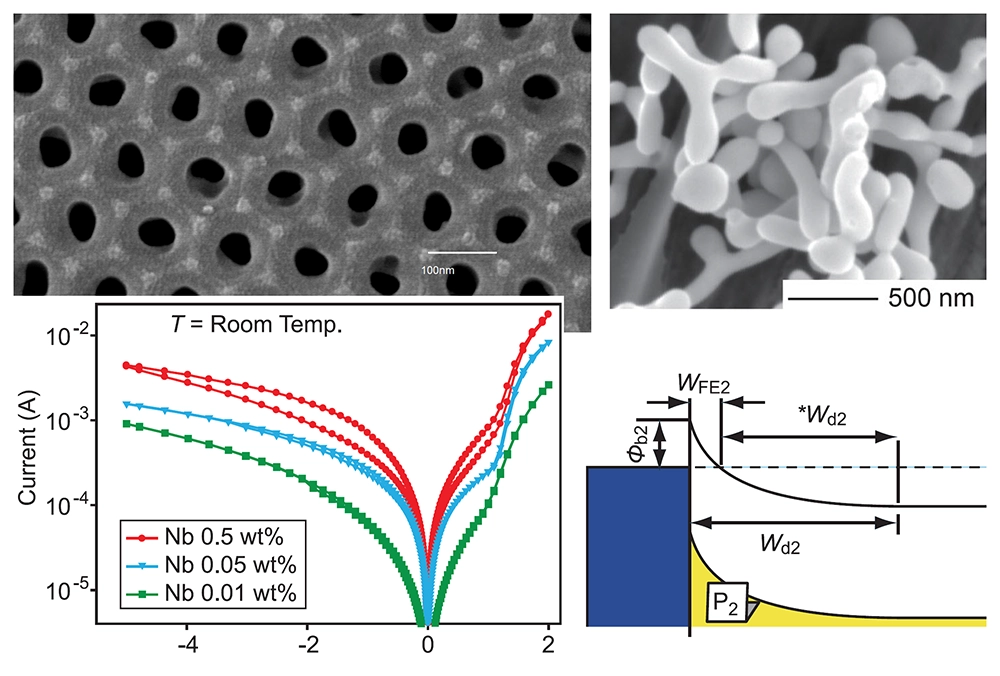
Four diagrams illustrating the microstructure and electrical properties of ceramic materials. Top left is an electron micrograph of a porous structure with one hundred nanometer scale holes. Top right shows a dendritic microstructure at a five hundred nanometer scale. The bottom left graph plots current against voltage at room temperature, demonstrating how current decreases as niobium doping drops from zero point five to zero point zero five and zero point zero one weight percent. Bottom right is an energy band diagram of the material interface, modeling energy barrier height and depletion layer width.

Semiconductor for chemical sensors

We are developing sensor materials that utilize the chemical activity of semiconductor surfaces.

Thin film sensor materials such as zinc oxide

Group in charge
Electro-ceramics Group

ADACHI, YutalaSAITO, Noriko

Four diagrams illustrating the principles of Zinc Oxide gas sensors. Top left: Schematic showing current control through depletion layer changes induced by oxygen and hydrogen adsorption or desorption on a Magnesium Zinc Oxide film. Top right: Graph of sensor response for eight hundred parts per million hydrogen at three hundred and fifty degrees Celsius, showing a significant increase in response as film thickness decreases from one hundred to twenty nanometers. Bottom left: Crystal structure model featuring polar Zinc and Oxygen faces. Bottom right: Coaxial Impact Collision Ion Scattering Spectroscopy, or CAISISS, spectra of polarity-controlled Zinc Oxide thin films, plotting intensity against incident angle.

We would like to introduce the research and development conducted at our center regarding the exploration of the substances and functions of amorphous materials.

oxynitride glass

We are developing mixed anionic glass materials containing oxygen and nitrogen to improve the heat resistance, chemical durability, and optical properties of glass.

Development of nitrogen-containing glass materials such as silicon oxynitride

Group in charge
Amorphous Material Group

SEGAWA, Hiroyo
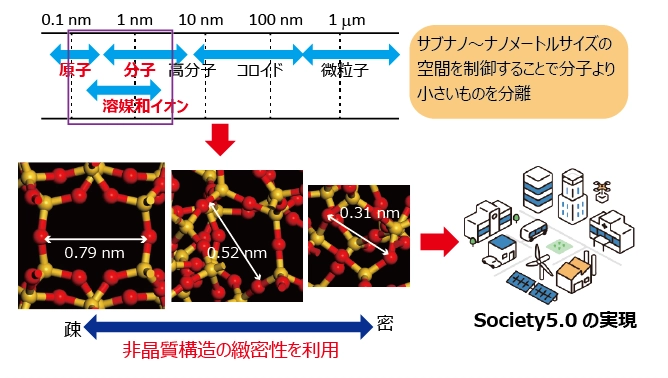
A conceptual diagram illustrating the density control of amorphous structures and their social implementation. The top section features a size scale from zero point one nanometers to one micrometer, classifying atoms, molecules, solvated ions, polymers, colloids, and fine particles. The center displays three atomic network models progressing from 'Sparse' to 'Dense,' with specific pore sizes labeled as zero point seven nine nanometers, zero point five two nanometers, and zero point three one nanometers. The right side includes an illustration of a smart city and the text 'Realizing Society five point zero,' indicating how sub-nanometer scale control contributes to future social infrastructure.
Research Center for Electronic and Optical Materials SITE MAP