Methods and technologies / Characterization and measurements | Research Center for Electronic and Optical Materials

Back to top

Methods and technologies
Characterization and measurements

The technologies used at this center can be broadly divided into synthesis/manufacturing technology and evaluation analysis technology.
This page focuses specifically on evaluation and measurement. Please see 【another page 】for Synthesis and processing methods.

There are also various ways to evaluate the obtained materials. Methods for investigating crystal and molecular structures, methods for evaluating electrical properties, methods for evaluating optical properties, and spectroscopic analysis for investigating electronic structures and lattice vibrations are also used. In addition, chemical evaluations such as catalytic properties and adsorption properties, as well as methods for investigating mechanical properties such as heat resistance and strength, are also used.

We also have equipment available for use by outside organizations. If you are interested, please inquire.

【Synthesis and processing】 page

Here, techniques for strctural analysis in this center will be introduced.

Scanning electron microscopy

We perform a variety of analyzes by combining scanning electron microscopes with various equipment such as spectrometers.

Evaluation of shape and defect structure using cathodoluminescence and electron beam induced current

Group in charge
Semiconductor Defect Design Group

CHEN, Jun

CL images of Mg-implanted GaN. Top: 10µm micrographs comparing uniform areas to white spots. Bottom: schematics showing an electron beam scanning beveled layers, revealing light emission at dislocation sites.

Transmission electron microscopy

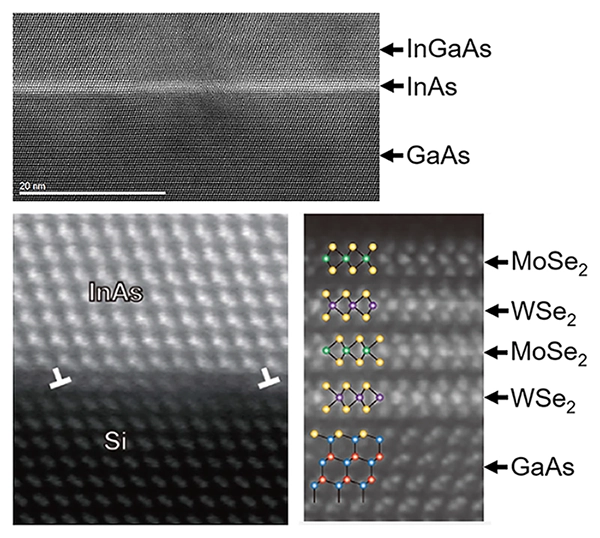
Transmission electron microscopy is used for various structural evaluations such as nano-sized structures and crystal defects.

Three TEM images. Top: 20nm scale GaAs/InAs layers. Bottom left: InAs on Si with 2 interface dislocations marked by T symbols. Bottom right: alternating WSe2/MoSe2 layers on GaAs, with crystal models showing precise stacking.

Probe microscopes

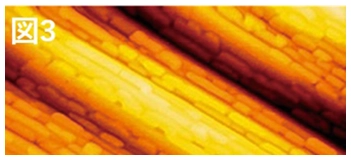
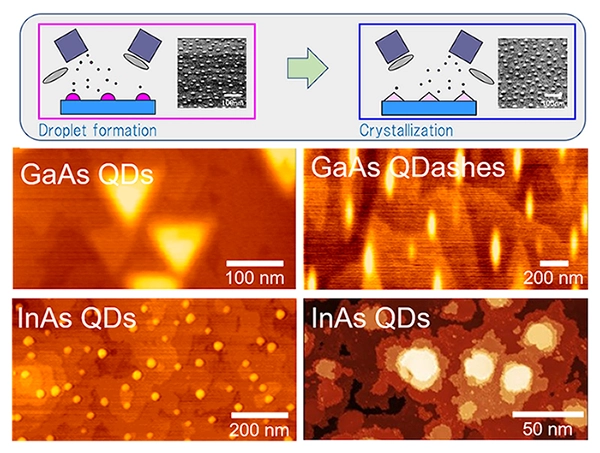
Atomic force microscopy (AFM) is used to evaluate nano-sized surface.

AFM image of a semiconductor surface. Parallel diagonal stripes show atomic steps just one atomic layer high. This confirms an extremely smooth crystal surface, precisely controlled at the atomic level. Nanostructures via droplet epitaxy. Top: schematic of crystallization. Bottom: 4 AFM images of GaAs QDs/Qdashes and InAs QDs (50 to 200nm), demonstrating diverse shape control at the atomic level.

X-ray diffraction

It is used not only to determine crystal structure, but also to evaluate various structures such as thin film thickness and particle size.

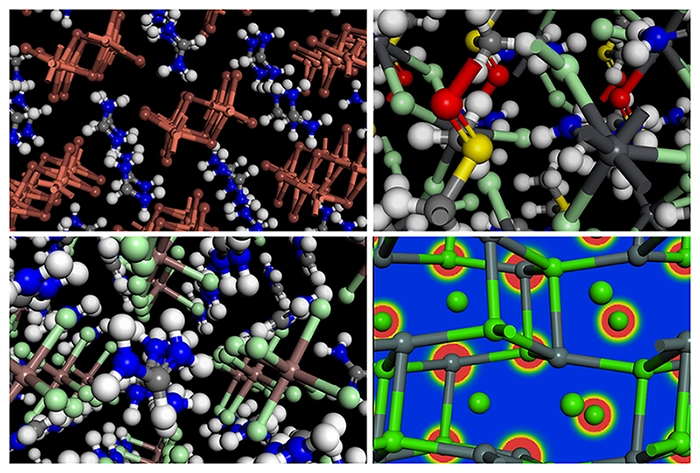
Hybrid crystal simulations. Three panels show carbon and nitrogen networks. Bottom right: electron density with red and yellow contours around atoms.

Electron beam diffraction

We utilize various electron beam diffraction techniques such as transmission electron microscopy, RHEED, and LEED to identify crystal structures and surface structures.

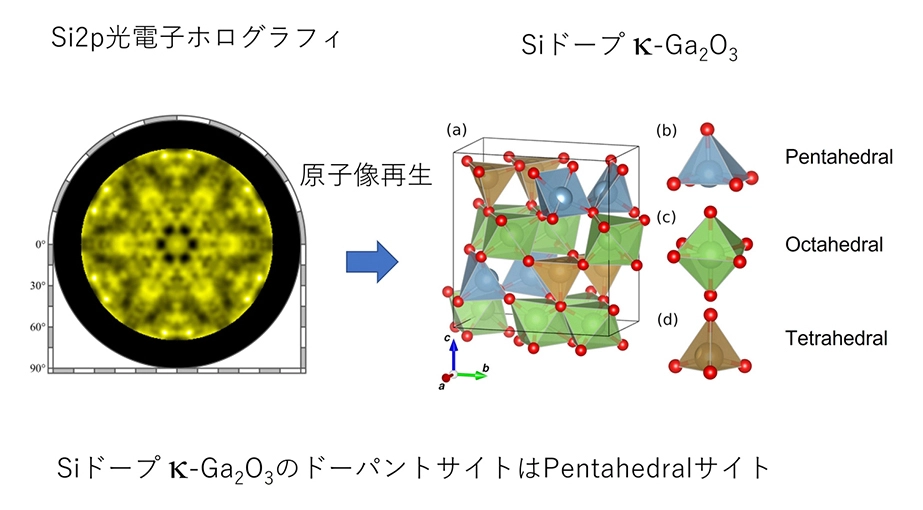
By analyzing the emission direction of photoelectrons observed using X-ray photoelectron spectroscopy or ultraviolet photoelectron spectroscopy (photoelectron diffraction method), it is also possible to identify the atomic arrangement on the top-most surface and sub-surface

Group in charge
Nano Electronics Device Materials Group

YAMASHITA, Yoshiyuki

Photoelectron holography. Left: reconstructed atomic image. Right: crystal models of Si-doped κ-Ga2O3. The analysis identifies the 5-fold Pentahedral site as the stable dopant position among 3 candidate sites.

We will introduce state analysis and composition analysis at this center.

Electron spectroscopy

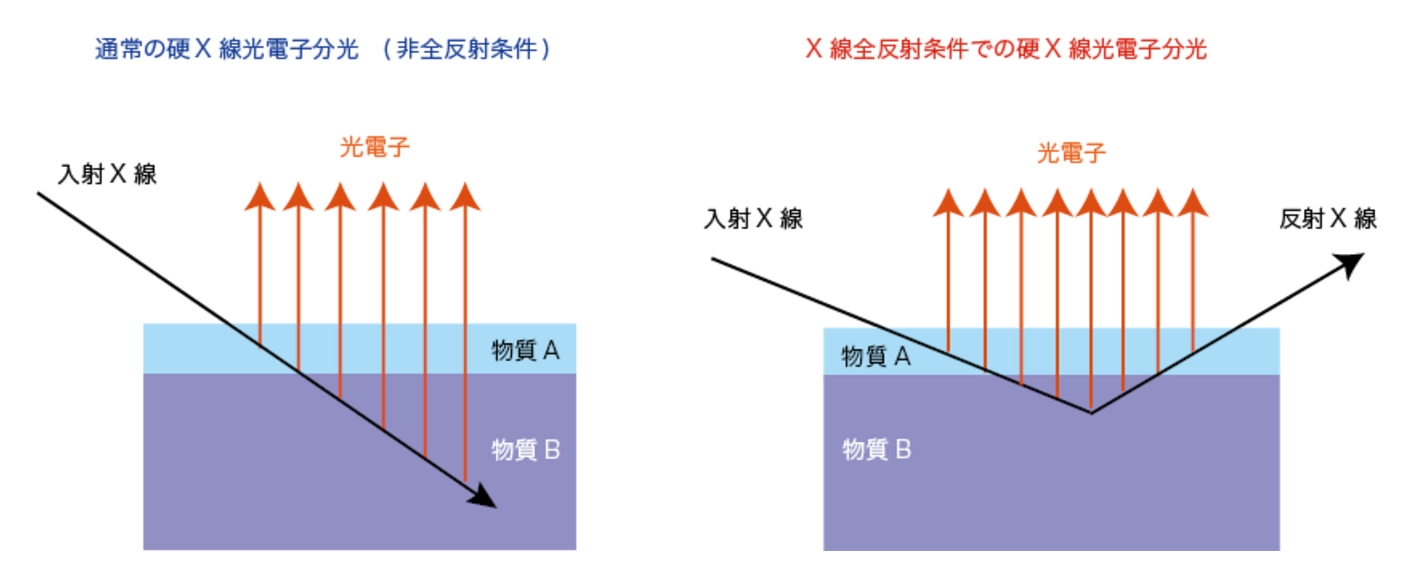
In particular, we utilize photoelectron spectroscopy, including hard X-ray photoelectron spectroscopy, to evaluate the chemical composition and electronic structure of substances and materials.

Hard x-ray photoelectron spectroscopy

Group in charge
Electro-ceramics group

UEDA, Shigenori

Hard X-ray Photoelectron Spectroscopy. Left: non-total reflection for bulk observation. Right: total reflection at a grazing angle for selective interface observation, demonstrating probe depth control in stratified samples.

Evaluation of crystal defect states

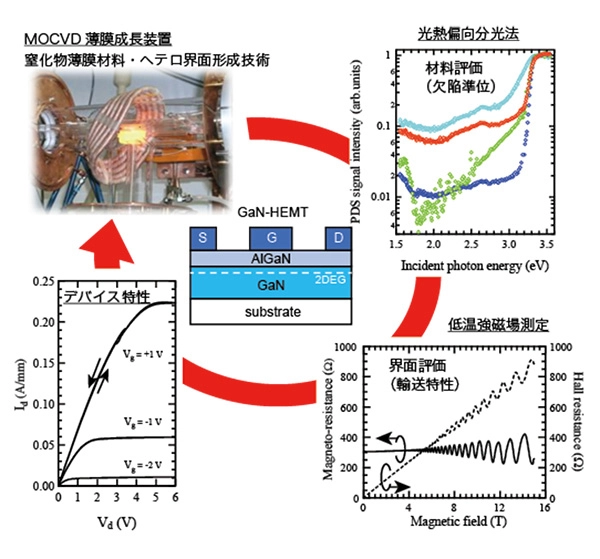
Development of evaluation device: Photothermal deflection spectroscopy

Group in charge
Electro-ceramics Group

SUMIYA, Masatomo

Nitride semiconductor research. Center: GaN HEMT cross section. Around it: growth system photo and three evaluation graphs of device, material, and interface.

Evaluation using isotope tracer

Group in charge
Electro-ceramics group

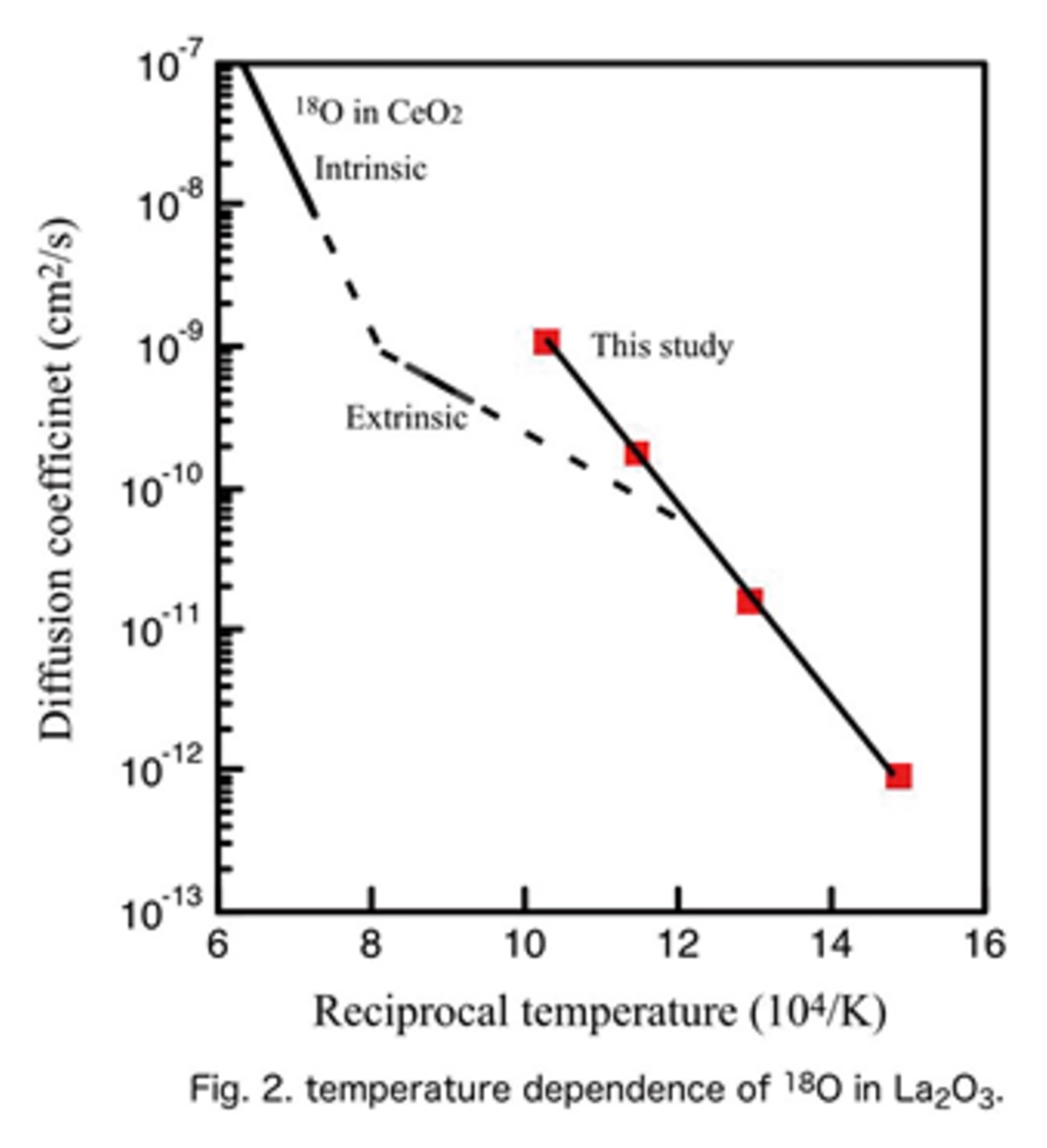
Arrhenius plot of 18O in La2O3. Red squares show a linear decrease from 10 to the minus 9th to 10 to the minus 12th as reciprocal temperature (1000/T) increases from 10 to 15.

cathodoluminescence

Group in charge
Semiconductor Defect Design Group

CHEN, Jun
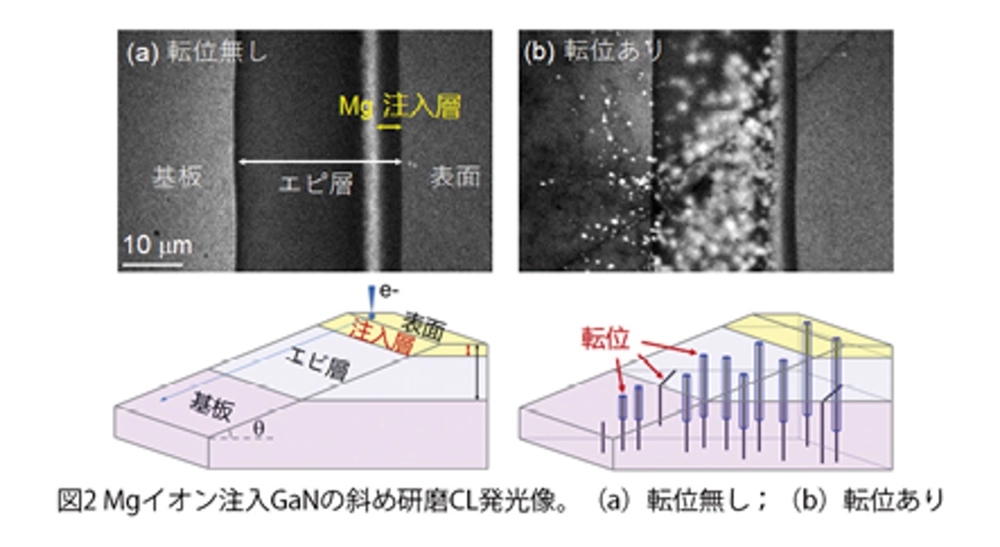
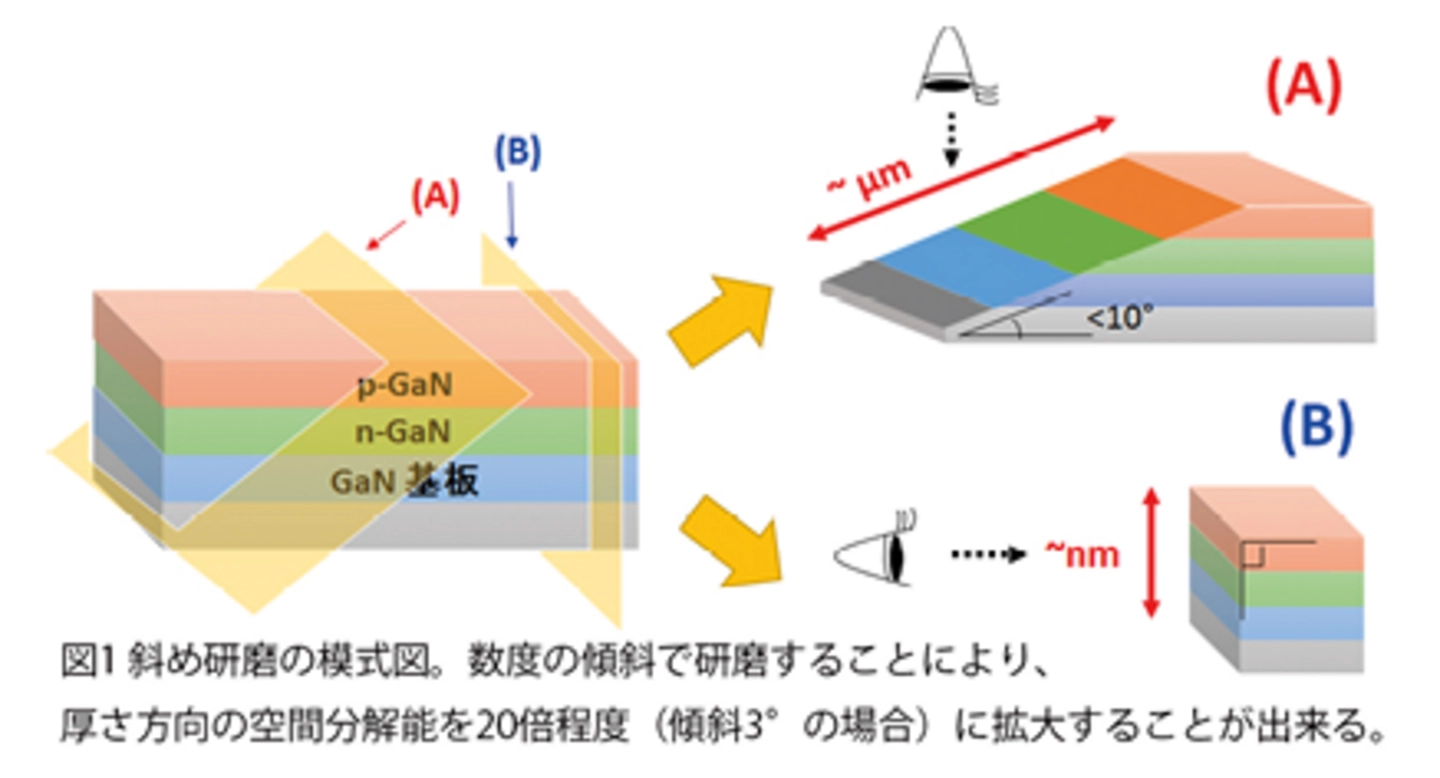
Bevel polishing for semiconductors. Small angles like 3 degrees expand nanometer layers to micrometer widths on the surface, increasing resolution in the thickness direction by 20 times.

We would like to introduce the property evaluation techniques at this center.

Installation of physical property evaluation method

We are developing and implementing property evaluation equipment necessary for material development, such as new measurement equipment that captures quantum phenomena.

Development of equipment for quantum optical measurements

Group in charge
Quantum Photonics Group

KURODA, Takashi

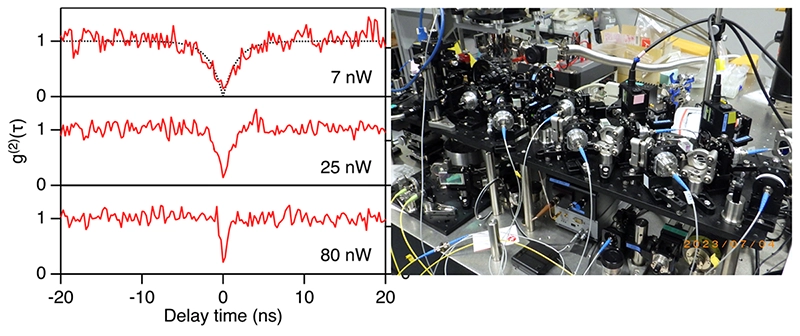
Quantum optics setup and data. Left: 3 graphs (7, 25, 80 nW) showing a sharp dip at 0 nanoseconds. This proves single-photon emission where light is generated one particle at a time.

ODMR, opticaly detected magnetic resonance

Group in charge
Semiconductor Defect Design Group

TERAJI, TokuyukiWATANABE, Kenji

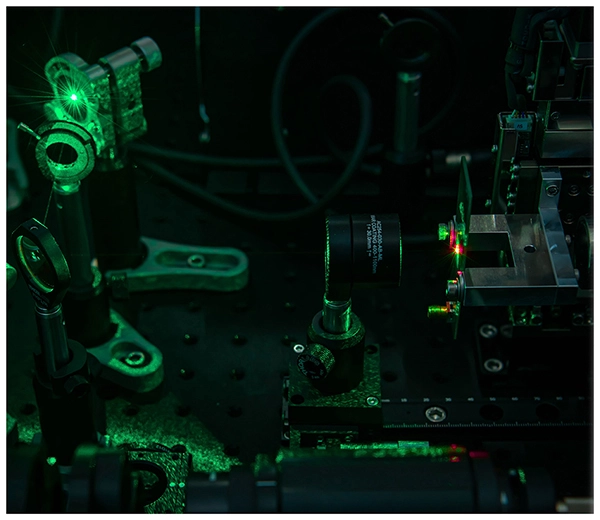
Close-up of an optical setup. A bright green laser beam passes through lens holders on a black breadboard, focusing on a component. This illustrates precise light targeting for experiments.

Application of data science

We are proceeding with efforts to automate and make our equipment autonomous, with the aim of speeding up substance searches, avoiding missing data and human-related variations, and creating libraries for data utilization.

Development of automatic measurement system

Group in charge
Nano Electronics Device Materials Group

YAGYU, Shinjiro

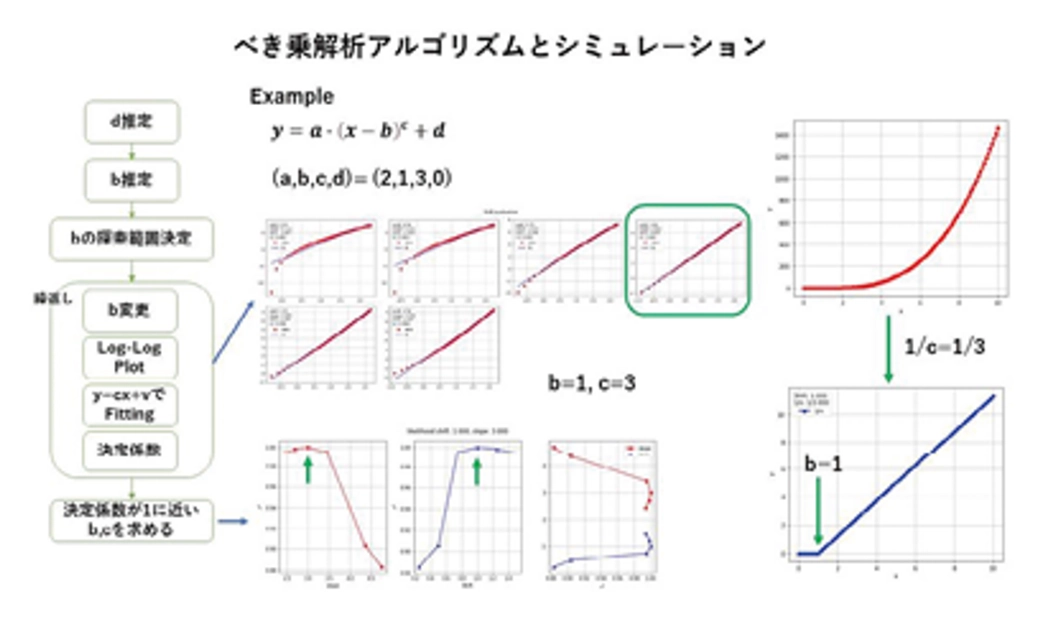
Power law analysis. Left: Flowchart to find parameters. Center: Formula y equals a times x minus b to the c plus d. Right: A red power law curve is linearized into a blue line starting at b using the reciprocal of c.

Building a combinatorial smart lab system

Group in charge
Nano Electronics Device Materials Group

NAGATA, Takahiro

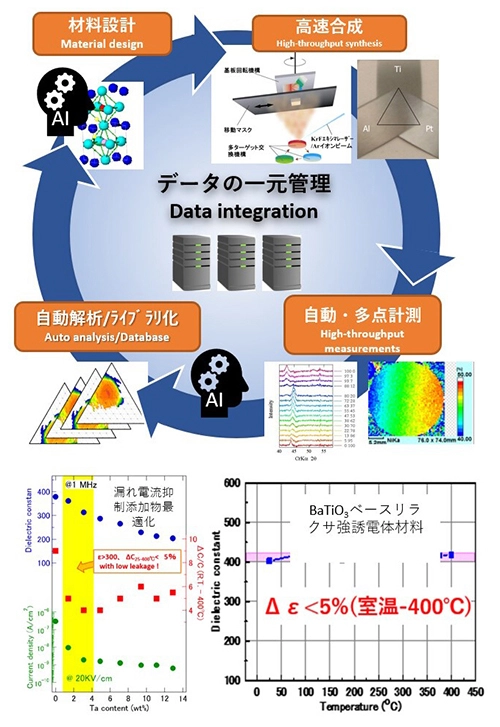
AI-driven material development. Top: workflow of design, synthesis, and analysis. Bottom: BaTiO3 property graphs showing high thermal stability with less than 5 percent dielectric variation from room temperature to 400 degrees.

Introducing calculations and analysis at this center.

Analysis program development

We are developing programs necessary for evaluator analysis of material properties.

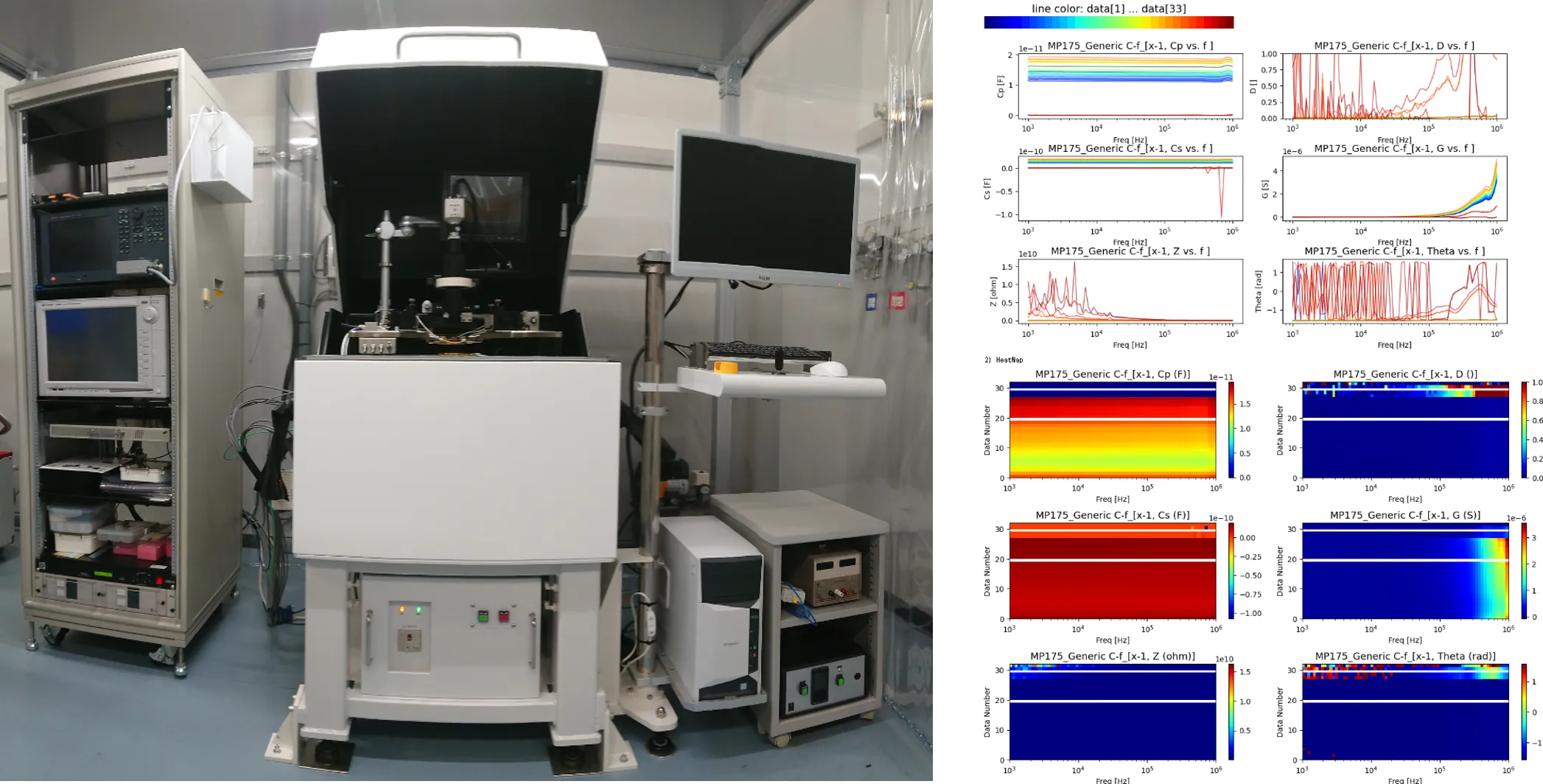
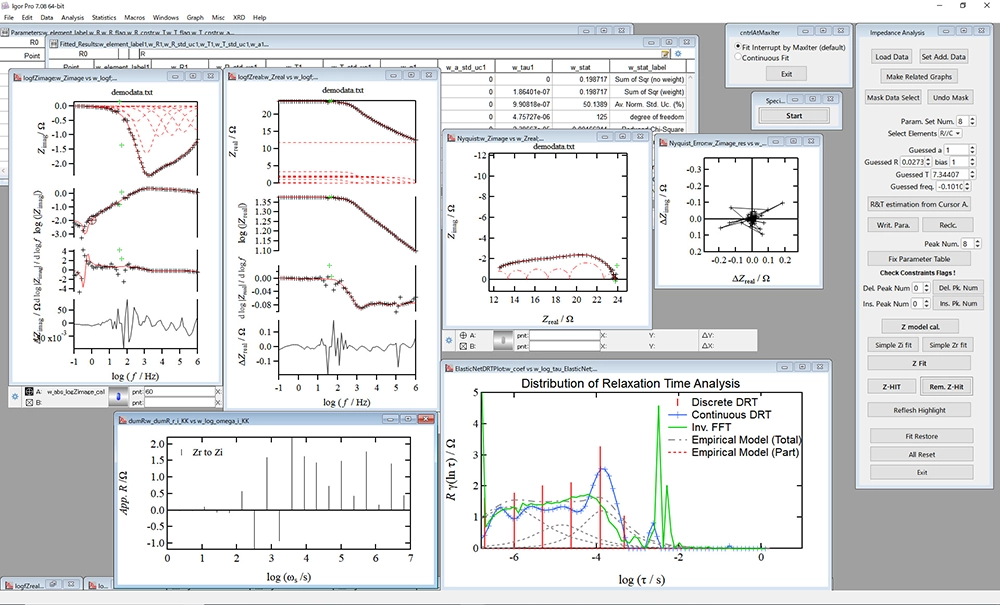
Impedance analysis program

Group in charge
Optical Ceramics Group

KOBAYASHI, Kiyoshi

Igor Pro screen for electrochemical analysis. Windows show Nyquist plots and relaxation time distribution with red fitting curves. A control panel with analysis buttons is on the right.

Automatic spectrum analysis program

Group in charge
Nano Electronics Device Materials Group

YAGYU, Shinjiro

Power law analysis. Left: Flowchart to find parameters. Center: Formula y equals a times x minus b to the c plus d. Right: A red power law curve is linearized into a blue line starting at b using the reciprocal of c.

Theory construction

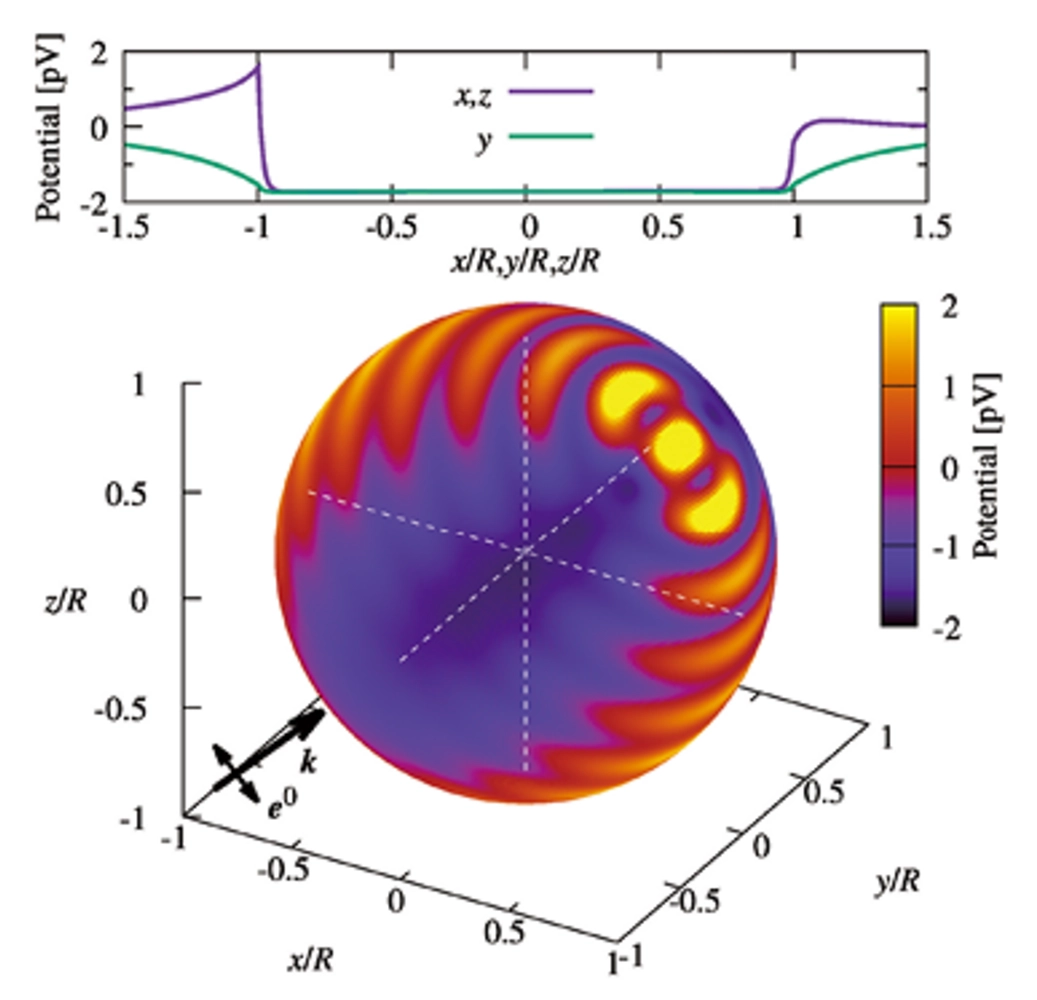
Search for unique nanophotonics functions

Group in charge
Quantum Photonics Group

OCHIAI, Tetsuyuki

Potential on a sphere. Bottom: 3D model in purple to yellow. Top: Graph showing sharp changes at boundaries minus 1 and plus 1, indicating a specific electrical response near the surface.

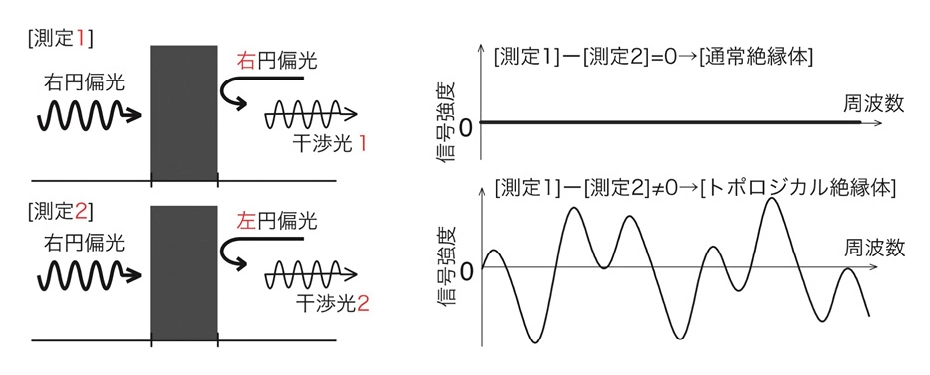
Mathematical material theory

Group in charge
Semiconductor Defect Design Group

INOUE, Junichi

Material identification via light. Left: polarized light measurements. Right: Graphs show a Normal Insulator with zero signal and a Topological Insulator with a wavy non-zero signal, using reflection to identify topological properties.

Molecular/crystal simulation

In order to gain a deep understanding of materials, we conduct electronic state calculations based on quantum mechanics and atomic arrangement simulations based on them.

Consideration of natural minerals, nanosheets, etc

Group in charge
Environmental Circulation Composite Materials Group

SUEHARA, Shigeru

Nanomaterials. A: Mica ions reacting with water. B: Atomic arrangement and energy band of a new sheet with a Dirac cone. C: Ions passing through a mesh. Atomic structures defining material properties.

Search for semiconductors and dielectrics

Group in charge
Electro-ceramics group
OHASHI, Naoki

Four simulations of hybrid crystals. Three panels show networks of carbon and nitrogen atoms. The bottom right visualizes electron density, with red and yellow contours around atoms, predicting chemical bonding and charge distribution.
Research Center for Electronic and Optical Materials SITE MAP