
ICYS PI Call for Applications from Young Researchers
Applications Closed
The application period for ICYS PI ended on September 29, 2026.
The ICYS Principal Investigator (ICYS PI) position at the National Institute for Materials Science (NIMS) is a tenure-track research position designed to foster the independence and long-term career development of outstanding young scientists.
Unlike a postdoctoral fellowship, the ICYS PI position provides a clear career pathway toward permanent research leadership roles such as Team Leader or Group Leader at NIMS. ICYS PIs are expected to establish internationally visible, original research programs and demonstrate the capability to grow into leaders in their fields.
Description of the position
| Work description |
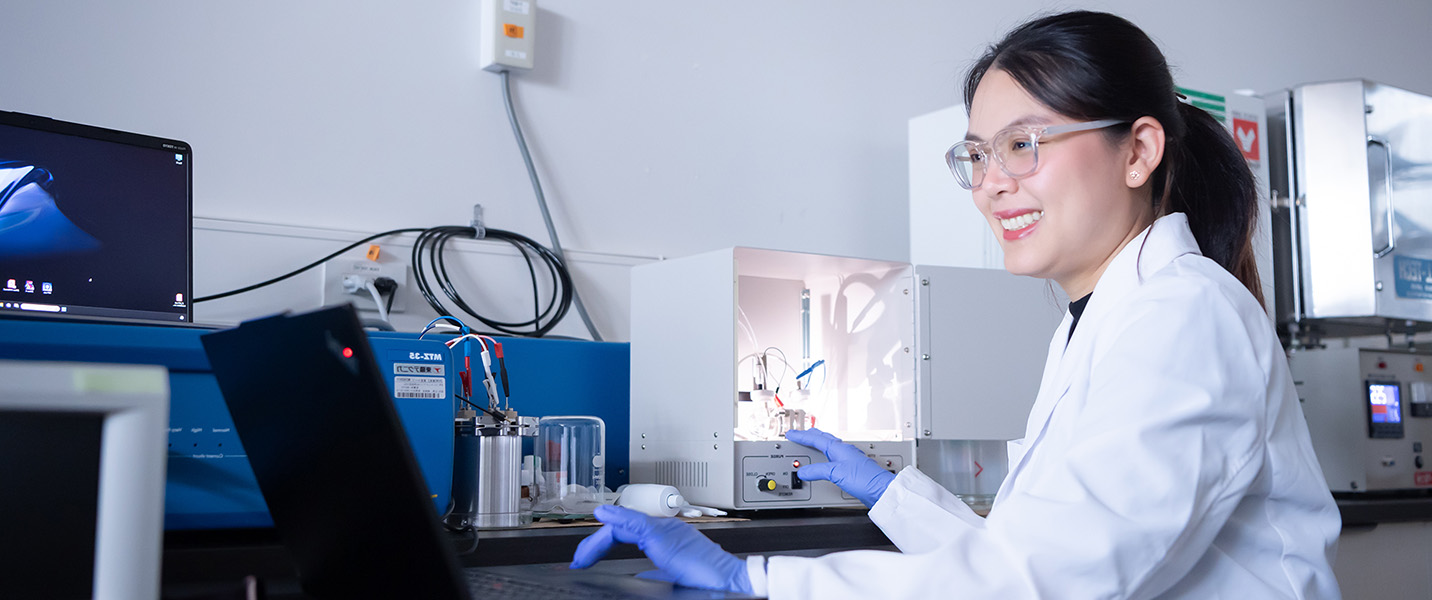
As an ICYS PI at NIMS, you will independently advance research based on your original ideas, managing your own small research unit and utilizing NIMS’s state-of-the-art shared facilities and dedicated research assistants. You will develop internationally recognized, original research areas across a wide spectrum of materials science—including quantum, battery, magnetic, structural, organic, bio-related, and other advanced materials, as well as data science. |
|---|---|
| Salary and benefits |
|
| Term |
5 years *If the applicant is already in NIMS as a non-permanent researcher (Postdoc), the maximum contract term depends on work experience at NIMS. |
| Work place |
National Institute for Materials Science, Sengen-Site/ NamikiーSite/ Sakura-site (Tsukuba, Ibaraki, Japan) |
Eligibility
Applicants must fulfill all of the following conditions.
- Pursue research independently based on your own research plan.
- Have a Ph.D. obtained within 10 years as of the date of appointment, or expect to be awarded a Ph.D. by the date of appointment.
*In case it is not possible to submit a certificate of expected Ph.D. completion by the application deadline, submit a letter signed by the supervisor stating the expected date when the Ph.D. will be awarded.
- Applicants must propose research that can be conducted at one of the NIMS research centers listed below.
NIMS Research Centers
Research Center for Energy and Environmental Materials (GREEN)
Main Research Fields: Battery and Cell Materials, Hydrogen Technology Materials
● Battery and Cell Materials FieldSolid-State Battery /Battery Materials Analysis/Photovoltaic Materials/Rechargeable Battery Materials/Solid State Battery Ionics/Environment-Controlled Microscopy/Frontier Battery Materials/Automated Electrochemical Experiments ● Hydrogen Technology Materials Field
Magnetic Refrigeration System Group/Superconducting System/Hydrogen Production Catalyst Materials/Advanced Superconducting Wire/Hydrogen Ion Materials/Electrochemical Energy Conversion/Mathematical Catalysis Research
Research Center for Electronic and Optical Materials
Main Research Fields: Functional Materials, Optical Materials
● Functional Materials FieldUltra-wide Bandgap Semiconductors/Environmental Circulation Composite Materials/Nano Electronics Device Materials/Electro-ceramics/Amorphous Material ● Optical Materials Field
Optical Single Crystals/Optical Ceramics/Advanced Phosphor/Semiconductor Epitaxial Structures/Nanophotonics/Semiconductor Defect Design/Quantum Photonics/Polycrystalline Optical Material
Research Center for Magnetic and Spintronic Materials (CMSM)
Main Research Fields: Magnetic Materials, Spintronics
Magnetic Functional Device/Magnetic Recording Materials/Spintronics/Spin Physics/Spin Caloritronics/Spin Theory/Green Magnetic MaterialsResearch Center for Structural Materials (RCSM)
Main Research Fields: Materials Manufacturing, Materials Evaluation
● Materials Manufacturing Field Polymer Matrix Composites/Ceramic Matrix Composites/Thermomechanical Processing/Light-weight Metallic Materials/High Temperature Materials/High-Reliability Heat-Resistant Materials/Additive Manufacturing/Anisotropic Materials/Corrosion and Protection ● Materials Evaluation Field
Creep Property/Fatigue Property/Cryogenic Fatigue/Steel Research/Corrosion Research/Welding and Joining Technology/Mechanical Properties/Microstructure Analysis/Computational Structural Materials/Structural Thermodynamics/Computational Microstructure Design
Research Center for Materials Nanoarchitectonics (MANA)
Main Research Fields: Semiconductor Materials, Quantum Materials, Nanomaterials
● Semiconductor Materials FieldNanostructured Semiconducting Materials/Quantum Materials Simulation/Semiconductor Functional Device/Thin Film Electronics/Neuromorphic Devices/Semiconductor Nano-integration/2D Semiconductor/Photonics Nano-Engineering/Ionic Devices/Semiconductor Device/Smart Interface ● Quantum Materials Field
Surface Quantum Phase Materials/Frontier Superconducting Materials/Quantum Solid State Materials/2D Quantum Materials/Quantum Material Properties/Quantum Materials Modeling/Qubit Materials/Quantum Materials Design/Quantum Magnetic Materials ● Nanomaterials Field
Thermal Energy Materials/Functional Nanomaterials/Layered Nanochemistry/Frontier Molecules/Functional Chromophores/Supermolecules/Nanoparticle/High-Pressure Materials Synthesis/ElectroActive Materials/Optical Nanostructure
Research Center for Macromolecules and Biomaterials (RCMB)
Main Research Fields: Macromolecules, Biomaterials
● Macromolecules FieldMolecular Design and Function/Electronic Functional Macromolecules/Molecular Mechatronics/Printed Electronics/Electrochemical Sensors/Data-driven Polymer Design/Autonomous Polymer Design and Discovery/Supramolecule/Polymer Materials/Polymer Process Technology/Polymer Surfaces and Devices ● Biomaterials Field
Mechanobiology/Medical Soft Matter/Polymeric Biomaterials/Bioceramics/Tissue Regeneration Materials/Smart Polymer /Olfactory Sensors/Electrochemical Nano-Bio/Polymer Surfaces and Devices
Center for Basic Research on Materials (CBRM)
Main Research Fields:Advanced Materials Characterization, Materials Design
● Advanced Materials Characterization FieldElectron Microscopy/In-situ Electron Microscopy Technique/Nanoprobe Group/Solid-State NMR/Photoemission Spectroscopy/High Magnetic Field Physics/Quantum Beam Diffraction ● Data-driven Materials Research Field
Data-driven Inorganic Materials/Data-driven Materials Design/Materials Modeling/Computational Materials Science/Data-driven Algorithm
How to Apply
The call for applications has ended.
The details of the next call will be announced on this website once they are finalized.
Selection Process
Number of Positions: A few
Selection will begin after the application materials are received at the ICYS office. The selection process consists of an initial screening of documents, followed by an interview for those who have passed the screening. The applicant will be promptly notified of the final result according to the schedule below.
2026-2027
| Item | Date/Period |
|---|---|
| Application period | August 3, 2026 - September 29, 2026 |
| Notification of Document Screening Results | Early December, 2026 |
| Interview Dates | January 7, 8, 14 and 15, 2027 *Interviews will be held on one of these four days. Details will be provided to successful candidates after the document screening. |
| Notification of Final Selection Results | Late January to early February, 2027 |
| Appointment Period | Between April 1, 2027 and September 1, 2027 |
Inquiry for Recruitment
ICYS Recruitment Desk, National Institute for Materials Science
1-2-1 Sengen, Tsukuba, Ibaraki, 305-0047 JAPANEmail: icys-recruitnims.go.jp