Molecular Mechatronics Group
Yoshio's Lab
Designing Supramolecular Nanostructured Soft Materials for Future Technologies

Designing Supramolecular Nanostructured Soft Materials for Future Technologies
We welcome students who are interested in joining our group and pursuing research with us.
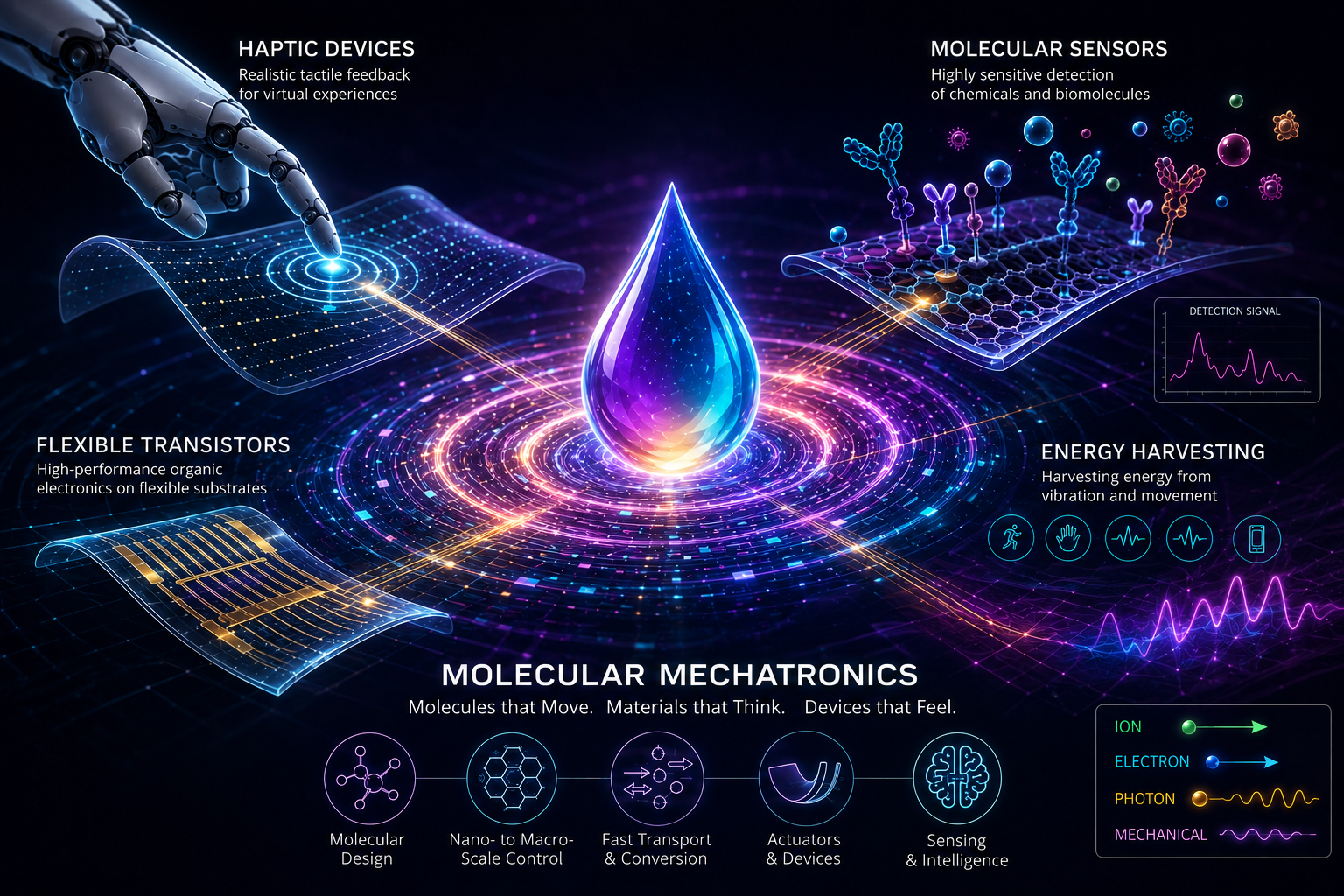
"Molecular Mechatronics" is a concept that integrates "Molecular", "Mechanics", and "Electronics". It is an interdisciplinary research field that seeks to create new materials, devices, and technologies at the interfaces of these fields, with the aim of transforming and advancing existing materials and technologies.
The Molecular Mechatronics Group develops innovative electroactive organic and polymeric materials and device technologies for applications including haptic feedback devices for virtual reality (VR), micro-vibration energy harvesters, and stress, friction, optical, and molecular sensors. Based on the synthesis of uniquely designed molecular materials, we precisely control hierarchical ordered structures and their organization across length scales ranging from nanometers to centimeters. Through this structural control, we aim to achieve high-speed transport of ions, electrons, photons, and matter, as well as efficient energy conversion, ultimately creating high-performance energy-conversion devices such as actuators that convert electrical energy into mechanical energy.
We develop a wide range of self-assembled materials, including ion-active nanostructured liquid crystals, liquid-crystalline semiconductors incorporating electronically active π-conjugated structures, and block copolymers capable of forming electrets. Our research also encompasses flexible metal–organic framework (MOF) materials, flexible thin films of covalent organic frameworks (COFs) exhibiting ionic and electronic conductivity, thermoplastic low-molecular-weight physical gels, and natural polysaccharide-based polymer gels.
Our group conducts integrated research and development spanning the entire process from molecular design and synthesis of materials to structural and physical-property characterization, circuit design, and device fabrication and evaluation. We also place strong emphasis on operando structural analysis using synchrotron radiation facilities and on elucidating device operating mechanisms through computational science. Researchers in our group can acquire a broad range of experimental and analytical techniques, including organic and polymer synthesis, chromatography, nuclear magnetic resonance (NMR) spectroscopy including pulsed-field-gradient measurements for ion diffusion, thermal analysis, fluorescence spectroscopy, electrochemical impedance spectroscopy, dielectric relaxation measurements, electrical conductivity measurements, time-of-flight charge-carrier mobility measurements, transistor device fabrication and evaluation, ferroelectric measurements, electric-field poling techniques, laser Doppler vibrometry, electron microscopy and atomic force microscopy, wide-angle and small-angle X-ray scattering, viscoelastic measurements, and tensile testing.
Why not join us in exploring the development of new materials and devices, from molecular design to device applications?
Our paper regarding topology-controlled proton transport in thermotropic liquid-crystalline acid-base complexes has been accepted for publication in Chemistry of Materials.
A review article on functional gels has been published in "Functional Soft Matter II: Analytical Methods and Topics", edited by Masahiro Funahashi, Springer-Nature.
Yoshio GL received the Achivement Award from the Japanese Liquid Crystal Society and gave an award lecture in Oita, Japan.

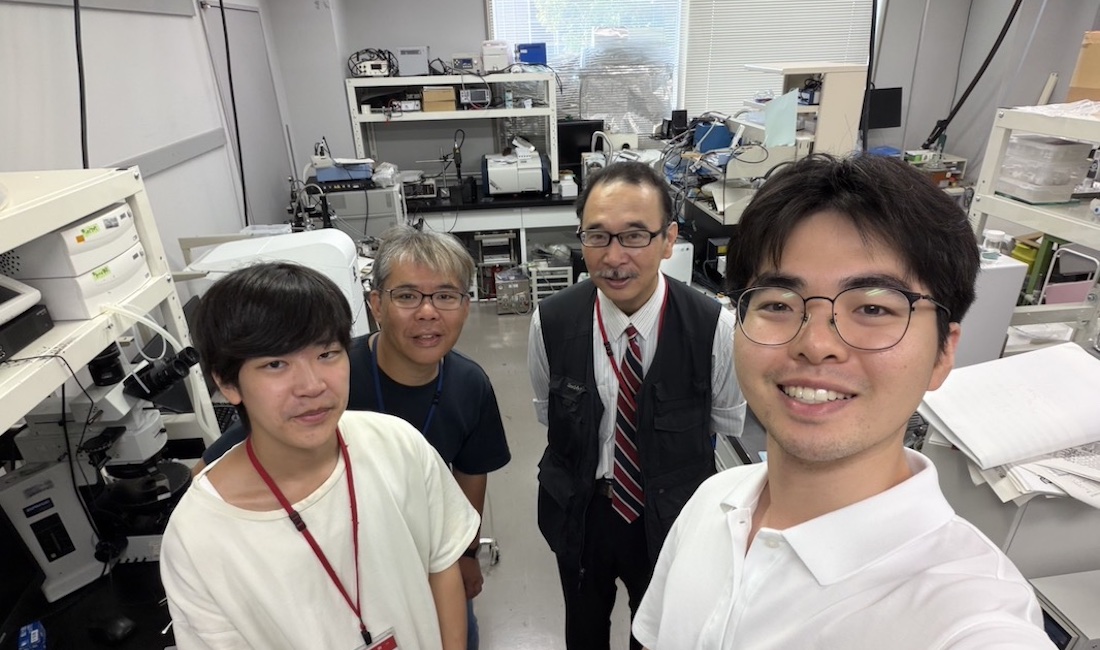
Prof. Hasegawa Yasuchika from Hokkaido University and M1 Nakamura-san visited for experiments.
Dr. BEHERA Paresh has been selected as a JSPS Foreign Research Fellow for 2026. We aim to develop flexible ferroelectric semiconductors that convert light into mechanical force.
Researchers from the JST PRESTO “Future Materials” research area and the Institute of Condensed Matter Chemistry of Bordeaux (ICMCB) jointly organized the international workshop “Japan-France Symposium on the Frontiers of Future Materials Design.” The workshop aimed to facilitate discussions on materials design for future materials and to establish international collaborative relationships. Yoshio, a researcher in the third cohort, gave a presentation on liquid-crystalline polymer actuators.
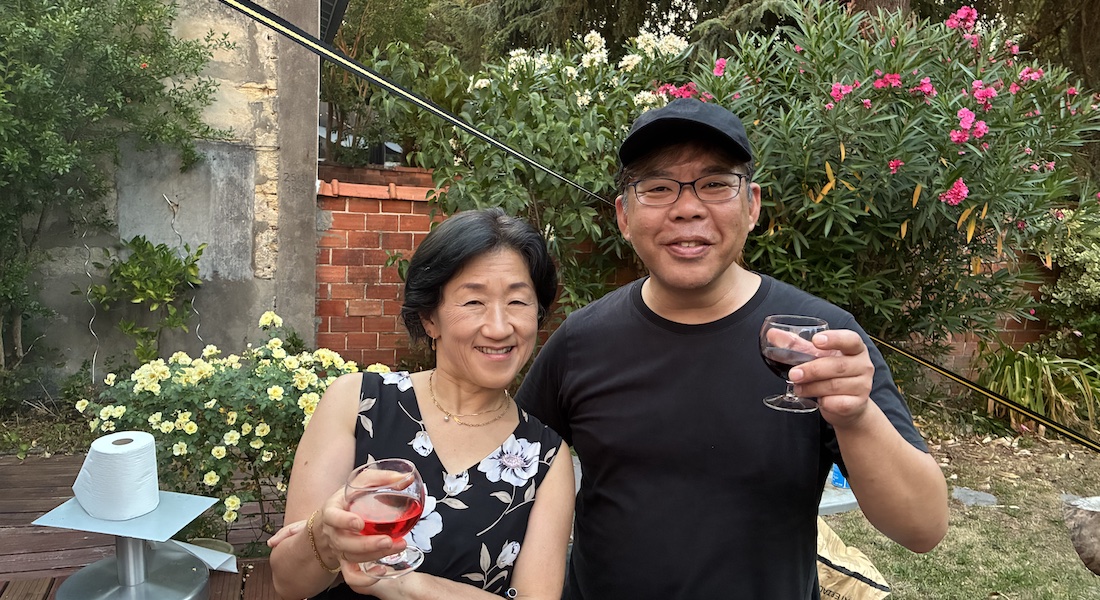
Prof. Oda Reiko invited us to her home party.
Yoshio GL gave a presentation on liquid-crystalline polymer actuators at the International Liquid Crystal Conference 2026 (ILCC 2026) in Quebec City, Canada.
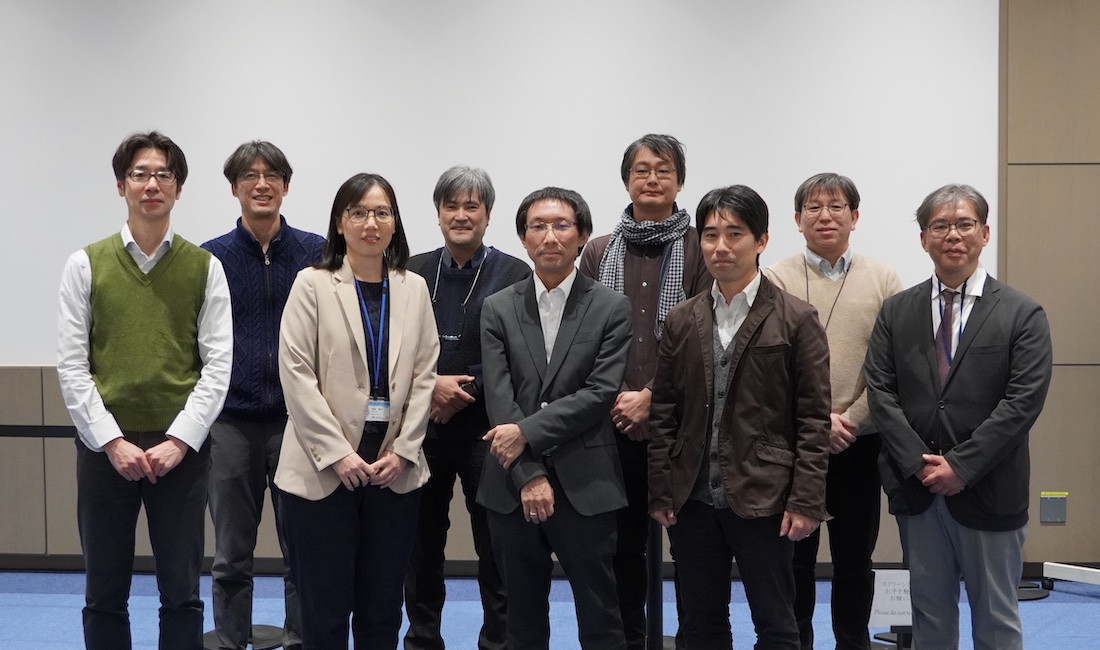
The third workshop of Grand-in-Aid for Transformative Research on π-Molecular Complexity was held at the NIMS Sengen Area.