Creating
innovative nanoionic devices
that will change the world

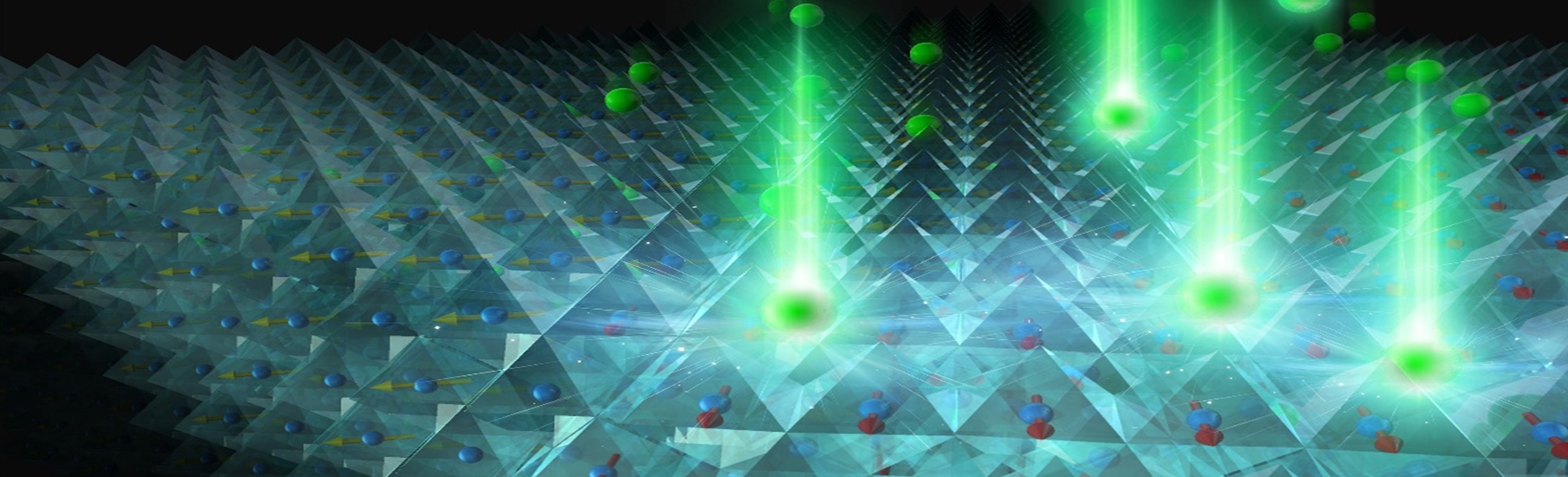
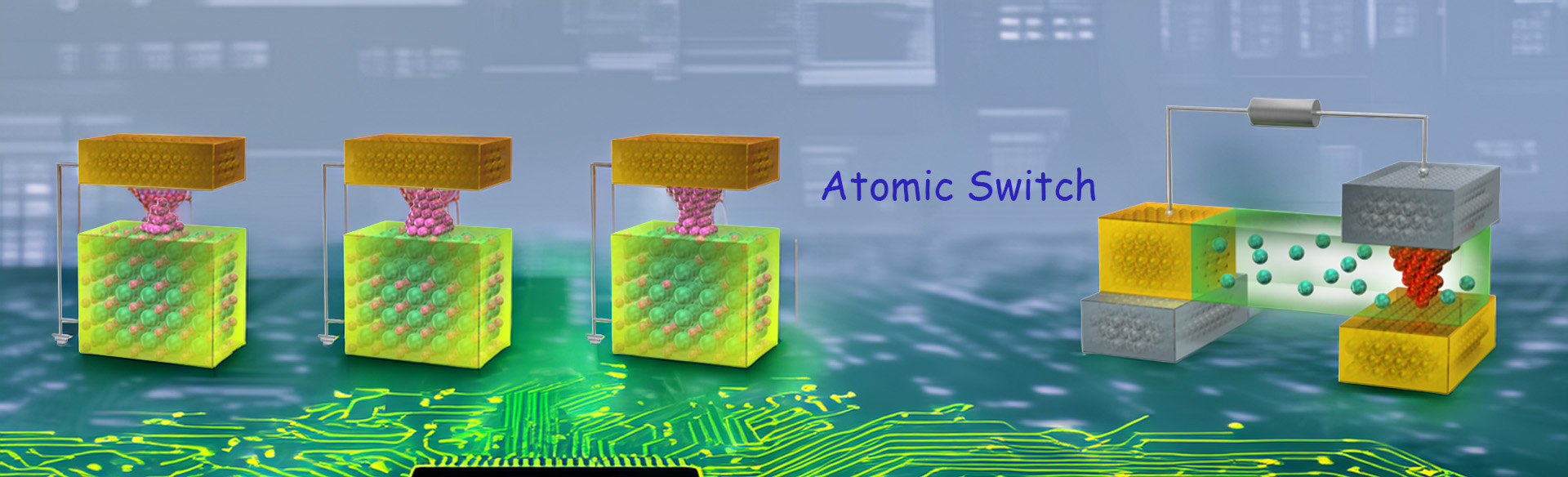
Drawing on nanotechnology and solid-state ionics, we aim to develop nanoionic devices that can perform functions beyond the capabilities of conventional semiconductor devices. Specifically, we utilize in-situ nanoarchitectonics — the controlled, local movement of ions within solids — to create fascinating nano-phenomena resulting from physical or chemical interactions. We then exploit these properties to create nano-devices that operate according to novel principles.
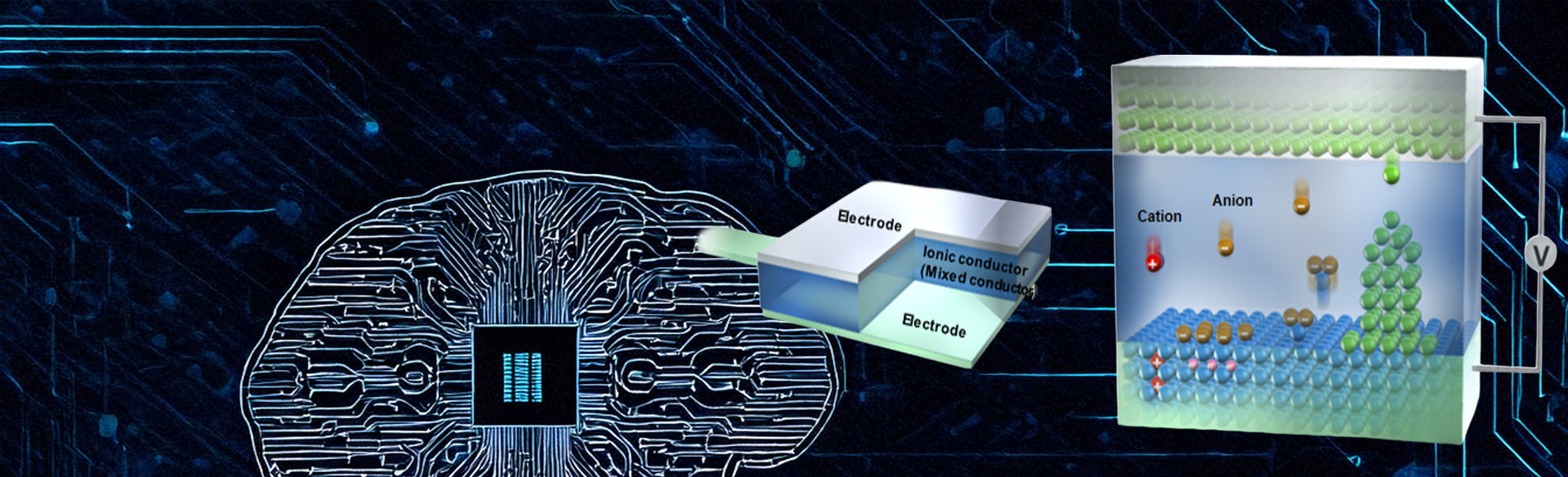
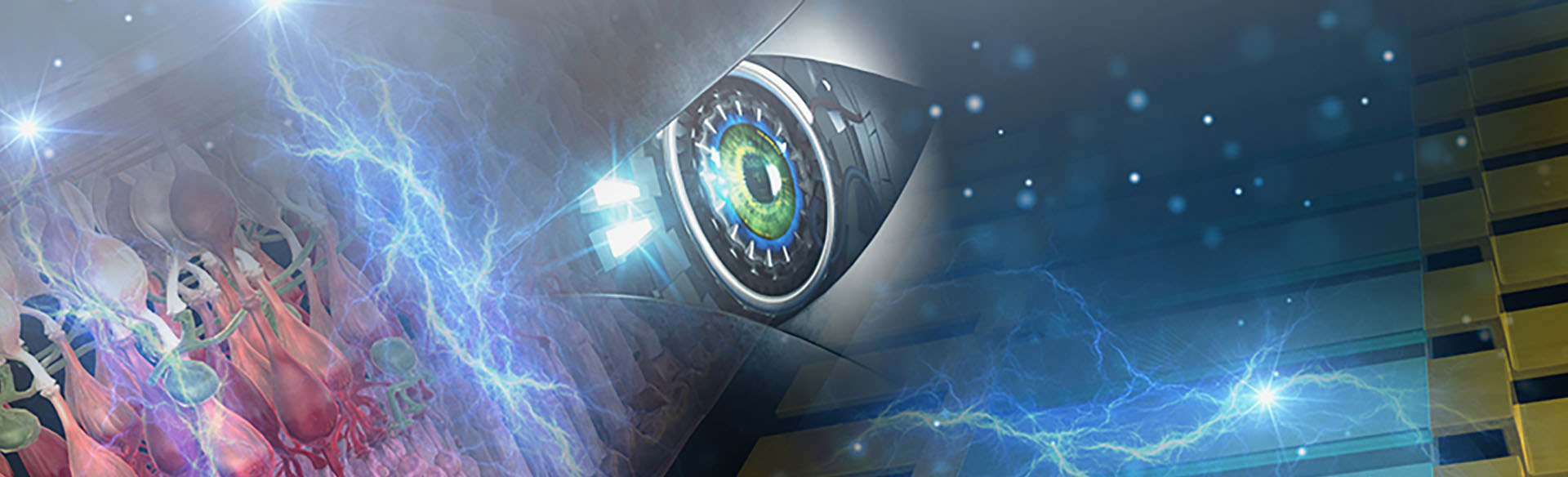
Our focus is particularly on creating neuromorphic devices that mimic the functions of neural cells found in the brain, such as synapses, capacitors and sensory elements. Our goal is to develop foundational technologies for hardware-oriented artificial intelligence and future brain-inspired computers. Building on our foundational research into next-generation nano-devices for artificial intelligence, we are actively pursuing practical applications through collaborative projects with partner companies.
Creating
innovative nanoionic devices that
will change the world

Drawing on nanotechnology and solid-state ionics, we aim to develop nanoionic devices that can perform functions beyond the capabilities of conventional semiconductor devices. Specifically, we utilize in-situ nanoarchitectonics — the controlled, local movement of ions within solids — to create fascinating nano-phenomena resulting from physical or chemical interactions. We then exploit these properties to create nano-devices that operate according to novel principles.
Our focus is particularly on creating neuromorphic devices that mimic the functions of neural cells found in the brain, such as synapses, capacitors and sensory elements. Our goal is to develop foundational technologies for hardware-oriented artificial intelligence and future brain-inspired computers. Building on our foundational research into next-generation nano-devices for artificial intelligence, we are actively pursuing practical applications through collaborative projects with partner companies.



TOPICS
2026-9-19
Namiki, researcher, delivered an invited talk at 2026
International Conference on Solid State Devices and
Materials (SSDM 2026).
SSDM2026
2026-6-30
Tsuruoka, chief researcher, delivered an invited talk at the 22th
International Symposium on the Physics of Semiconductors and
Applications (ISPSA 2026).
ISPSA2026
2026-6-24
Terabe, group leader, delivered an invited talk at the 10th
Forum on New Materials (CIMTEC 2026).
CIMTEC2026
2026-5-25
The results of a collaboration with Kaneko Laboratory at the Tokyo University of Science have been published inJournal of Physical Chemistry Letters.
S. Nishimuro, T. Tsuruoka, T. Ohto, K. Akashi, T. Nishino, K. Terabe, S. Kaneko, “Electrochemical Wiring of a Metal Nanofilaments to Form a Molecular Junction”, J. Phys. Chem. Lett., 17 (2026) 6176.
https://doi.org/10.1021/acs.jpclett.6c00582
2026-04-03
We have launched a joint research project on autonomous visual sensors with the Ikuno Laboratory in the Department of Applied Electronics at Tokyo University of Science.
NIMS連携拠点推進制度
2026-04-03
We have launched a joint research project on new solid electrolyte membranes with the Moriya Laboratory at the Research Institute of Green Science and Technology, Shizuoka University.
NIMS連携拠点推進制度
2026-03-03
Wataru Namiki delivered a young researcher presentation at the Iwate Spintronics School 2026.
https://koichioyanagi.com/iwate_spintronics_school_2026/index.html
2025-12-15
A paper by Tsuruoka and his colleagues on visual device has been published in Advanced Functional Materials.
S. Mallik, K. Terabe, T. Tsuruoka, “Hardware-Oriented Visual Information Edge Detection, Based on Proton Migration-Driven Lateral Inhibition”, Adv. Funct. Mater. 36 (2025) e23757.
http://dx.doi.org/10.1002/adfm.202523757
2025-10-25
The results of a collaboration with Nishino-Kaneko Laboratory at the Tokyo University of Science have been published in Small.
A. Aiba, M. Buerkle, S. Kaneko, T. Tsuruoka, S. Nishimuro, K. Terabe, T. Nishino, “Redox-Induced Atomic Switch as Platform for Molecular Electronics Devices”, Small 21 (2025) e07653
https://doi.org/10.1002/smll.202507653
2025-10-15
Terabe, the group leader, delivered a plenary talk at the 8th International Conference on Memristive Materials, Devices and Systems (MEMRISYS 2025).
MEMRISYS 2025_Kazuya Terabe_plenary talk
2025-10-15
A review paper summarising the achievements of our research group to date has been published in Solid State Ionics.
K. Terabe, T. Tsuchiya, T. Tsuruoka, H. Tanaka, I Valov, J. K. Gimzewski, T. Hasegawa, “Ionic nanoarchitectonics for electronic information devices, Solid State Ionics, 430 (2025) 116995
https://doi.org/10.1016/j.ssi.2025.116995
2025-07-31
Terabe, the group leader, delivered a invited talk at the 9th in a series of international conferences on fundamentals and applications of magnons (Magnonics 2025).
Magnonics 2025 | IEEE Magnetics Society
2025-07-03
Terabe, the group leader, delivered a invited talk at the 23rd International Nanotech Conference & Exhibition (Nano KOREA).
NANO KOREA 2025
Recruit
NIMS
Internship Program
Participants in the NIMS Internship Program have the opportunity to engage in cutting-edge nanoionics device development within our group.
The 2026 program has concluded. Please check the NIMS website for information about the next program.
Postdoctoral researchers utilizing NIMS/public institutions recruitment systems
Our group offers opportunities to engage in the development of cutting-edge nanoionics devices.
Although we are not currently recruiting NIMS postdocs, we warmly welcome applications from postdoctoral researchers via the Japan Society for the Promotion of Science (JSPS).
Joint research groups utilizing various NIMS collaboration systems
Joint research activities will be carried out utilizing NIMS infrastructure.