

A Lab Unlocking Life’s Principles and New Technologies through Bacteria–Material Interactions
Our mission
Can we capture the dynamic state of life—built from countless chemical reactions and electron flows—in real time, and truly understand it?
In our lab, we use materials such as electrodes as a “scaffold/window” to study living microbial communities (including bacteria and biofilms) without destroying them, and to identify which biochemical processes act as the key drivers of their behavior.
Our philosophy is a two‑way cycle: we start from real challenges in medicine, energy, and the environment, work backwards to define fundamental questions, and then feed the technologies we develop back into basic science. For societal implementation, we have so far advanced mainly through collaborations with companies in Japan and abroad aimed at patent licensing, and we are also preparing for future development through launching a startup.
1. Revealing the mechanisms that set the pace of life
What are the “bottleneck reactions” that determine the speed of life?
Using genetically tractable model bacteria, we tackle this question through the kinetics of electron transfer and metabolism.
Bacteria can change their metabolic rate by more than 10,000‑fold depending on their environment, and slow‑metabolism states can be linked to antibiotic‑hard‑to‑kill conditions (such as persister‑like states). In contrast, fast metabolism can be a key factor for efficient bioprocesses and high‑performance energy conversion. We quantify the “speed” of living bacteria by combining materials, electrochemistry, and spectroscopy, and we identify which molecules and reactions become rate‑limiting steps through genetic perturbations and systematic experiments. By learning the principles of “speed control”, we aim to develop new strategies to precisely steer bacterial behavior, including next‑generation approaches to control and kill bacteria.
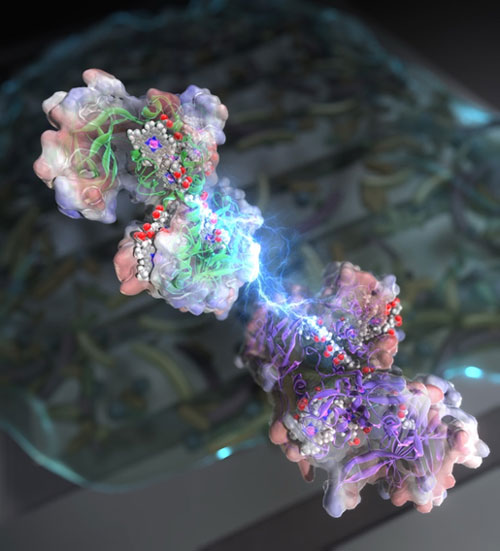
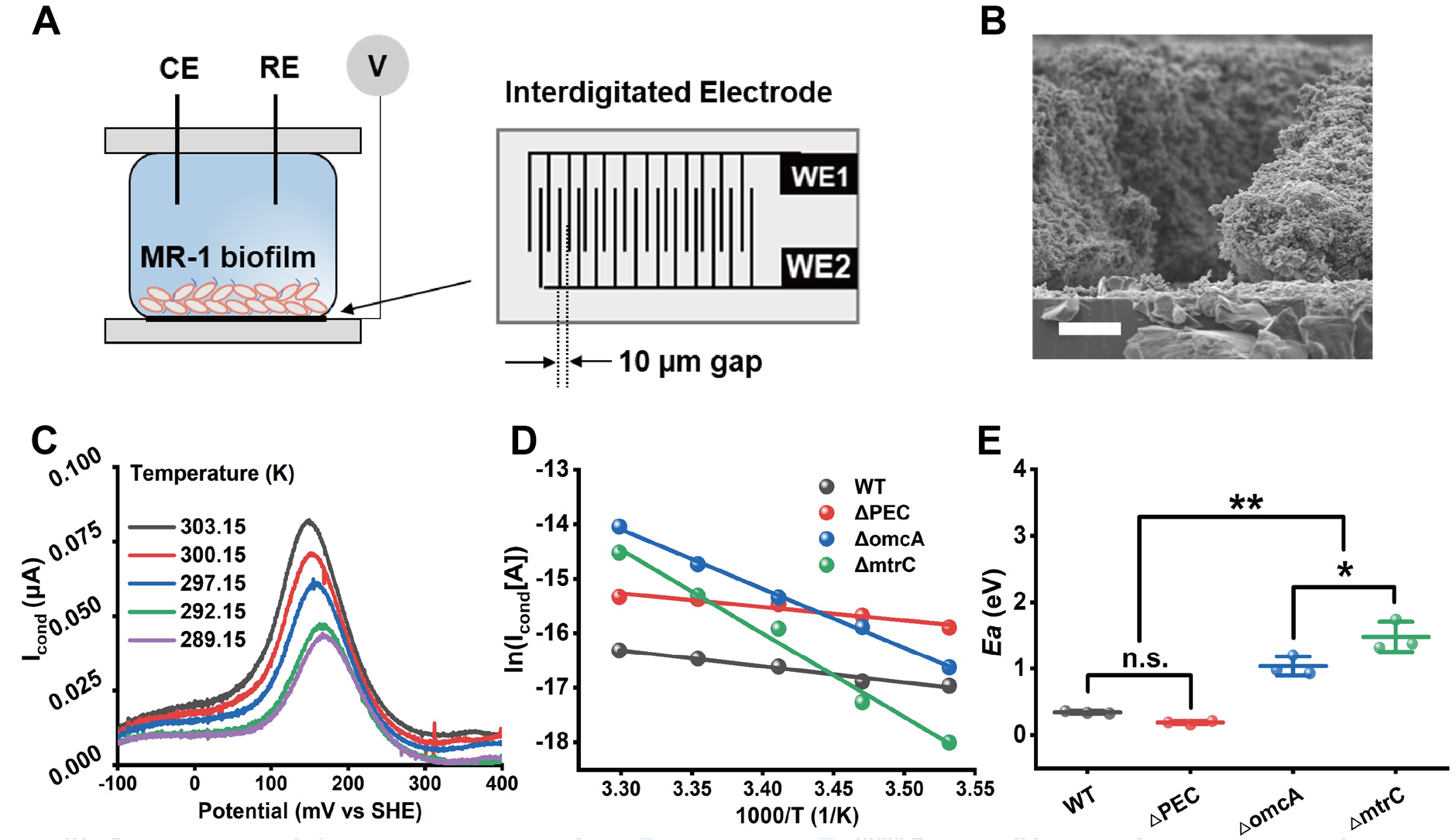
Dynamic interprotein electron transfer between OmcA and MtrC on the cell surface, where their collisions ignite cascades of electron flow across Shewanella biofilms — like sparks illuminating a living circuit. Conductive current measurements for the biofilm of Shewanella oneidensis MR-1 (S.MR-1) and representative conduction current (Icond) versus the gate potential under each temperature, calculated by subtracting the source from the drain current in the absence of an electron donor. Activation enegy for the biofilm electron conduction was estimated by Arrhenius-style plots of wild type (WT), ΔPEC, ΔomcA, and ΔmtrC.
2. Creating new technologies by combining materials and bacteria
What new functions can emerge when materials meet bacteria?
We build “cyborg bacteria”— microbes designed to exchange electrons with engineered materials—to expand reactions from 2D surfaces into 3D spaces.
Because materials and bacteria have very different strengths, smart integration of the two can create breakthrough technologies. For example, electrode catalysis is highly efficient, but scaling up is often difficult because reactions happen mainly on 2D surfaces. If we use bacteria that can deliver electrons into materials, we can extend electrode reactions into 3D reaction fields. We are exploring this concept for applications such as recovering valuable elements like lithium. In addition, we develop approaches to strengthen bacteria–material interactions, including gene knockout screening, materials synthesis, and the creation of hybrid materials that embed membrane protein functions into engineered platforms. Insights from these “function creating” studies also feed back into deeper basic understanding of how life interacts with materials.
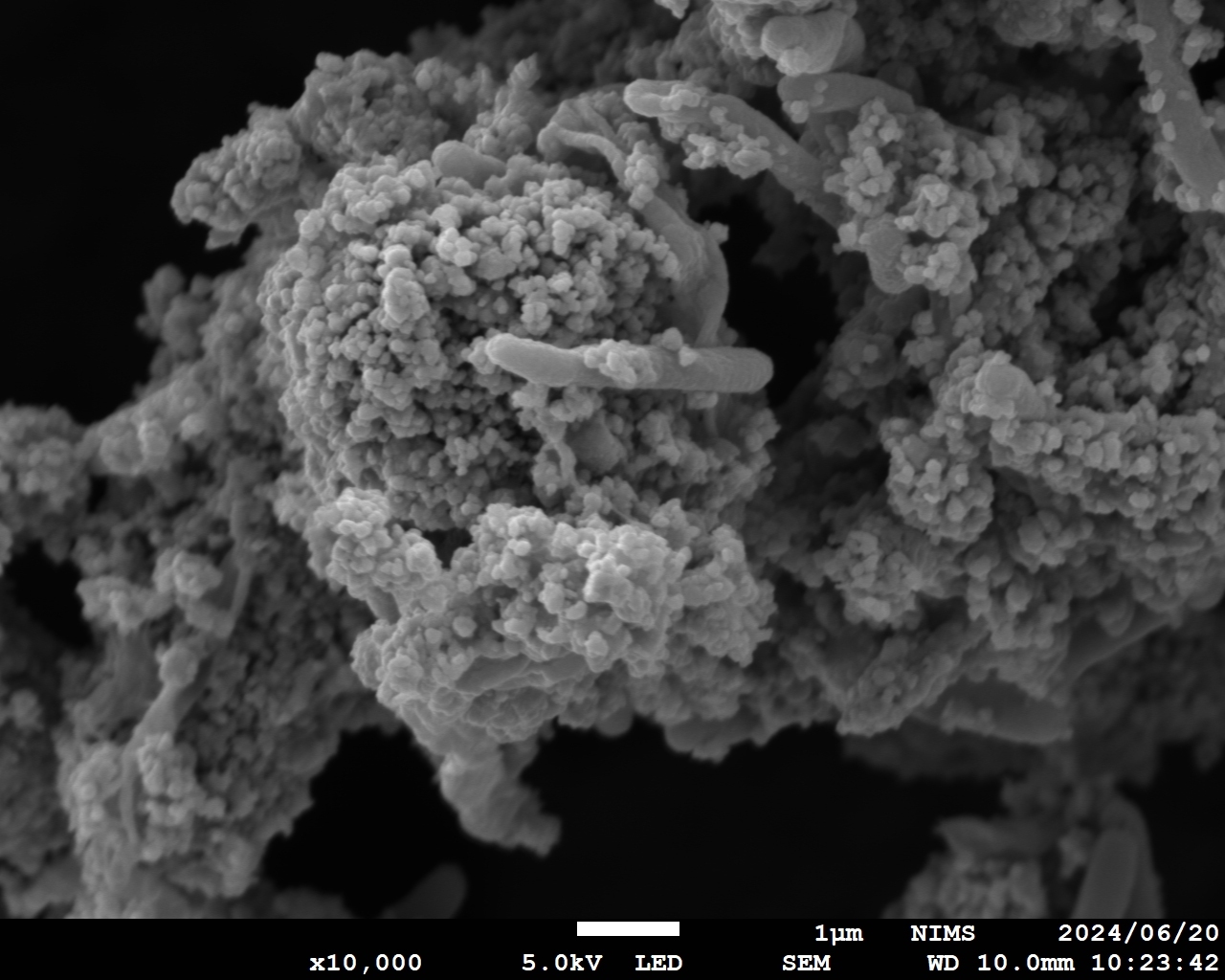
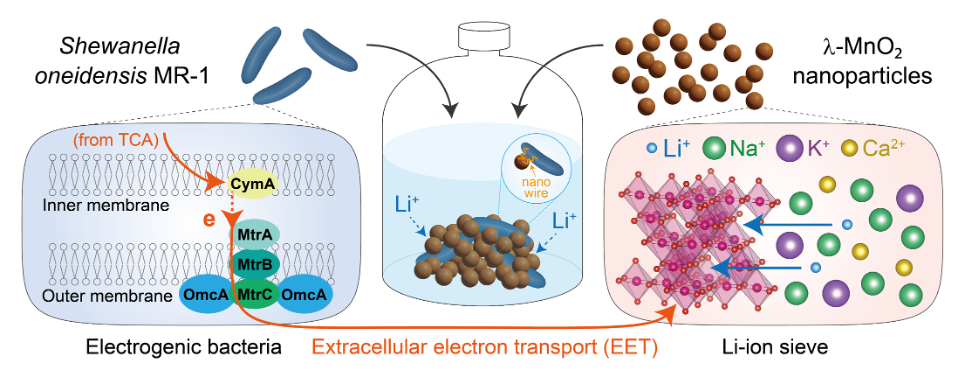
Shewanella oneidensis MR-1, electrogenic bacteria, provides electrons outside the cell by extracellular electron transport (EET). On the other hand, λ-MnO2 with a spinel structure is a Li-ion sieve that prevents the intercalation of larger ions (e.g., Na+, K+, Ca2+). In this method, MR-1 and λ-MnO2 are self-agglomerated at the bottom of the reactor, and Li ions in the solution intercalates into λ-MnO2 due to the charge compensation for electrons supplied by MR-1.
3. Building tools to watch life dynamics as they happen
How can we extract dynamic biochemical information from living microbial communities?
By combining our high‑throughput electrochemical devices with data science, we capture life dynamics in real time.
Traditionally, biochemistry has made progress by breaking cells apart, isolating biomolecules, and studying them as static samples. This has been powerful—but directly observing biomolecular interactions and dynamic processes in living systems remains challenging. We focus on electrical currents generated by bacteria and have developed original devices that measure these signals at over 100× higher throughput than conventional methods, effectively reinventing electrochemistry as a strong tool for biochemistry and biology. By integrating these measurements with data science, we can perform screening directly linked to societal problems—such as searching for antibiotics and molecules that boost their effectiveness against bacteria involved in infectious disease and iron corrosion. We further combine our platforms with genetic analyses, expanding our targets beyond pure cultures to complex systems such as microbiomes and biofilms.
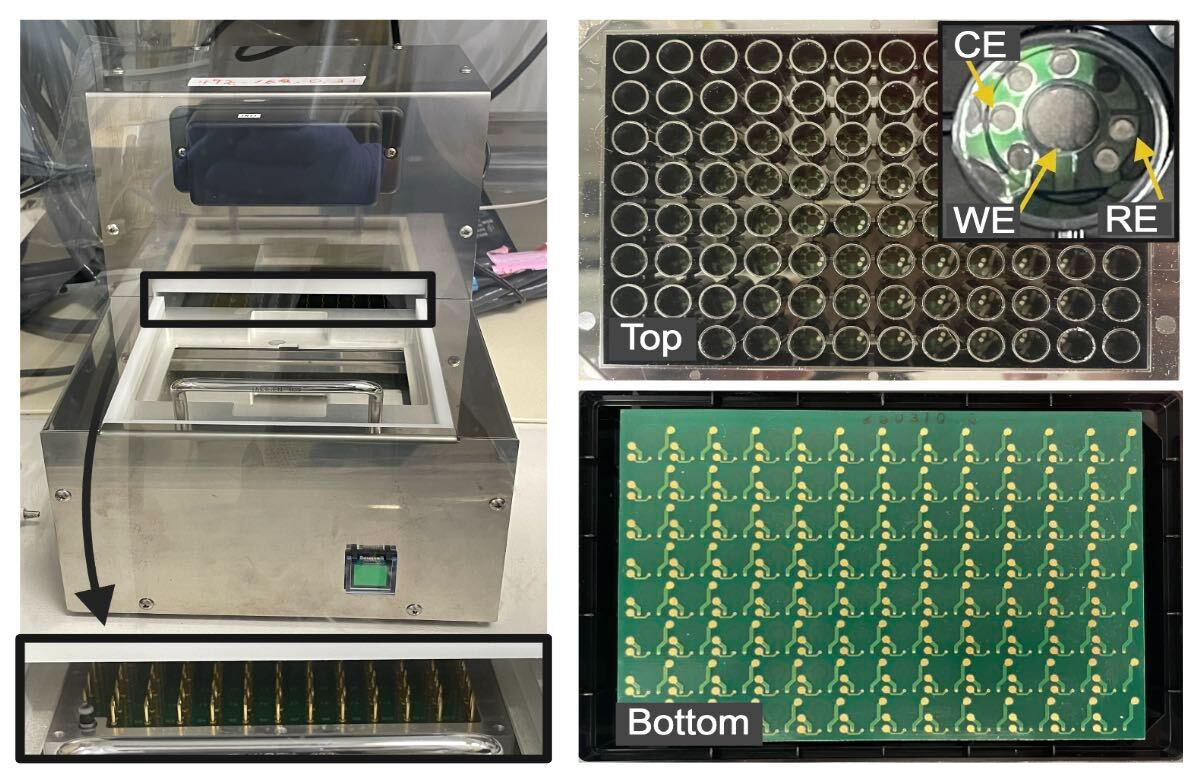
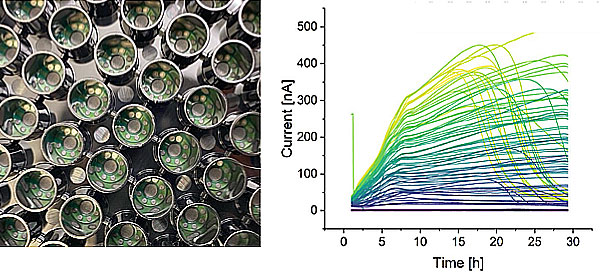
Image of 96-well electrochemical system producing ninety-six distinct temporal profiles of microbial
current generation (I-t curve) under potentiostatic conditions.