Principle of Field Ion Microscope (FIM)
The field ion microscope (FIM) was invented by Erwin E. Mueller at Pennsylvania State University in 1951. With FIM, for the first time, individual atoms could be observed. The technique was developed from its predecessor, the field emission microscope. The apparatus consists of a specimen shaped into a sharp needle, mounted on an electrically insulated stage and cooled to cryogenic temperatures (20 to 100 K) within an ultrahigh vacuum chamber (Fig. 1). The field ion image is formed on a microchannel plate and phosphor screen assembly located approximately 50 mm in front of the specimen. To generate the field ion image, a controlled amount of image gas is introduced into the vacuum system. The choice of image gas depends on the material being studied; typical image gases include neon, helium, hydrogen, and argon.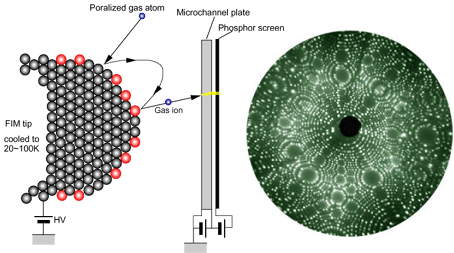
Fig. 1. Principle of field ion microscope (FIM).
The field ion image is generated by projecting image gas atoms, ionized by the high positive voltage applied to the specimen, onto the fluorescent screen. A schematic diagram of this multi-step imaging process is shown in Fig. 1. In the vicinity of the specimen, image gas atoms become polarized due to the strong electric field and are subsequently attracted to the apex region of the specimen. Through a series of collisions with the specimen, the image gas atoms lose part of their kinetic energy and become thermally accommodated to the cryogenic temperature of the specimen. If the electric field is sufficiently high, the image gas atoms are field ionized via a quantum-mechanical tunneling process. The resulting ions are then radially repelled from the specimen surface toward the microchannel plate and screen assembly. A microchannel plate image intensifier is positioned directly in front of the phosphor screen and generates between 103 and 104 electrons for each input ion. These electrons are accelerated towards the phosphor screen, where they produce a visible image.
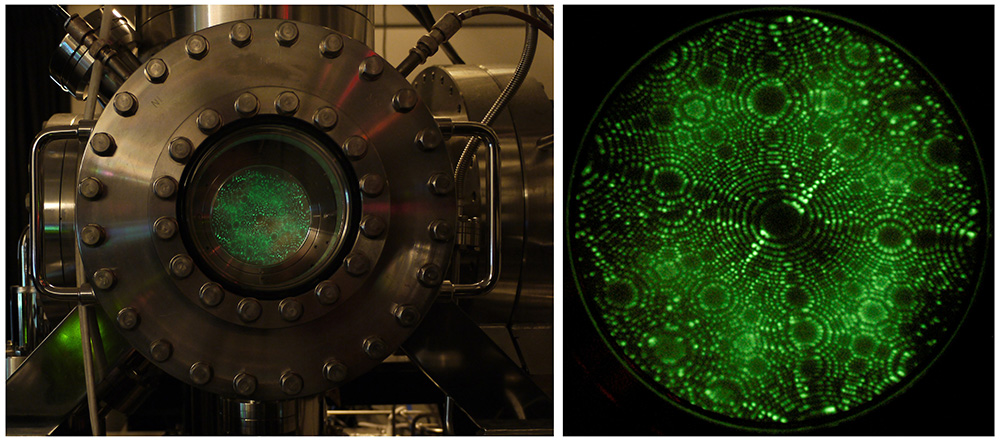
Fig. 2. FIM image of tungsten obtained using the FIM observation system at NIMS.