
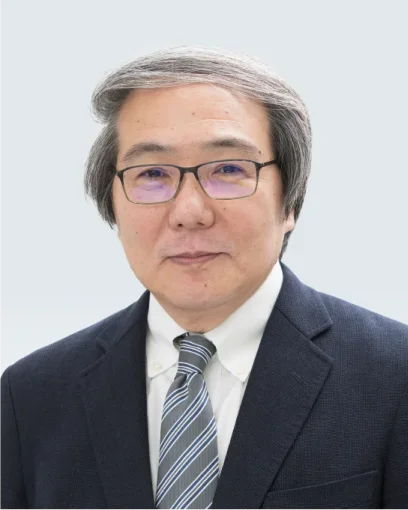
Institute Professor,
Institute of Science Tokyo
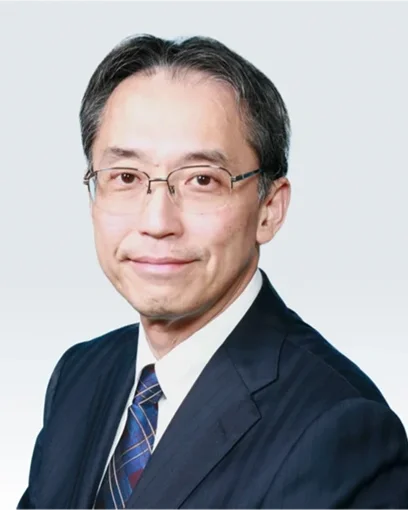
Executive Advisor,
Osaka Metropolitan University
The work of the awardees has made comprehensive and pioneering contributions to realizing all-solid-state batteries, which is a key technology in next-generation energy storage, through the development of sulfide-based ion-conducting solid materials and the elucidation of their conduction mechanisms.
Prof. Ryoji Kanno developed crystalline sulfide solid electrolytes, including Li₁₀GeP₂S₁₂ (LGPS) and argyrodite-type materials, achieving superionic conductivity at room temperature that significantly exceeds that of conventional liquid electrolytes.
Furthermore, he advanced the understanding of lithium-ion diffusion pathways based on studies of crystal structures and defect chemistry, and established guidelines for designing materials exhibiting high ionic conductivity.
Prof. Masahiro Tatsumisago pioneered amorphous and metastable crystalline materials exhibiting fast ion conduction through the development of ion-conducting glasses and glass-ceramics typified by the Li₂S–P₂S₅ system, thereby establishing a materials foundation for the practical application of sulfide-based solid electrolytes.
Together, their complementary approaches—spanning amorphous to crystalline materials—established comprehensive principles for achieving fast ionic conduction and advanced the understanding of electrode/electrolyte interfaces. These achievements have laid the scientific and technological foundation for high-performance all-solid-state batteries.
The combined contributions of Prof. Kanno and Prof. Tatsumisago have transformed the field of solid-state ionics and energy materials science by integrating seemingly opposing approaches incorporating crystalline and amorphous solids into a unified framework for ion conduction. Their work has significantly advanced the fundamental understanding of fast ion transport and stimulated extensive global research activities, as reflected in the high citations of their publications.
From an industrial perspective, their discoveries have triggered the development of sulfide-based all-solid-state battery technologies, which are being actively studied for applications in electric vehicles, grid-scale energy storage, and portable electronics. Their work has provided essential materials and design guidelines that have accelerated industrial R&D worldwide.
By enabling safer and higher energy-density battery systems, these achievements are expected to play a crucial role in advancing next-generation energy technologies and contribute to the realization of a carbon-neutral society.
| Akitoshi Hayashi | Professor, Graduate School of Engineering, Osaka Metropolitan University |
|---|---|
| Yasutoshi Iriyama | Professor, Graduate School of Engineering Science, Nagoya University |
| Shin-Ichi Orimo | Professor, Advanced Institute for Materials Research, Institute for Materials Research, Tohoku University |
| Junichiro Shiomi | Professor, Graduate School of Engineering, The University of Tokyo |
| Shohji Tsushima | Professor, Graduate School of Engineering, The Osaka University |
| Takashi Taniguchi | Executive Vice President, Chair of the NIMS Award Committee |
|---|---|
| Masayuki Takeuchi | Executive Vice President |
| Hideo Hosono | Distinguished Fellow, Research Center for Materials Nanoarchitectonics (MANA) |
| Kazunori Takada | Fellow, Research Center for Energy and Environmental Materials (GREEN) |
| Takuya Masuda | Director, GREEN |
| Koji Kamiya | Deputy Director, GREEN |
| Hiroyo Segawa | Deputy Director, Research Center for Electronic and Optical Materials |
| Kazutaka Mitsuishi | Deputy Director, Center for Basic Research on Materials |
| Hitoshi Ota | Platform Director, Battery Research Platform, GREEN |
| Naoaki Kuwata | Group Leader, Solid State Battery Ionics Group, GREEN |
| Toshihiko Mandai | Group Leader, Frontier Battery Materials Group, GREEN |
| Shogo Miyoshi | Senior Researcher, Solid-State Battery Group, GREEN |
| Kei Kubota | Senior Researcher, Battery Materials Analysis Group, GREEN |
Established in 2007, this international award is annually presented to individual researchers or groups from one of the four major areas of materials science:
1. Environmental and Energy Materials, 2. Functional Materials, 3. Structural Materials, and 4. Basic Materials Science. The selection is based on a specific theme set each year and is conducted through a recommendation and rigorous assessment by a committee consisting of leading experts. Focusing on the area of environmental and energy materials, this year’s selection was conducted under the theme of “Energy Storage Materials”
Please visit the official website of NIMS Award for the details.
→ https://www.nims.go.jp/nims-award/en/