
With “adhesion” and “interface” as keywords, we conduct basic research on biomaterials that induce tissue regeneration and healing through their own functions. We are actively collaborating with medical and dental institutions and companies to expand from basic to applied research.
RESEARCH
Taguchi Lab.
Development of high-strength, biocompatible adhesives that adhere to moist tissue/organ surfaces
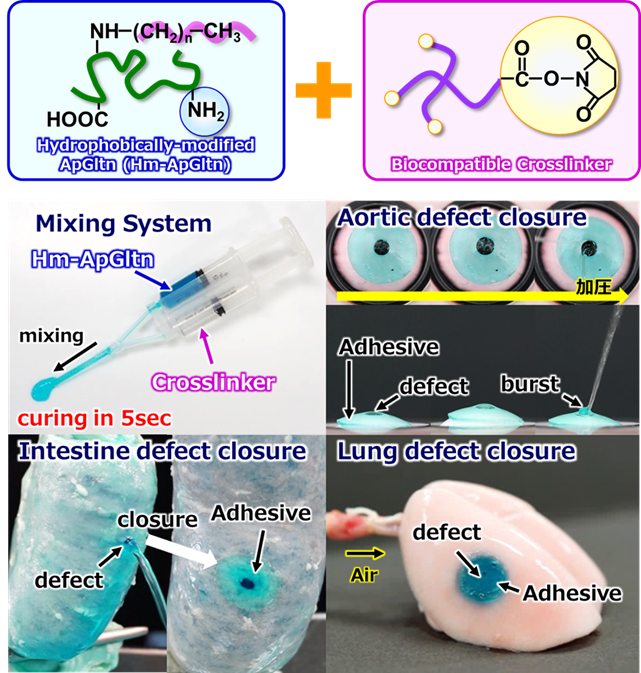
We are developing a high-strength, biocompatible adhesive consisting of two components: hydrophobically-modified Alaska pollock gelatin (hm-ApGltn), a partially hydrophobic form of ApGltn that exhibits fluidity even at low temperatures and high concentration, and a biocompatible crosslinker. When the two components are mixed, the adhesive cures within about 5 seconds and adheres to the surfaces of tissues and organs such as the aorta, large intestine, and lungs under wet condition, preventing blood and air leakage. It is also designed to be broken down and absorbed by the body as it heals, eliminating the need for re-operation.
- References
- Colloid Surf B, 220, 112946 (2022)
J Biomed Mater Res A, 110, 909-915 (2022)
Acta Biomater, 121, 328-338 (2021)
Int J Biol Macromol. 163, 2365 (2020)
Biomater Sci 5, 982 (2017)
Development of adhesive particles to coat wounds after removal of early-stage gastrointestinal cancers
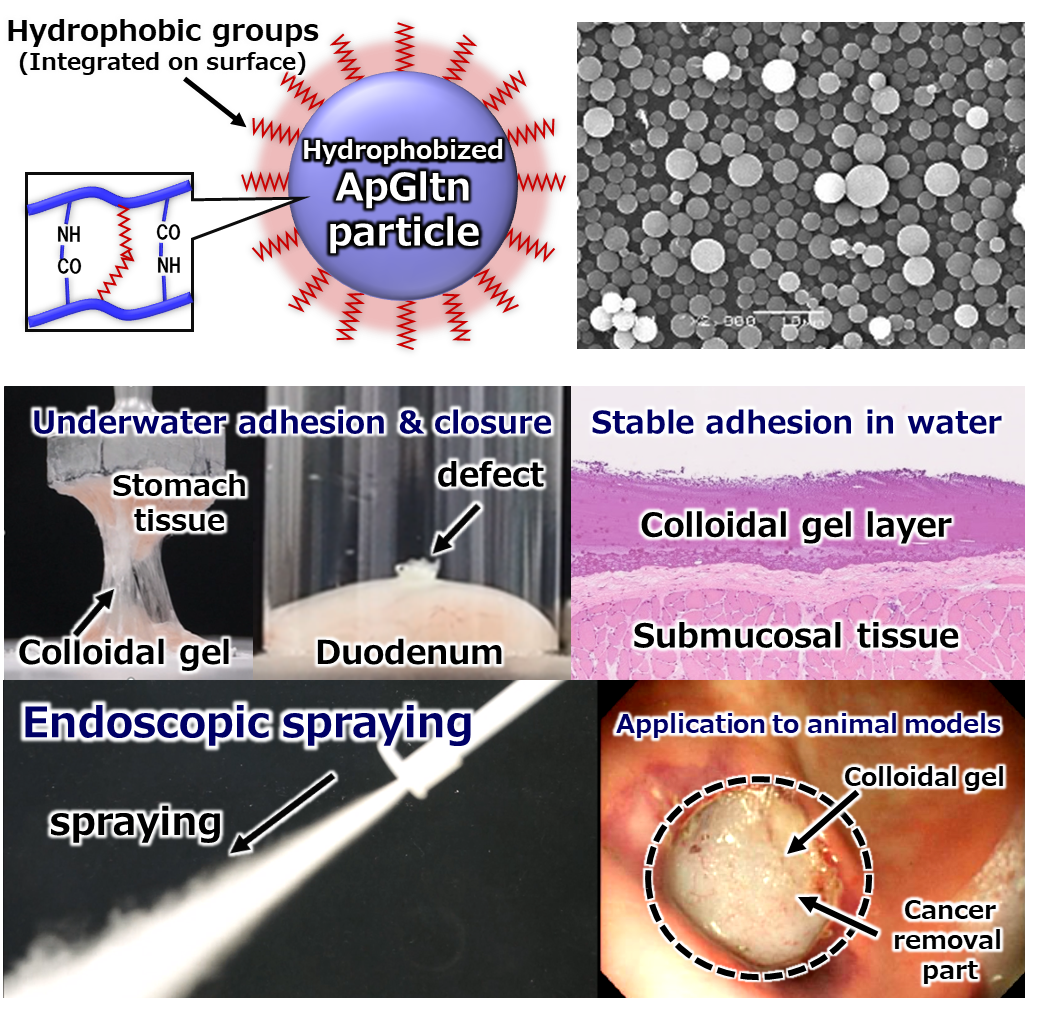
We are developing particles that adhere to damaged gastrointestinal tissues after removal of early-stage gastrointestinal cancer by endoscopy to form a gel layer and promote tissue regeneration. The particles can be easily delivered through an endoscope to the area where cancer was removed. After adhering to and coating the tissue, the particles are degraded and absorbed by the body, eliminating the need for reoperation after tissue repair. It is expected to be applied as a medical material to prevent complications such as stricture after removal of esophageal cancer and perforation of the colon and duodenum after endoscopic surgery.
- References
- Acta Biomater, 159, 83-94 (2023)
Acta Biomater, 149, 139-149 (2022)
Mater Sci Eng C, 123, 111993 (2021)
Acta Biomater, 99, 387-396 (2019)
Small, 15, 1901566 (2019)
Development of growth factor-free angiogenesis-inducing materials
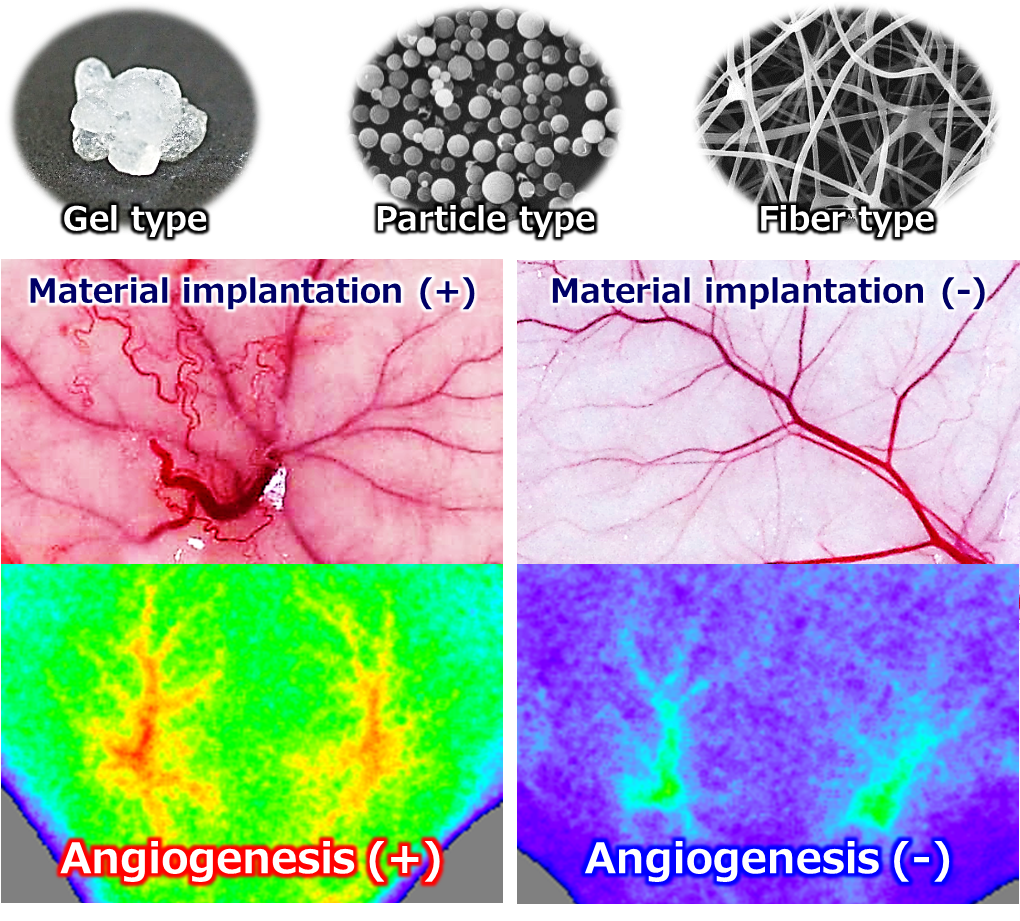
Focusing on the fact that lipopolysaccharide (LPS), which promotes vascular induction in the body, has a dodecyl group, we have prepared dodecyl groups-modified Alaska pollock gelatin (ApGltn) with various types (gels, particles, and fibers) and demonstrated that angiogenesis is induced by the same TLR4-mediated mechanism that promotes secretion of vascular endothelial cell growth factor as LPS. It is expected to be applied as a material for regeneration of large organs that require formation of vascular network.
- References
- ACS Biomater Sci Eng, 7, 4991-4998 (2021)
RSC Adv, 10, 24800-24807 (2020)
NPG Asia Mater, 12, 48 (2020)
J Tissue Eng Regen Med, 13, 2291-2299 (2019)
Macromol Biosci, 19, 1900083 (2019)
RESEARCH

We are developing biomaterirals that promote the generation of damaged tissues.
specifically,based on the chemical modification of biopolymers and phase separation control technology,we are advancing the development of functional injectable gels,3D printing technologies,and drug delivery carriers,with the aim of applying these to generative medicine and drug discovery.
Development of porous injectable gels and their application in regenerative medicine
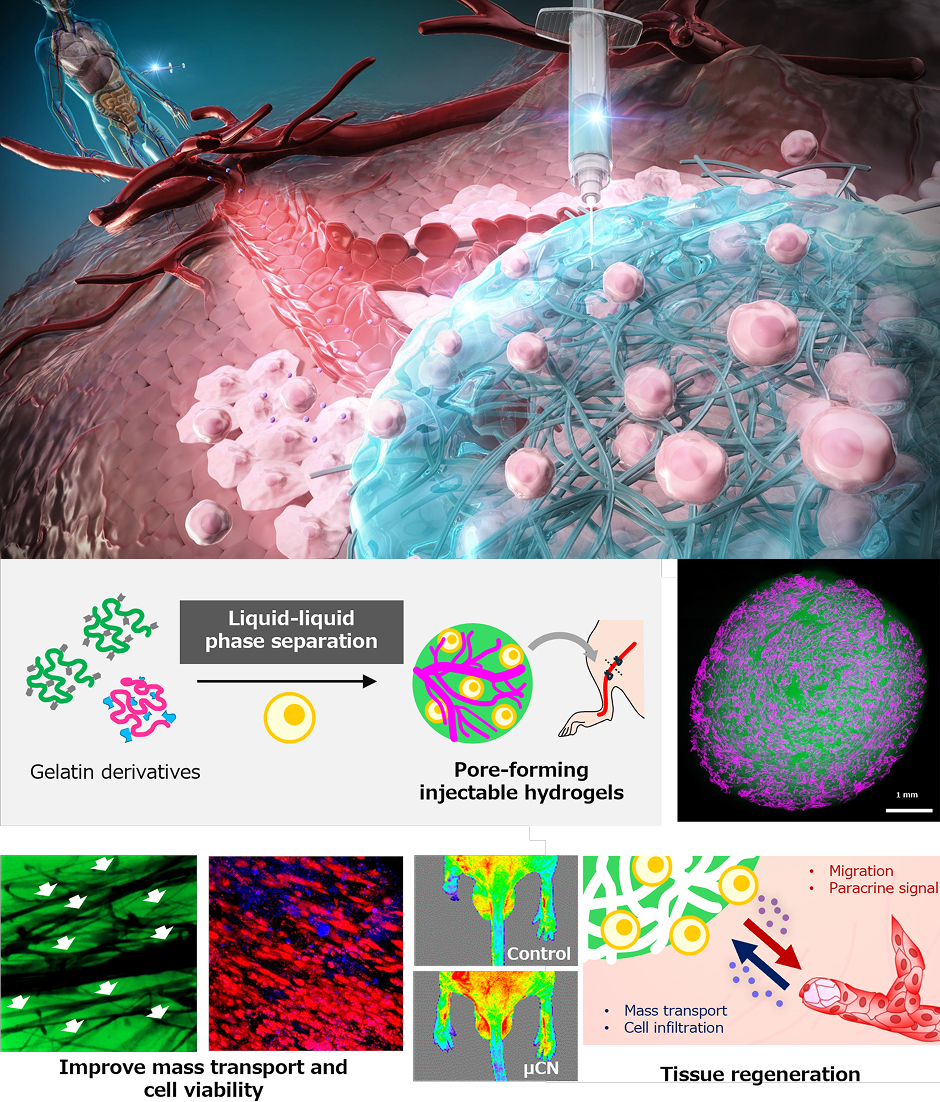
In cell transplantation therapy, low cell engraftment rates remain a significant challenge. To address this, we have developed a novel material designed to enhance cell engraftment and survival rates. This material utilizes liquid-liquid phase separation control technology to create a porous injectable gel. As this material can improve the therapeutic efficacy of cell transplantation, it holds promise for applications in regenerative medicine.
- References
- Biomaterials 2024
Biomacromocromlecules 2024
Adv Funct Mater 2025
3D bioprinting of living tissues by tissue engineering-based approach
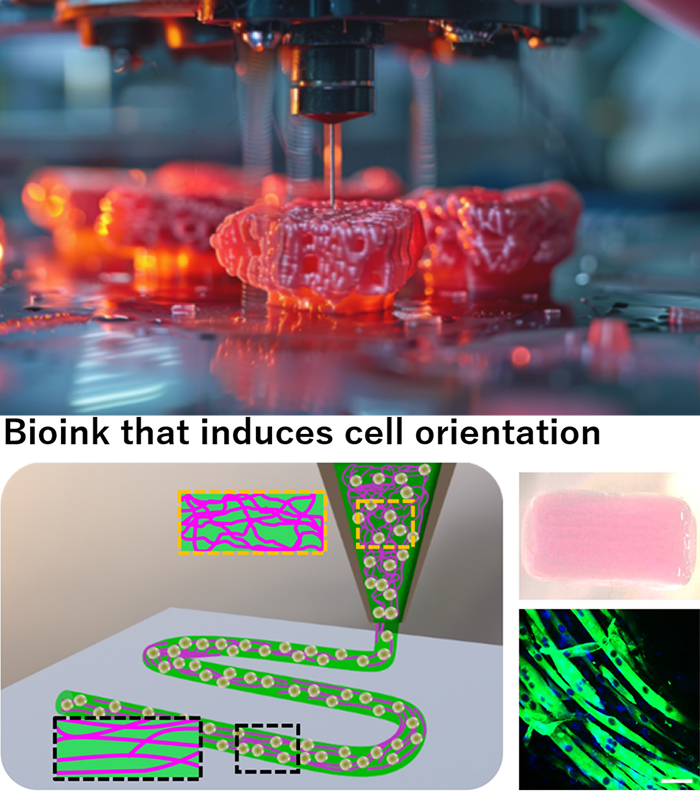
3D bioprinting has gained significant attention in recent years as a technology for constructing tissue-like structures outside the body that possess similar structure and function to biological tissues. Using 3D bioprinters enables automated control of cellular 3D arrangement and rapid in vitro construction of three-dimensional organs, making it a promising tool for regenerative medicine and drug discovery models. Focusing on the design of novel bio-ink formulations for bioprinting, we are developing porous bio-inks that enhance cellular 3D orientation and facilitate improved substance diffusion.
- References
- Small 2026
Drug delivery using injectable hydrogels and nanoparticles
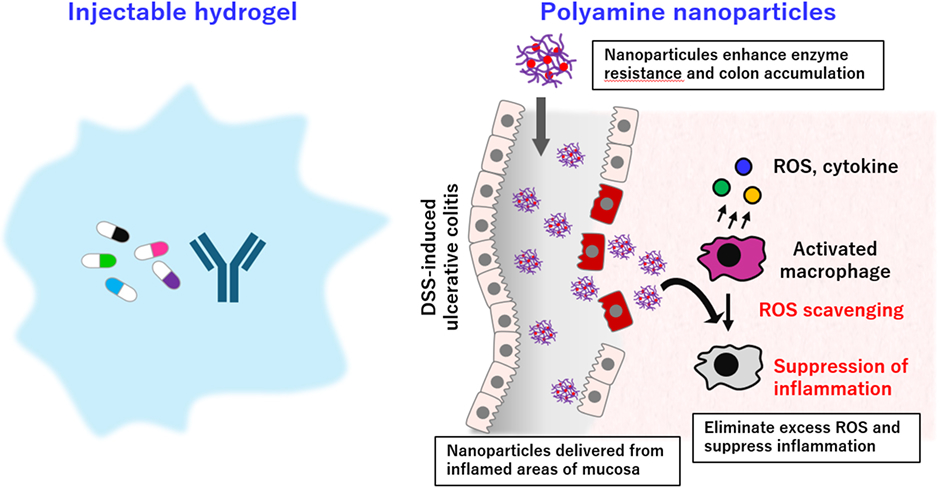
Drug delivery systems are technologies designed to deliver the right amount of medication to the right location at the right time. By incorporating drugs into injectable gels or nanoparticles for administration into the body, these systems enable drug delivery that maximizes therapeutic efficacy while minimizing side effects. These technologies are useful in cancer treatment and the treatment of inflammatory diseases.
- References
- Adv Funct Mater 2021
J Mater Chem B 2023
Development of tissue adhesive scaffolds for tissue regeneration
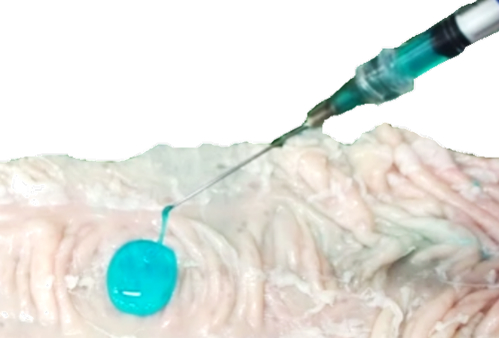
Postoperative complications are complications that occur during or after surgery, such as bleeding, adhesions, inflammatory reactions, and infections. We are developing injectable gels as biomaterials to prevent such postoperative complications. By performing appropriate molecular design according to the intended purpose, we aim to develop new medical materials that prevent postoperative complications while promoting tissue regeneration.
- References
- Acta Biomater 2021
Acta Biomater 2022
Acta Biomater 2025
Adv Healthc Mater 2025