国立研究開発法人物質・材料研究機構
高分子・バイオ材料研究センター 高分子材料分野
電気化学センサグループ
電気化学センサグループ
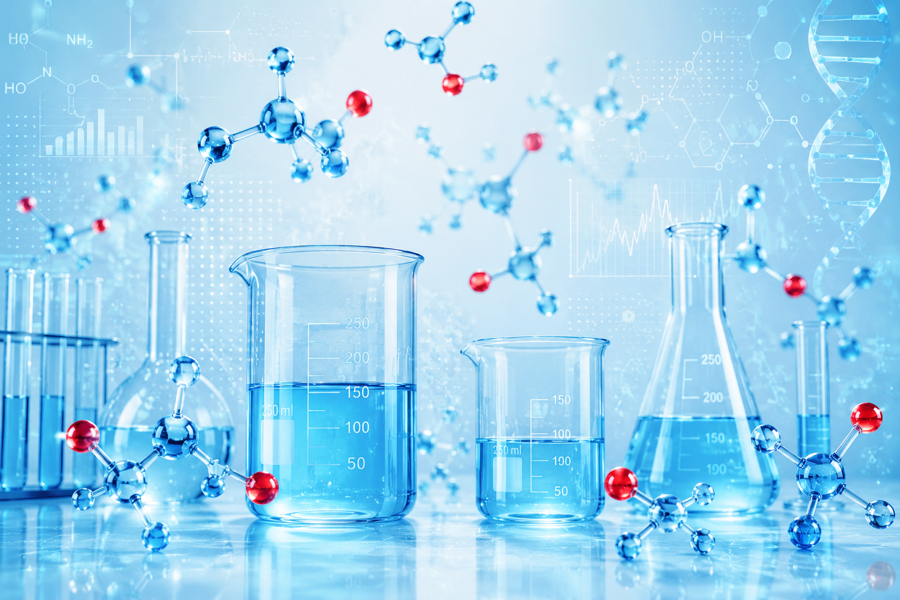
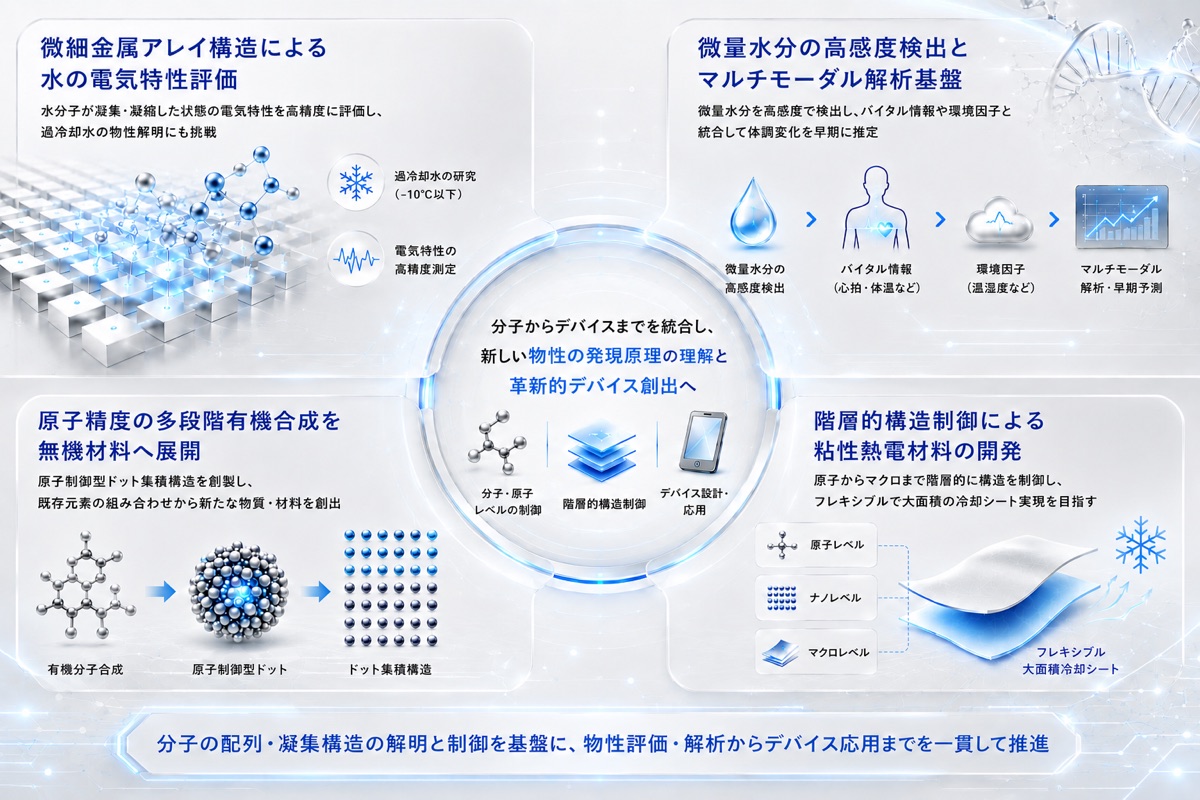
本研究グループでは、分子が配列・凝集した構造の解明と制御を基盤に、電気的・熱的特性を中心とした物性評価・解析、さらにそれらの知見を活かしたセンサ・デバイス応用までを一貫して推進している。
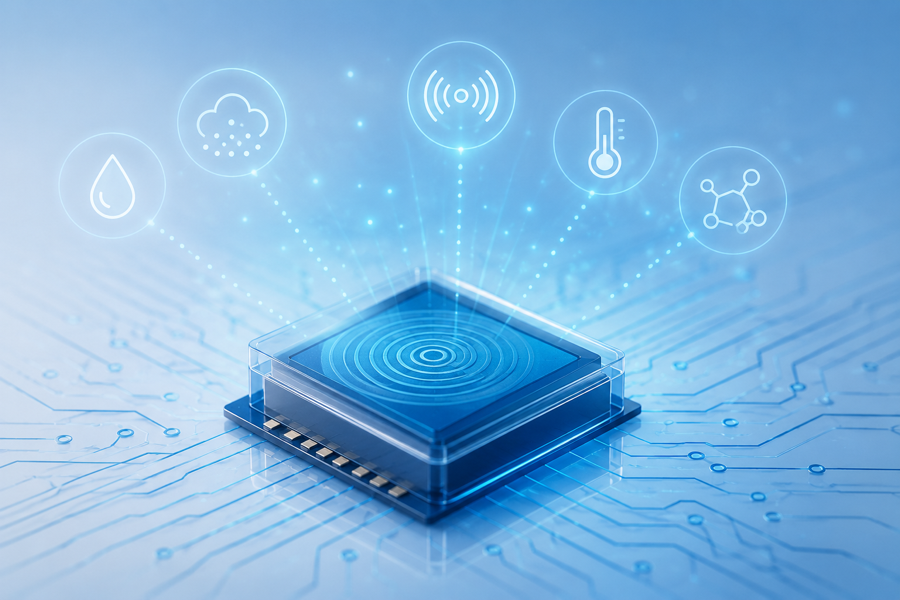
微細な金属アレイ構造を用いた研究では、水分子が凝集・凝縮した状態における電気特性を高精度に評価し、実験的に保持が難しい過冷却水の物性解明にも挑戦している。また、微量水分を高感度で検出できる特性を活かし、センサ応用を進めるとともに、得られたデータをバイタル情報や環境因子と統合するマルチモーダル解析基盤を構築し、体調変化を早期に推定する仕組みの確立を目指している。
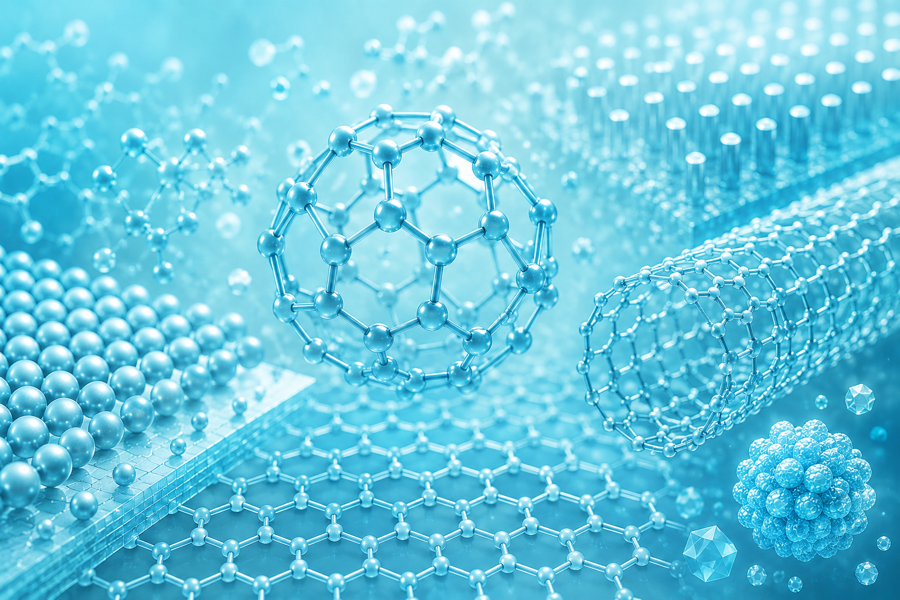
一方、既存元素の組み合わせから新たな物質・材料を創出するため、原子精度で有機分子を組み立てる多段階有機合成を無機材料へ展開し、原子制御型ドット集積構造の創製に取り組んでいる。さらに、原子からマクロまで階層的に構造を制御することで、フレキシブルで大面積の冷却シート実現に向けた粘性熱電材料の開発も進めている。
これらの研究を通じて、分子レベルの構造制御からマクロスケールのデバイス設計までを統合し、新しい物性の発現原理の理解と、その応用による革新的デバイス創出を目指している。
The study evaluates the electrical properties of water molecules in aggregated and condensed states using arrays of finely arranged metallic structures, and also investigates the physical properties of supercooled water, which is difficult to maintain experimentally. Leveraging the ability to detect minute amounts of water with high sensitivity, the research extends to sensor applications and the development of a multimodal analysis platform that integrates sensor data with vital signs and environmental factors to enable early detection of physiological changes. In parallel, to create new-class materials from the limited elements available in the periodic table, we apply multistep organic synthesis—capable of building organic molecules with atomic precision—to inorganic synthesis. This approach aims to develop atomically controlled dot-assembly structures. Furthermore, by controlling structural requirements across scales from the atomic to the macroscopic level, we have explored viscous thermoelectric materials for flexible, large-area cooling sheets.