Special CMSM Seminar No.305

Terahertz Non-Destructive Inspection of Civil Infrastructure and Plastic Waste
- Speaker
-
Prof. Tadao Tanabe
Department of Design Engineering and Research Center for Advanced Terahertz Technology, Shibaura Institute of Technology

- Date & Time
- 15:00 – 16:00, June 10th (Wed), 2026.
- Venue
- Medium Seminar Rm., 8F, Main Bldg., Sengen
Abstract
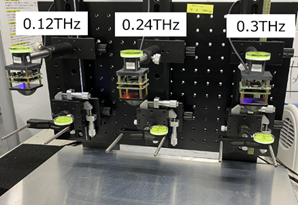
Terahertz (THz) waves, which are located between millimeter waves and infrared light, not only have high penetrability through non-polar substances, a characteristic of radio waves, but also have the straightness characteristic of light, enabling optical design. As their energy is equal to room temperature, THz waves can be used safely without affecting the human body. THz waves transmittance of concrete in the lower-frequency band is high, and the position of steel rods inside can be confirmed by reflection. In addition, since the sub-THz waves are absorbed and scattered by metal corrosion and cracks, the level of degradation can be diagnosed for the concrete structures [1]. This non-destructive THz evaluation can be performed for the inside of concrete structures as well as civil infrastructures. Furthermore, the frequency of variation between molecular chains in plastics corresponds to the THz frequency, so the dielectric constant dispersion in the THz region can be used to identify not only the plastic material but also additives, and the degree of degradation [2,3]. Recently THz measurement devices designed for plastic identification and chlorine concentration assessment have been developed as shown in right picture, with a particular focus on practical system integration that utilizes high-frequency radar devices - originally developed for automatic driving vehicles - as compact THz sources.
Contact
Yuta Sasaki
Research Center for Magnetic and Spintronic Materials
・E-mail