

BBCube™ Large-Scale 3DI using WOW/COW Hybrid Processes
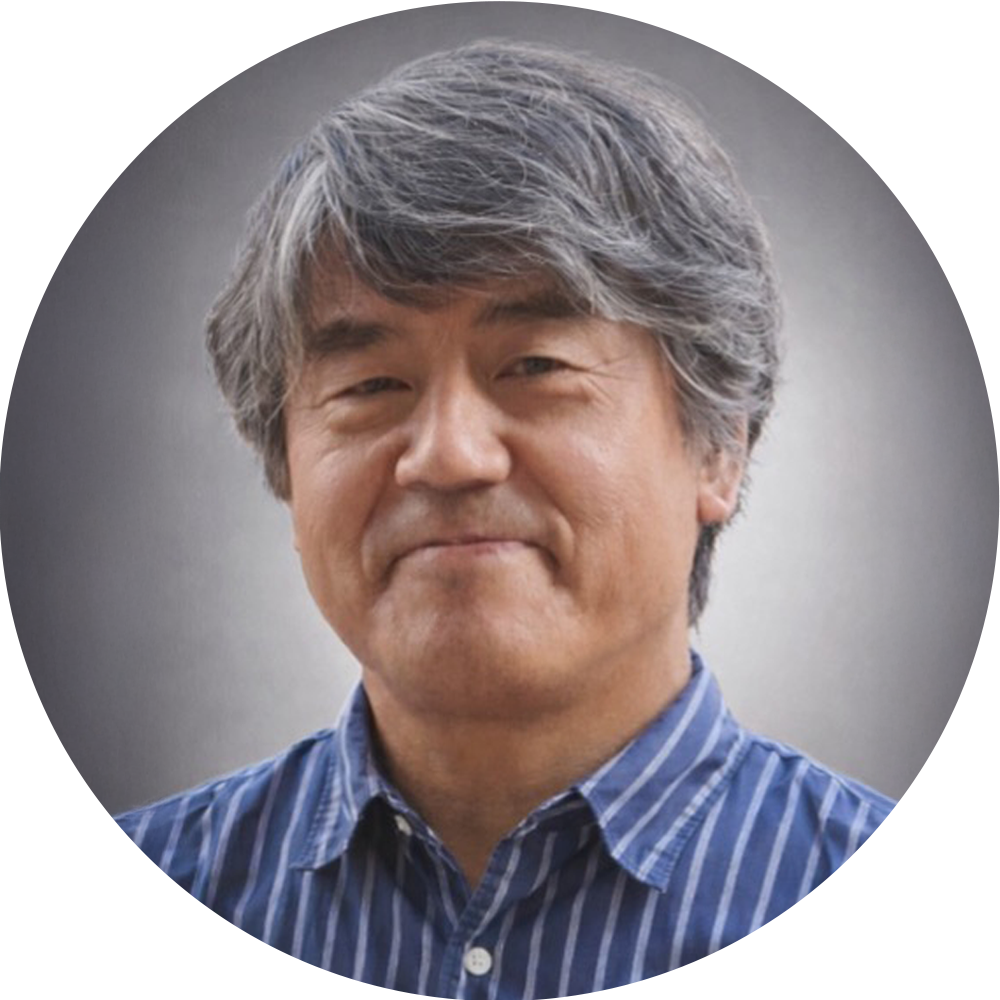
Author
Takayuki Ohba
Affiliation
Institute of Science Tokyo
URL
Biography
Takayuki Ohba received his Ph.D. in Engineering from the Graduate School of Engineering (Electrical Communication), Tohoku University, in 1995. He began his career at Fujitsu Limited in 1984 and later joined the University of Tokyo in 2004. Since 2013, he has been serving as a Professor at the Institute of Science Tokyo (ISCT), formerly the Tokyo Institute of Technology, and he is also a Visiting Professor at National Yang Ming Chiao Tung University in Taiwan. His research focuses on ultra‑low‑power system technologies, particularly three‑dimensional integration with shortest‑length interconnects and advanced cooling solutions. He leads the WOW Alliance at ISCT, spearheading innovations in semiconductor technology and advancing the next‑generation WOW/COW manufacturing platform.
Abstract
The Bumpless Build Cube (BBCube™) 3D architecture delivers terabyte‑level bandwidth while significantly reducing power consumption. To address the rapidly evolving landscape of heterogeneous 3D integration, BBCube 3D integrates CPU/GPU chiplets, HBMs, and voltage regulators through a hybrid process that combines WOW and COW techniques. The Via‑Last bumpless TSV process shortens wiring length to approximately 10 µm, enabling high‑density parallel interconnects for multi‑stack die‑to‑die links. Moreover, the Via‑Last process—implemented using Damascene Cu, a technology matured in BEOL—provides highly reliable metal‑metal contact, surpassing mechanical attachment methods such as Cu‑Cu hybrid bonding. The use of high‑density, ultra‑short TSV interconnects minimizes thermal resistance, supporting the development of multi‑stack devices while reducing the overall footprint of 3D systems.

References
- T. Ohba et al., IEICE Electron. Express, 12, pp. 1–14, 2015.
- Y. S. Kim et al., IEEE IEDM2015 Tech. Dig., 190, 2015.
- Z. Chen et al., IEEE 71st ECTC, pp. 1131–1137, 2021.
- Y. Funaki et al., IEEE ECTC, pp. 185–190, 2021.
- T. Ohba et al., Electronics, 236 (11), pp. 1–57, 2022.
- T. Ohba et al., IEEE VLSI TSA, D9-1, 2025.
- N. Chujo et al., IEEE ECTC, pp. 1405–1409, 2026.
- H. Kitada et al., IEEE VLSI Symp., T17.1, 2026.