
Neuromorphic, In-memory, and Reservoir Computing as Foundations for Future AI electronics
Author
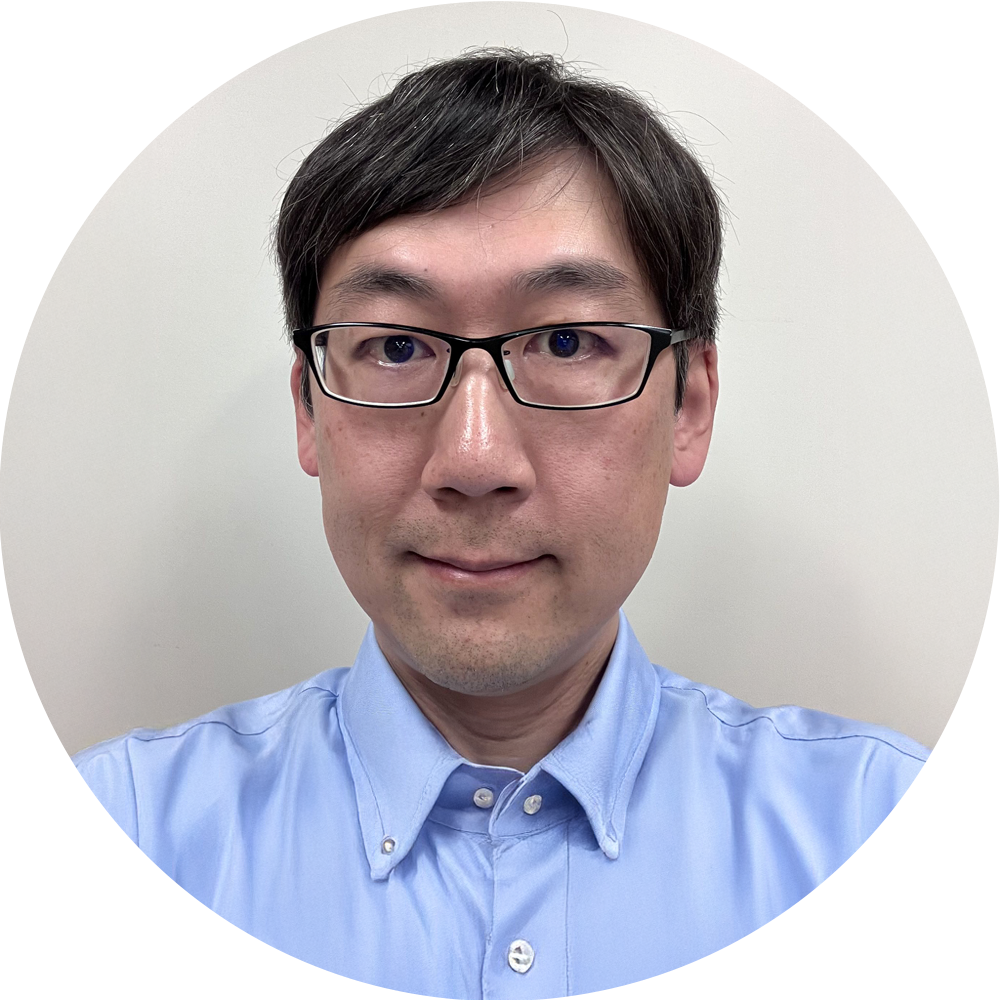
Takao Marukame
Affiliation
Hokkaido University
URL
Biography
Dr. Takao Marukame is a Professor at the Faculty of Information Science and Technology, Hokkaido University. His research focuses on next-generation information processing technologies beyond conventional computing, including AI hardware, brain-inspired and neuromorphic computing, in-memory computing, VLSI systems, and advanced devices and circuits. Drawing on device technology, circuit design, and system architecture, he develops efficient computing architectures and integrated systems for future AI and digital transformation applications. His work also includes applications in information security and bio-implementation. He is currently a member of industrial chapter (IC), technical program committee for AI electronics, and APEX/JJAP editorial board in The Japan Society of Applied Physics.
Abstract
This presentation highlights recent advancements in neuromorphic systems, in‑memory computing, and reservoir computing as foundational paradigms for next‑generation artificial intelligence (AI) electronics [1–3]. The integration of nonlinear device‑level phenomena, analog memory states, and autonomous dynamical behaviors inspired by brain function has emerged as a powerful pathway toward novel computational capabilities and unprecedented energy efficiency. Building on these principles, the presentation delineates methodologies for leveraging physical device mechanisms to engineer scalable, ultra‑low‑power AI electronics. It further explores the technological trajectory toward future systems in which materials, devices, circuits, and algorithms co‑evolve in a tightly coupled manner, ultimately redefining the landscape of computation [4].

References
- T. Marukame et al., JJAP 57 (4S), 04FK06(2018) DOI: 10.7567/JJAP.57.04FK06
- R. Berdan, T. Marukame et al., Nature Elec. 3, 259(2020) DOI: 10.1038/s41928-020-0405-0
- T. Marukame et al., IEEE J. of the Elec. Dev. Soc. 11, 602 (2023) DOI: 10.1109/JEDS.2023.3265392
- R. Kusunose, A. Schmid, T. Asai, T. Uemura, T. Marukame, Engineering Research Express 8, 085303 (2026) DOI: 10.1088/2631-8695/ae5d86