

Metal oxide-based thin-film transistors and thermal transistors
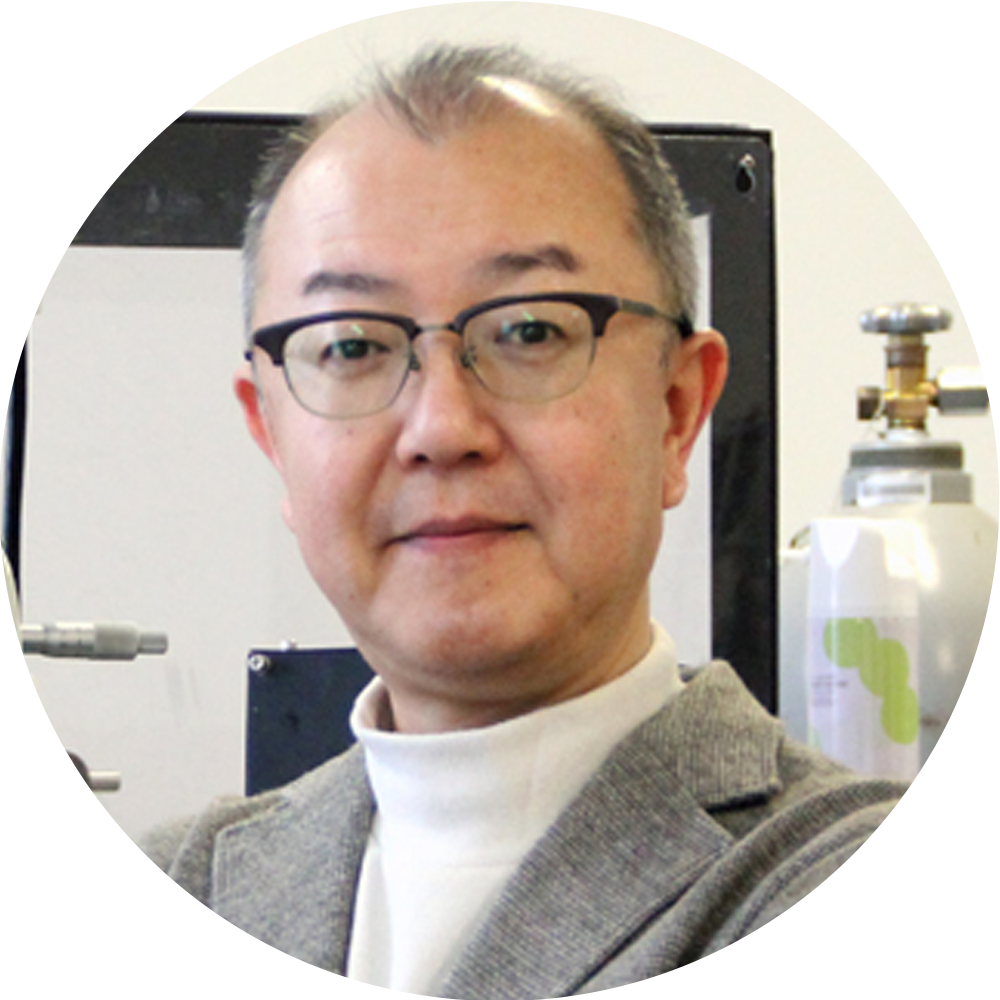
Author
Hiromichi Ohta
Affiliation
Hokkaido University
URL
Biography
He graduated Meiwa High School, Nagoya, Japan in March 1990. After graduating from the Faculty of Engineering, Saitama University in March 1994 and completing the master’s program in the Department of Applied Chemistry, Graduate School of Engineering, Nagoya University in March 1996, he was a researcher at Sanyo Electric Co., Ltd., and HOYA Co., Ltd. After working at ERATO Hosono Transparent ElectroActive Materials Project, he became an Associate Professor at the Graduate School of Engineering, Nagoya University in 2003, and a Professor at Research Institute for Electronic Science (RIES), Hokkaido University in 2012. Deputy Director of RIES from 2021 to 2025 March. Director of RIES from 2025 April. Ph.D. (Engineering) (2001 Tokyo Institute of Technology)
Abstract
Traditional metal oxides have long been used as ceramics. However, their intrinsic properties have not been fully exploited in practical applications because of grain boundaries and impurities. We fabricate high-quality thin films of functional metal oxides to fully utilize their intrinsic properties. Our goal is to develop devices that can make a meaningful impact in the real world. In this talk, I will present selected results on metal oxide-based thin-film transistors (TFTs) [1,2] and solid-state thermal transistors [3,4].
Metal oxide-based TFTs: Although polycrystalline In2O3 TFTs exhibit an outstanding field-effect mobility of up to 140 cm2 V−1 s−1, their long-term reliability remains a major challenge. We demonstrate that In2O3 TFTs passivated with Y2O3 and Er2O3 films exhibit significantly improved reliability, most likely because the passivation layers grow epitaxially on the In2O3 channel [1]. We have also developed a safe and simple method for introducing hydrogen into In2O3 films [2].
Solid-state thermal transistors: In 2023, we developed oxide-based all-solid-state electrochemical thermal transistors fabricated on single-crystal yttria-stabilized zirconia (YSZ) substrates, which serve as solid electrolytes. The thermal transistors operate in air at 280 °C. Using SrCoOx as the active material, we achieved reversible modulation of the thermal conductivity from approximately 0.95 to 3.8 W m−1 K−1 [3]. Furthermore, we found that CeO2-based thermal transistors exhibit an even larger modulation, with thermal conductivity varying from approximately 2.5 to 12 W m−1 K−1 [4].
References
- P. Ghediya, H. Ohta et al., Small Methods 9, 2400578 (2025). DOI: 10.1002/smtd.202400578
- H. Sadahira, H. Ohta et al., ACS Appl. Electron. Mater. 7, 6952 (2025). DOI: 10.1021/acsaelm.5c00829
- Q. Yang, H. Ohta et al., Adv. Funct. Mater. 33, 2214939 (2023). DOI: 10.1002/adfm.202214939
- A. Jeong, M. Yoshimura, H. Ohta et al., Science Adv. 11, eads6137 (2025). DOI: 10.1126/sciadv.ads6137