
Recent progress in spin-wave reservoir computing
Biography
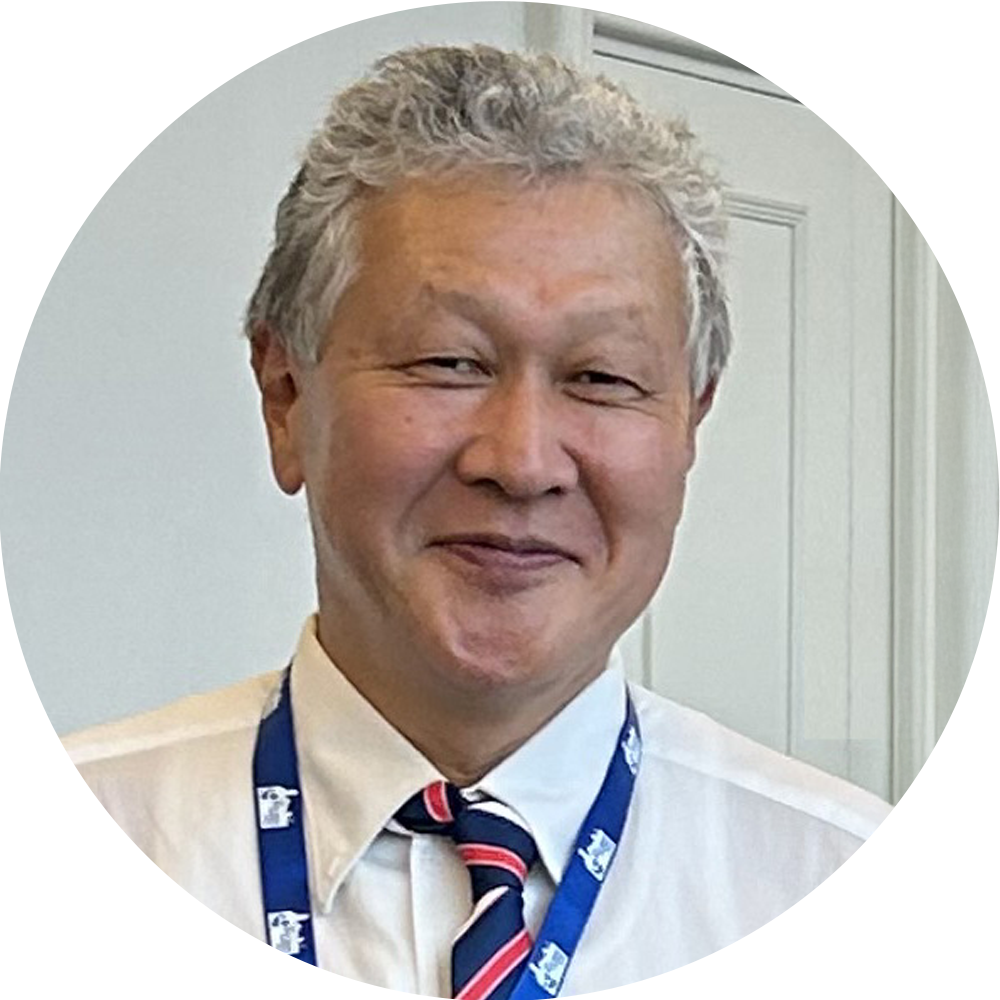
Akira Hirose received his Ph.D. degree in electronic engineering from the University of Tokyo, Tokyo, Japan, in 1991. He is currently Professor at the Department of Electrical Engineering and Information Systems, the University of Tokyo. He authored or coauthored several books, including Complex-Valued Neural Networks, Second Edition (Springer, 2012). He received several awards such as INNS Dennis Gabor Award (International Neural Network Society), APNNS Outstanding Achievement Award (Asia-Pacific Neural Network Society), IEEE GRSS Education Award (IEEE Geoscience and Remote Sensing Society), and IEICE Outstanding Achievement Award (Institute of Electronics, Information and Communication Engineers). He is Fellow of the IEEE and the IEICE.
Abstract
The authors' group has proposed a reservoir computing (RC) device utilizing spin waves (SW) [1] and has reported on its excellent properties and high potential for application [2–4]. In spin-wave reservoir computing (SWRC), we modulate a carrier wave with input signals, and feed it into the spin-wave reservoir (SWR). Then the modulated carrier wave propagates as a spin wave. That is, the spin wave propagates as passband (high-frequency) signals. These passband signals are converted nonlinearly, having delays, and detected at output terminals before fed to readout process—specifically, weighted summation—to generate output signals. Recent analysis by our group has revealed that performing a readout process in the passband, prior to demodulation, yields superior performance compared to performing it after down-conversion to baseband [5]. This finding has significant implications for the overall configuration of the SW reservoir chip.
References
- R. Nakane, et al., IEEE Access, 6, 4462 (2018) DOI: 10.1109/ACCESS.2018.2794584
- T. Ichimura, et al., IEEE Access, 9, 72637 (2021) DOI: 10.1109/ACCESS.2021.3079583
- J. Chen, et al., Phys. Rev. Appl., 23, 034045 (2025) DOI: 10.1103/PhysRevApplied.23.034045
- Y. Miyasaka, et al., APL-ML, 4, 016108 (2026) DOI: 10.1063/5.0308497
- J. Chen, et al., Phys. Rev. Res., 7, 013310 (2025) DOI: 10.1103/PhysRevResearch.7.013310