Seminar Information
 Abstract
The Condensed Matter Theory/Computational Materials Science Seminar
CMT/CMS Seminar
Organized by Computational Materoals Science Unit
CMT/CMS seminar is a series of seminars organized by the Computational Materials Science Unit (CMSU) .
The aim of these seminars is to
1) Offer comprehensive reviews/progress reports on research carried out at CMSU.
2) Provide the much needed platform for promoting interaction between the experimentalist- and theorist-communities within NIMS.
3) Invite NIMS/external speakers to give talks that will keep the community posted on the latest developments in condensed matter physics/materials science.
We look forward to your participation.
Computational Materials Science Seminar
CMS Seminar
Coordinators: Dr. Masao Arai (MPT group), Dr. Yoshihiko Nonomura (TM group), and Dr. Yoshitaka Tateyama (MANA)
The CMS seminar aims at discussion of fundamental theories and calculational methods, as well as individual problems in materials science. The CMS seminar covers the following; (1) announcements of research results of the theoretical/computational scientists in NIMS, especially NIMS-CMSU, (2) talks by guests visiting NIMS (or the neighbourhood), (3) invited talks by outstanding researchers outside. Each seminar is organised by a different member working on theoretical/computational materials science in NIMS. The CMS seminar is open for everyone. All interested are welcome. This seminar is an official activity of the NIMS-CMSU.
CMS Seminar Archives
You can find the abstracts of previous CMS seminars here.
Information of the next seminar
CMS seminar
 04 June 2014 (Wed.) 14:45 -- 15:30
 Dr. Nicolae Atodiresei Peter Grünberg Institut and Institute for Advanced Simulation, Forschungszentrum Jülich and JARA, Germany)
 Ab Initio Insights into Molecular Electronics and Spintronics
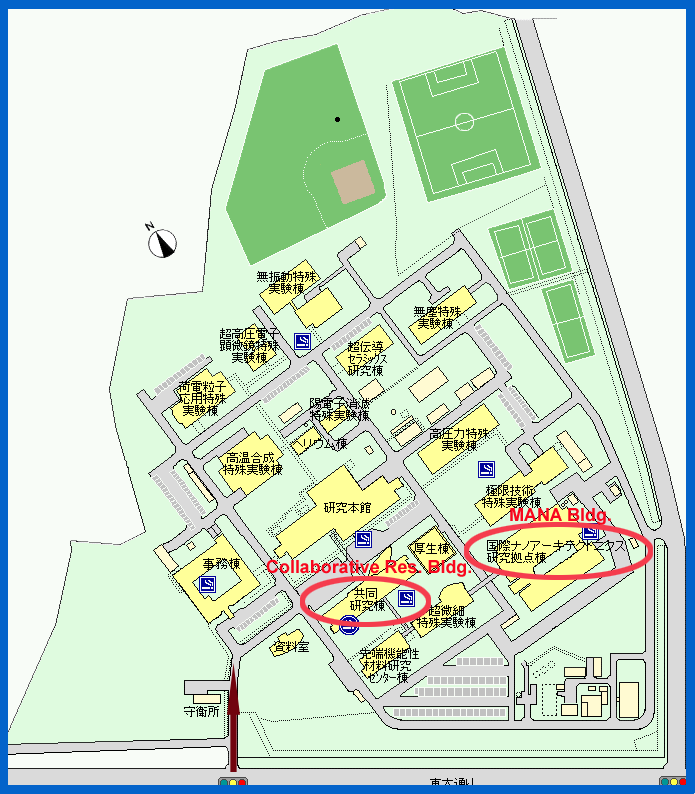
This will be held at 1F Auditorium, WPI-MANA bldg., Namiki site, NIMS.